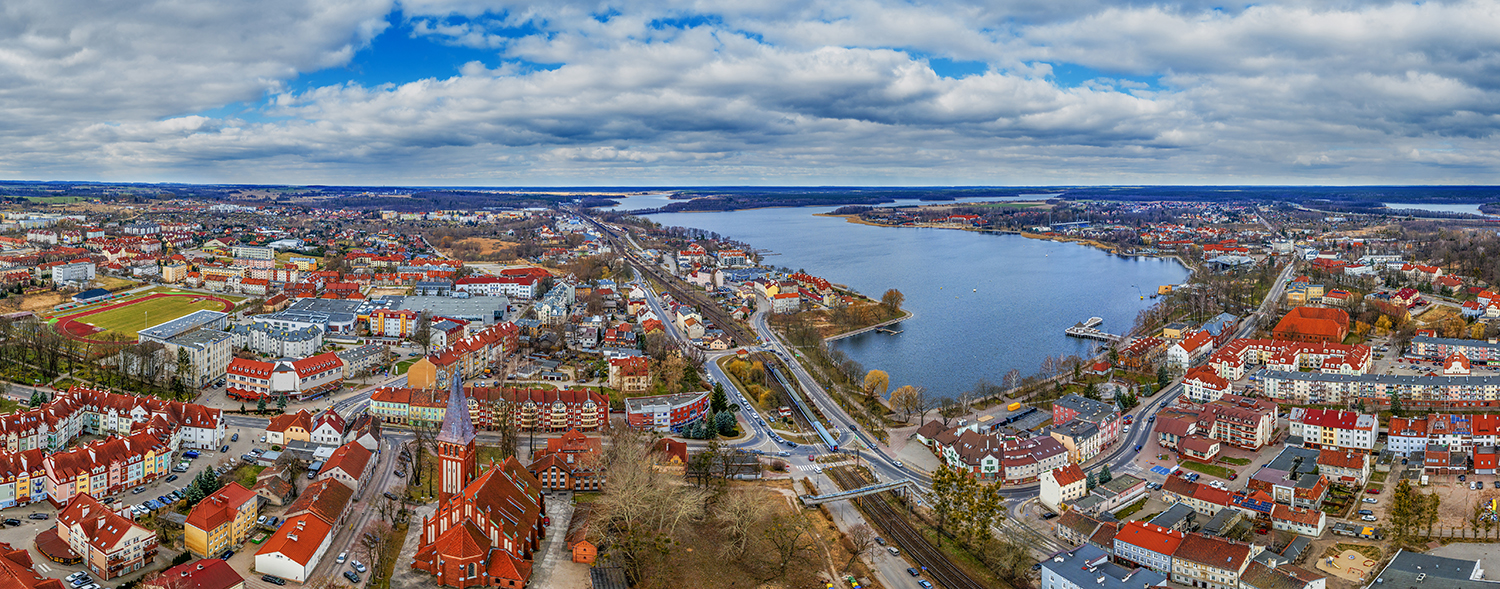
It is not just large district heating companies that are focusing on the need for a green transition. MPEC Ostróda – a smaller district heating company with an annual heat sale of 300 TJ, located approximately 150 km south/east of Gdansk in Poland – started this journey back in 2017. Previously, production was 100% coal-based, but in 2017, it was partially replaced by two gas engines, which could help secure income from electricity sales to the grid. The transformation has begun, and the company is soon to reach its goal: no coal. And since 2024, the district heating price has been reduced with 18%.
By Wojciech Zalewski, CEO MPEC Ostróda, Lars Gullev, CEO Gullev DH Advisory, and Mathias Vestergaard Steenstrup, Project Manager – DH Specialist, Artelia
Published in Hot Cool, edition no. 2/2026 | ISSN 0904 9681 |
What’s the secret behind this development?
The initial stages
In autumn 2023, in connection with work for the Danish Embassy in Warsaw, with a focus on supporting the green transition of district heating (DH) companies in Gliwice and Gdynia, the district heating company MPEC Ostróda was visited. A DH company with committed management that clearly saw the need for a green transition of heat production. Not only to be green, but primarily to ensure that customers’ DH price remained competitive with alternative heating methods. Rising coal costs, including CO2 quota costs, would threat-en a future competitive DH price.
An application to the Danish Energy Agency (DEA) for support in preparing a Development Plan for MPEC Ostroda and continued close cooperation with PEC Gliwice and the Gliwice municipality was submitted in autumn 2023, approved by DEA just before Christmas 2023, and preparation of the Development Plan started in early 2024.
The project aimed to plan the green transition for a sustainable and efficient DH system. MPEC Ostróda also aimed to maintain a low, stable heat price for its consumers and a high level of security of supply, while, as a frontrunner, making the transition from a fossil-fuel-based to a sustainable, efficient DH production.
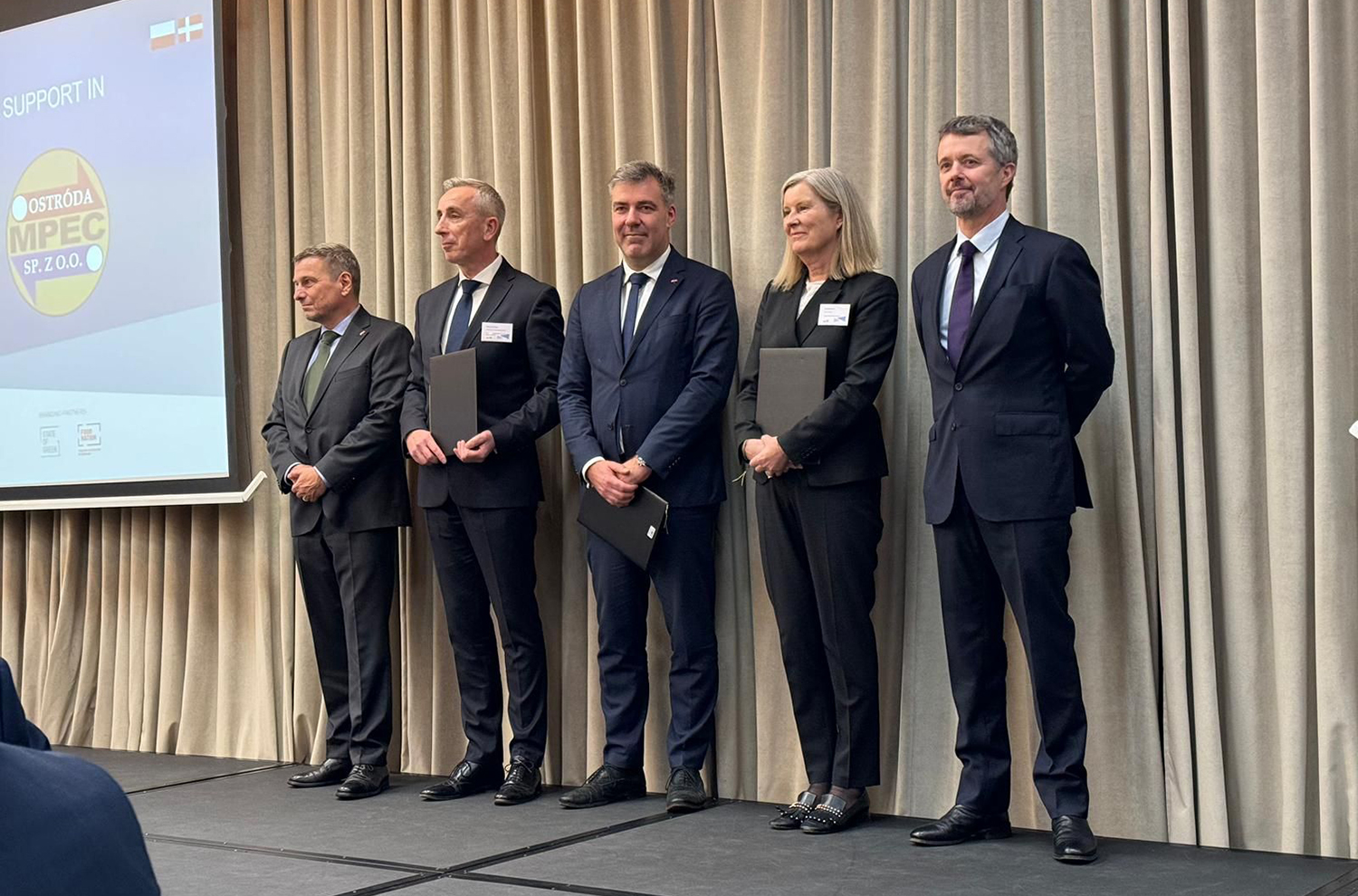
Signing of the MoU between MPEC Ostróda and DBDH during His Majesty the King of Denmark’s visit to Poland in January 2024. From left to right: Ole Toft, former Danish ambassador in Poland, Wojciech Zalewski, CEO MPEC Ostróda, Lars Aagaard, Danish Minister of Energy & Climate, Pia Zimmermann, Export Manager, DBDH, and His Majesty King Frederik X.
Development from 2017-2024
Changes in broader environmental policies and the Russian invasion of Ukraine in February 2022 have had a significant impact, completely changing the approach to heating in Ostróda.
The years 2022–2024 marked a turning point. Prices of coal, electricity, and natural gas surged dramatically, with costs climbing almost daily. Heating prices for residents reached unprecedented levels, setting a new record for the company. The company’s aim became to survive in the market.
Following these events, the company decided to invest quickly in new heating production to reduce heating costs for residents in Ostróda. Thus, the company and the city of Ostróda in 2024 invested in a 4.6 MW biomass boiler – the first sustainable heat production source in the history of the company, not subject to CO2 taxes.
The company changed its natural gas and electricity contracting policies for its combined heat and power (CHP) operations, partnering with the Finnish company FORTUM, thus start-ing a new chapter in its operations. The new cooperation principles and stock market con-tracting brought the first results by the end of 2023, as the company presented a significant profit from sales of electricity, which helped cover the loss from coal-based production – main-ly CO2-related expenses.
But it didn’t stop there. Since October 2023, MPEC Ostróda has been establishing a 10 MW natural gas-fired boiler. The tender closed in March 2024, the contract was signed in April 2024, and the boiler went into operation at the beginning of 2025 (figure 1).
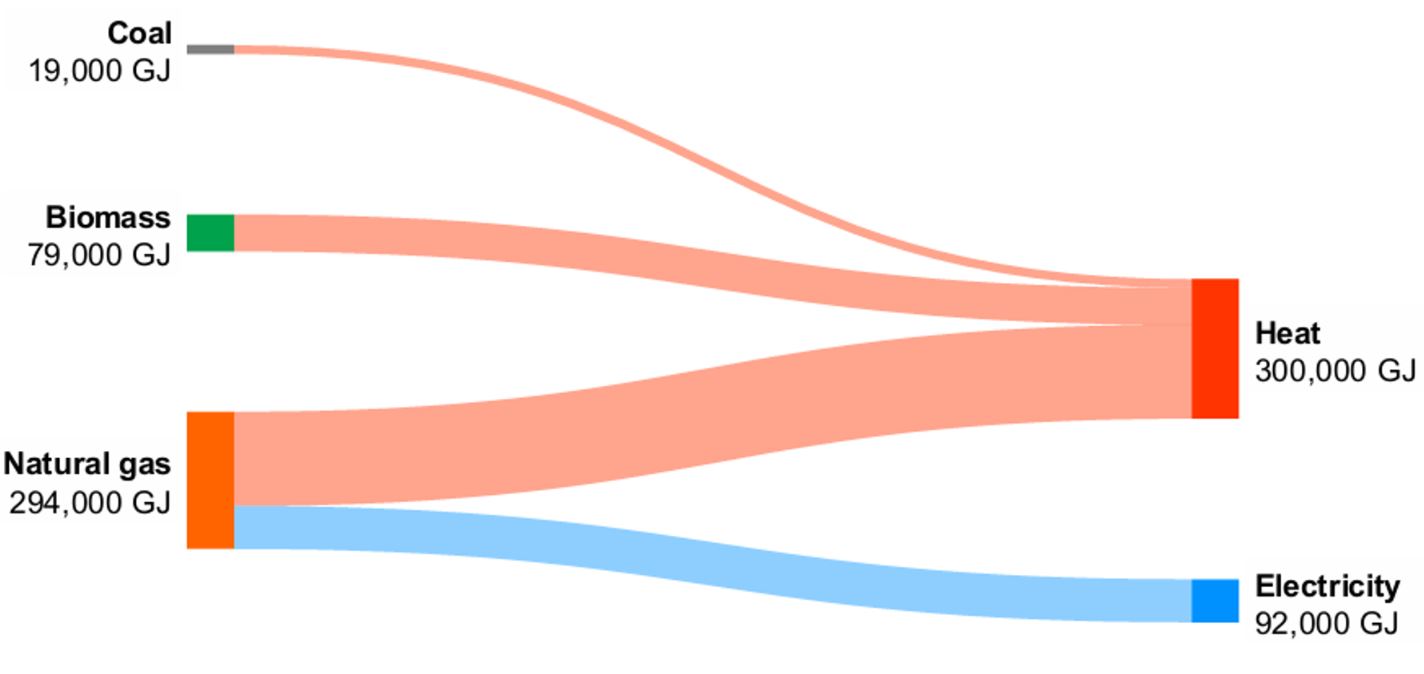
Figure 1: Sankey diagram of the energy mix – Simulation 2025.
In addition to significant investments, the development has required support from consumers and, not least, from political institutions. These potential barriers have been identified, allowing them to be addressed to achieve a sustainable and efficient DH supply in Ostróda.
MPEC Ostróda has started addressing these barriers by releasing a short video about the DH company and explaining that its investments, together with changes in fuel prices, have led to an 18% decrease in the heat price since 2024.
The shares of coal, natural gas to CHP, natural gas to boiler, and biomass in 2025 were 15%, 24%, 26%, and 35%, respectively (Figure 2).
Distribution of heat sources in 2025
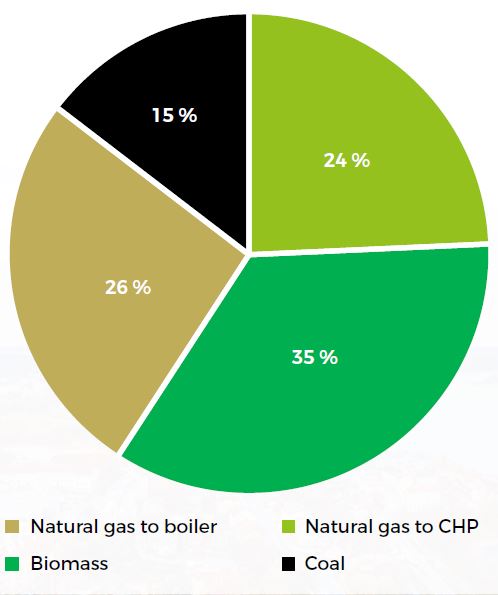
Figure 2: 2025 heat production – natural gas for CHP, biomass, natural gas for boiler, and coal.
In accordance with the EED, the current energy mix will be insufficient and not fulfill the requirements by January 2027 (see text box below).
The Energy Efficiency Directive of the EU
The objectives of MPEC Ostróda – as mentioned in the text box – are highly related to the revised Energy Efficiency Directive (EED) of the EU. The EED is a directive of the EU that aims to improve energy efficiency in all member states. Introduced in 2012, the directive has undergone several revisions, with the most recent update in 2023, which integrated it into the Fit for 55 package and the European Green Deal – key strategic and legislative frameworks for reducing CO₂ emissions.
Under the EED, efficient heat supply systems must meet the criteria mentioned in the text box.
Basis for a development plan
To set up a development plan [MD8.1][la8.2]for MPEC Ostróda, it was necessary to perform a detailed techno-economic analysis. Implementation of new green production capacity and new technologies requires a thorough understanding of the varied production and heat de-mand, as well as the costs of production. Changes in heat demand and production capacity were analysed using an annual simulation model.
The model was built and simulated in EnergyPRO – a leading software for detailed modeling and simulation of energy systems. The software offers tools for users to conduct feasibility studies, financial analysis, energy production and distribution optimisation, and evaluate op-erational scenarios.
In the software, a wide range of technologies for integrating and analysing various systems can be selected, including large-scale heat pumps, electric boilers, heat storage, geothermal energy, and renewable energy sources such as wind and solar power.
By comparing the model and simulation results with the actual energy mix and operating costs, a reference operating cost was determined.
By running several simulations with iterating capacities and combinations, the most economi-cally and practically feasible solution for a sustainable and efficient DH supply of MPEC Os-tróda was identified for 2030. The following mix also considers fuel diversity and efficiency, as was pointed out in the strategy (figure 3).
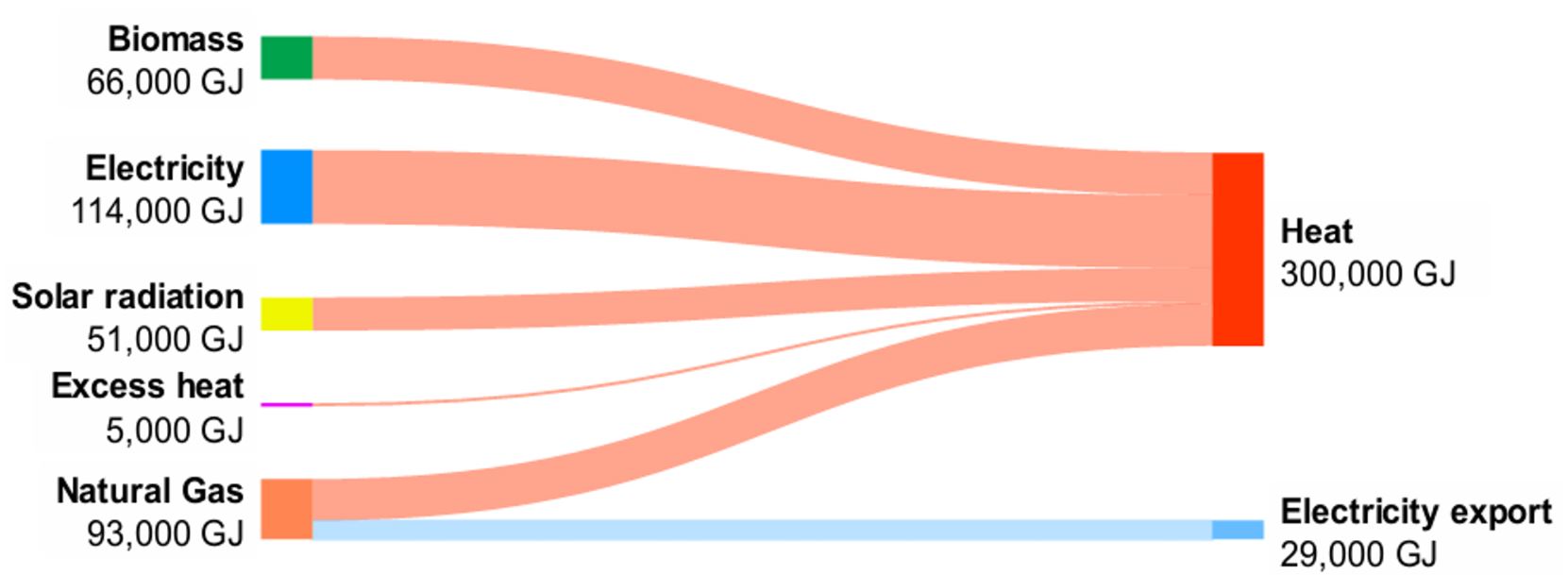
Figure 3: Sankey diagram of the energy mix of the 2030 model and simulation.
Roadmap 2030
By addressing all criteria and conditions, a roadmap (fig. 4) for MPEC Ostróda to meet the EED criteria and to have a more sustainable and efficient supply of DH, was made.
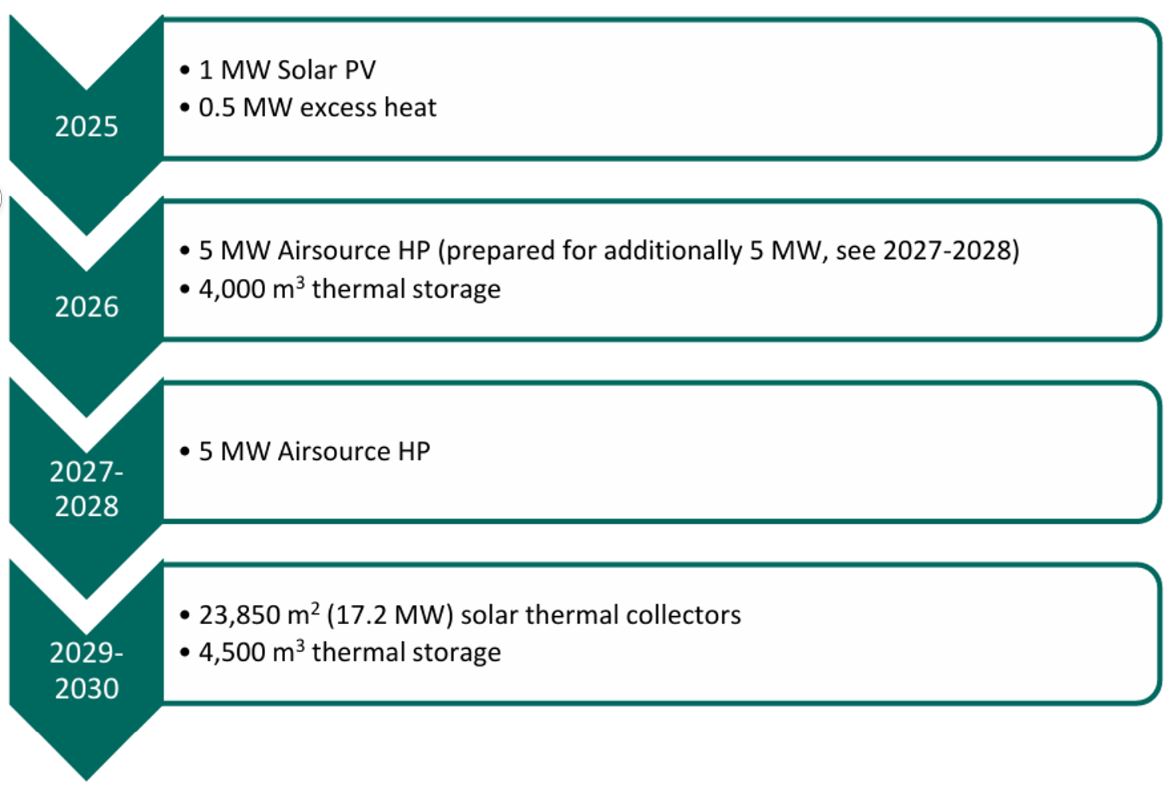
Figure 4 Roadmap 2030 of investments needed to obtain a sustainable and efficient DH supply.
Spin-off from the development plan
Through the development of a strategy aiming to implement a sustainable and efficient DH supply, criteria for procedures and investments have been found. These criteria will ensure a future DH system that is economically feasible and technically sufficient.
The techno-economic evaluation has shown that a mix of solar thermal collectors, heat pumps, and the existing biomass boiler and CHP unit, together with thermal energy storage capacity, is an optimal solution.
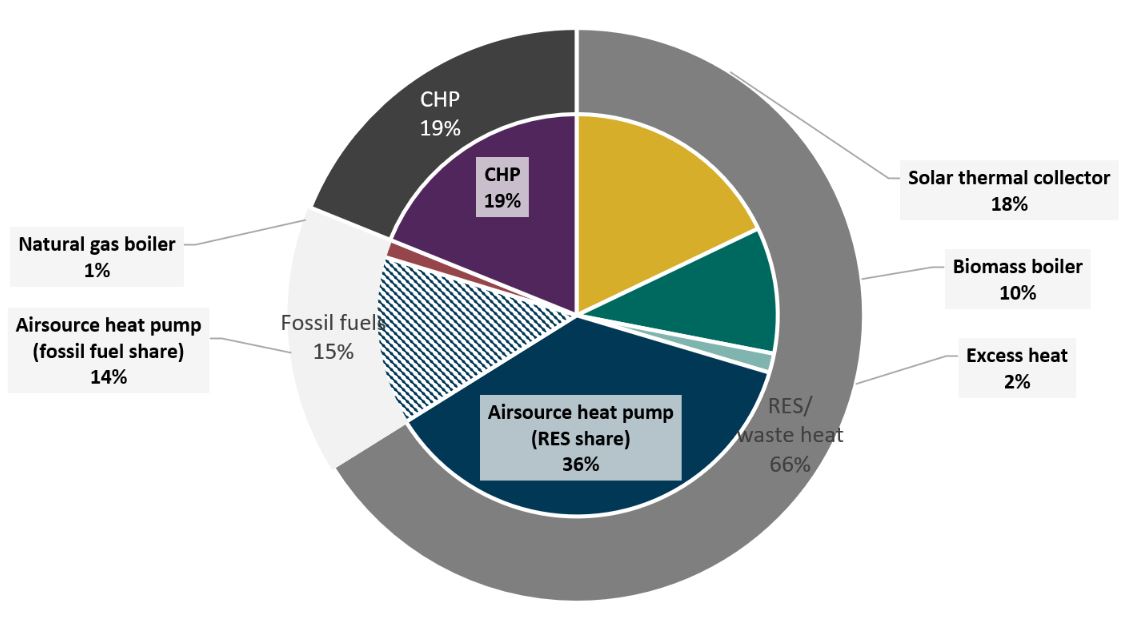
Figure 5: Simulated shares of production of MPEC Ostróda in 2030.
Based on the requirements of the EED and projected share of RES in the electricity sector, MPEC Ostróda’s simulated share of RES from heat production is 66%, fulfilling both the re-quirements of 2028 and 2035.
Also, the share of RES and high-efficiency CHP combined amounts to 85%, fulfilling the re-quirements of 2035. However, this requires a slight increase in the efficiency of the two CHP units at MPEC Ostróda. An overview of the contributions from each production unit is shown in Fig. 5.
Based on the production share shown above (Fig. 4), the total CO2 emissions amount to 8,400 t/year. The reduction in CO2 emissions corresponds to 59%.
Therefore, the aim of CO2 emissions (see text box) by MPEX Ostróda is not met. However, most CO2 emissions come from CHP, which is considered efficient and contributes to a greener electricity supply in Poland.
Correct investments, visionary management – that’s the cocktail for success
All in all, the green transformation of MPEC Ostróda is a fine example of how visionary management can translate vision into action, while the investments made lay the foundation for a still-competitive district heating price. Without the green transformation, MPEC Ostróda would not have been able to deliver a competitive product to its customers.
The experience from MPEC Ostroda can be used in many district heating companies in Poland and other countries. So, use your personal network to exchange experiences. This way, the green transition can be made more affordable for customers, society, and the environment.