With a new closed-loop single-well geothermal solution benefiting from the oil and gas industry, geothermal heat becomes accessible everywhere. The geological requirements are minimal, and the issues with conventional doublet-hydrothermal solutions are mitigated.
By Kim Gunn Maver, Camille Hanna, Mads Sylvest Eegholm, and Nikolaj Holmer Nissen, Green Therma
Published in Hot Cool, edition no. 2/2026 | ISSN 0904 9681 |
The new solution almost eliminates heat loss from the returning fluid to the surface and will thereby overcome the currently perceived limitations of single-well coaxial solutions. Furthermore, it increases the heat-harvesting area by adding a long horizontal section, as is common in oil and gas wells.
The solution can play a significant role in the European energy transition and deliver heat directly to the growing district heating grid without the use of heat pumps. As a result, district heating can be largely decoupled from the electricity grid, with a Coefficient Of Performance (COP) of 30-50 and a very limited surface footprint.
Green Therma and its partners have received an €11.5 million grant from the Danish Energy Technology Development and Demonstration Programme (EUDP). The grant will support the full-scale demonstration project, including a 7 km well to be drilled in late 2026. The well will supply geothermal heat directly to Aalborg Forsyning’s district heating customers under a 30-year heat-offtake agreement. The project supports the wider goal of scaling multi-well closed-loop solutions in the global energy mix.
Hydrothermal well solutions
Conventional geothermal systems are based on a doublet design, where one well produces formation water and another well injects/returns cooled formation water. The system is highly dependent on the thickness of the geological formation and the formation parameters, such as porosity, permeability, and geochemistry, to ensure hydraulic connectivity between the wells to maintain water production.
Produced water can cause corrosion, scaling, clogging, and significant maintenance issues in surface installations, the injection well, and the reservoir around the injection wellbore. Hydraulic fracking may be required to improve injectivity and formation connectivity, with the risk of polluting groundwater aquifers, having a detrimental impact on the geological formation, inducing seismicity, and potentially damaging surface infrastructure.
Because these risks can only be partially mitigated by gathering geophysical and geological data for well planning, the financial viability of a project is highly variable and unpredictable.
Closed-loop horizontal geothermal well design
To mitigate issues with a doublet hydrothermal solution, a patented vacuum-insulated inner pipe circulates a working fluid in a closed-loop well. The working fluid is heated by the surrounding geological formations along a long horizontal section (Figure 1).
The working fluid, similar to the fluid in district heating pipes, flows downward between the well casing and an outer pipe, absorbing heat from the geological formations along the way, especially in the horizontal section. Once heated, the working fluid returns to the surface through a vacuumized pipe-in-pipe assembly, which consists of an inner and an outer pipe working similarly to a thermos flask.
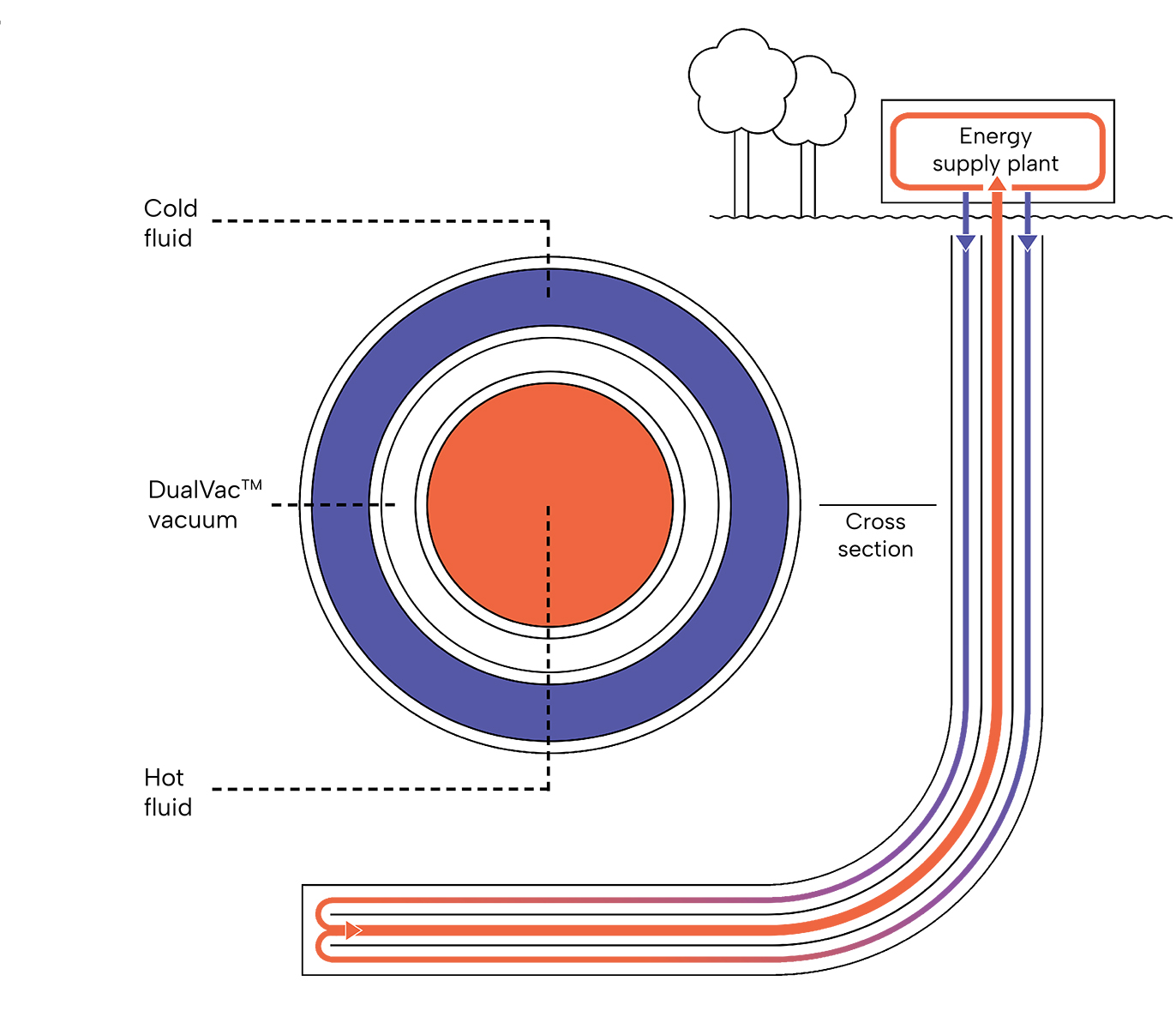
Figure 1: Closed-loop horizontal geothermal well solution.
The continuous and controlled vacuum in the pipe-in-pipe provides thermal insulation, minimizing heat loss (Figure 2). As a result, the temperature of the fluid returning to the surface is reduced to only a few percent. Without a vacuum to insulate the circulating fluid, significant heat loss occurs.
The closed-loop solution is flexible in its heat provision. This is beneficial in cases where heat demand varies seasonally. Flexibility is achieved by either adjusting the flow rate or stopping fluid flow for a period. This allows the subsurface to reheat during under-utilized periods.
In some cases, the flow of the working fluid in the well can sustain itself by the thermosiphon effect due to the heated fluid in the inner pipe being less dense than the cold water in the outer pipe. However, fluid circulation at various flow rates requires a small circulation pump.
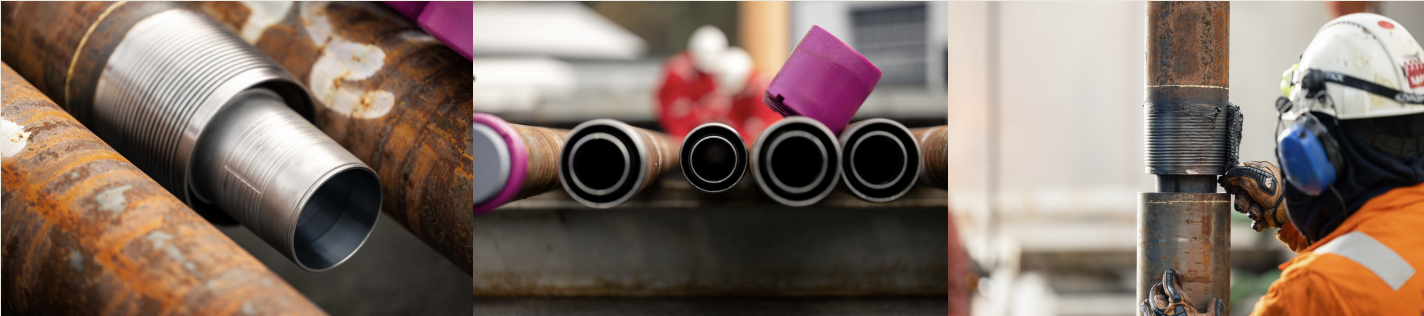
Figure 2: Vacuumized pipe-in-pipe solution.
Benefits of a closed-loop well solution
There are several benefits of the closed-loop solution in general, and when compared to the conventional doublet hydrothermal solution.
The solution is largely independent of geology, meaning wells can be drilled in most locations to depths where subsurface temperatures are high enough to deliver heat without heat pumps. That also means that there is no exploration risk – a well will always produce heat.
As the general electricity requirement is only for a 45 kW circulation pump, the solution has a COP of between 30 and 50, depending on the thermal output of the well, minimizing the burden on the electrical grid.
With a very high COP, this solution has minimal CO2 emissions, and the heat pump’s electricity demand could easily be met by a green source.
In a closed-loop system, no fluids circulate within the geological layers, leaving the geology undisturbed. No downhole equipment is required; the circulation pump and surface equipment are based at surface level, gathered in an easily accessible 20-foot container. The operating cost is therefore limited to maintenance. The 20-foot topside facility can be placed below a parking lot or field, requiring only a 50 m by 50 m area around the well. The landscape footprint is therefore minimal. In addition, the initial water requirement is minimal.
With the right design, there will be no tear, wear, and corrosion, which is why the solution should work for more than 50 years.
The road to geothermal everywhere
To further develop the closed-loop solution, the technology is currently being advanced through ongoing demonstration projects.
Testing in Norway
In late 2024, the vacuumized pipe-in-pipe solution was installed at the Ullrigg test site in Stavanger, Norway, and 525 m of pipe was tested. The solution was run to the planned depth for testing the equipment design, measurements, and procedures. The insulation effect and the pipe-in-pipe design were successfully tested for further development.
Installation in a suspended geothermal well north of Berlin
A full installation began in the second half of 2025, with the first heat produced in mid 2026 at Groß Schönebeck, 50 km north of Berlin, Germany.
The Groß Schönebeck site serves to investigate the sustainable provision of geothermal energy from two deep wells completed as an Enhanced Geothermal System (EGS) and is managed by GFZ Helmholtz-Zentrum für Geoforschung in Potsdam.
The GrSk 4/05 well was drilled in 2006 to extract thermal water and to form a doublet system of hydraulically connected boreholes, with a measured temperature of 145°C at 4.4 km. However, high flow rates could not be sustained, and the well is currently suspended.
In late summer 2025, the well’s dimensions and structural integrity were tested and confirmed to be suitable for recompletion. The lowest part of the well, with the perforated section used initially to flow water, will be isolated to create a closed-loop space before installing the closed-loop well completion.
The vacuumized pipe-in-pipe system, consisting of a 3.5-inch inner pipe and a 4.5-inch outer pipe, will be installed to maintain a continuous vacuum from the surface to a depth of 3.2 km. The geothermal performance of the well, specifically the transfer of heat from the geological formations, will be tested to assess the effects of varying flow rates. The average modelled output is 0.4 MW.
The overall performance of the formation’s heat transfer and the vacuumized pipe-in-pipe solution will be evaluated over a one-year period. The geothermal performance test of the solution will further qualify the completion tubing design and structural modelling for circulating varying fluid temperatures in the well.
The Aalborg well
In a collaboration between Aalborg Forsyning and Green Therma — and project partners also including Aarhus University, Aalborg University, Danish and Greenland Geological Survey, and Energy Cluster Denmark — a geothermal demonstration plant will be built in Storvorde. Green Therma will operate the facility and deliver heat for the next 30 years through a heat offtake agreement with Aalborg Forsyning (Figure 3). The project is supported by the Danish Energy Technology Development and Demonstration Programme (EUDP) with 11.5 mill Euro.
In late 2026, the geothermal well with a slanted section will be drilled, and the vacuumized pipe-in-pipe solution will be installed. The well will deliver geothermal heat directly without heat pumps to the city’s district heating network starting in 2027 (Figure 4).
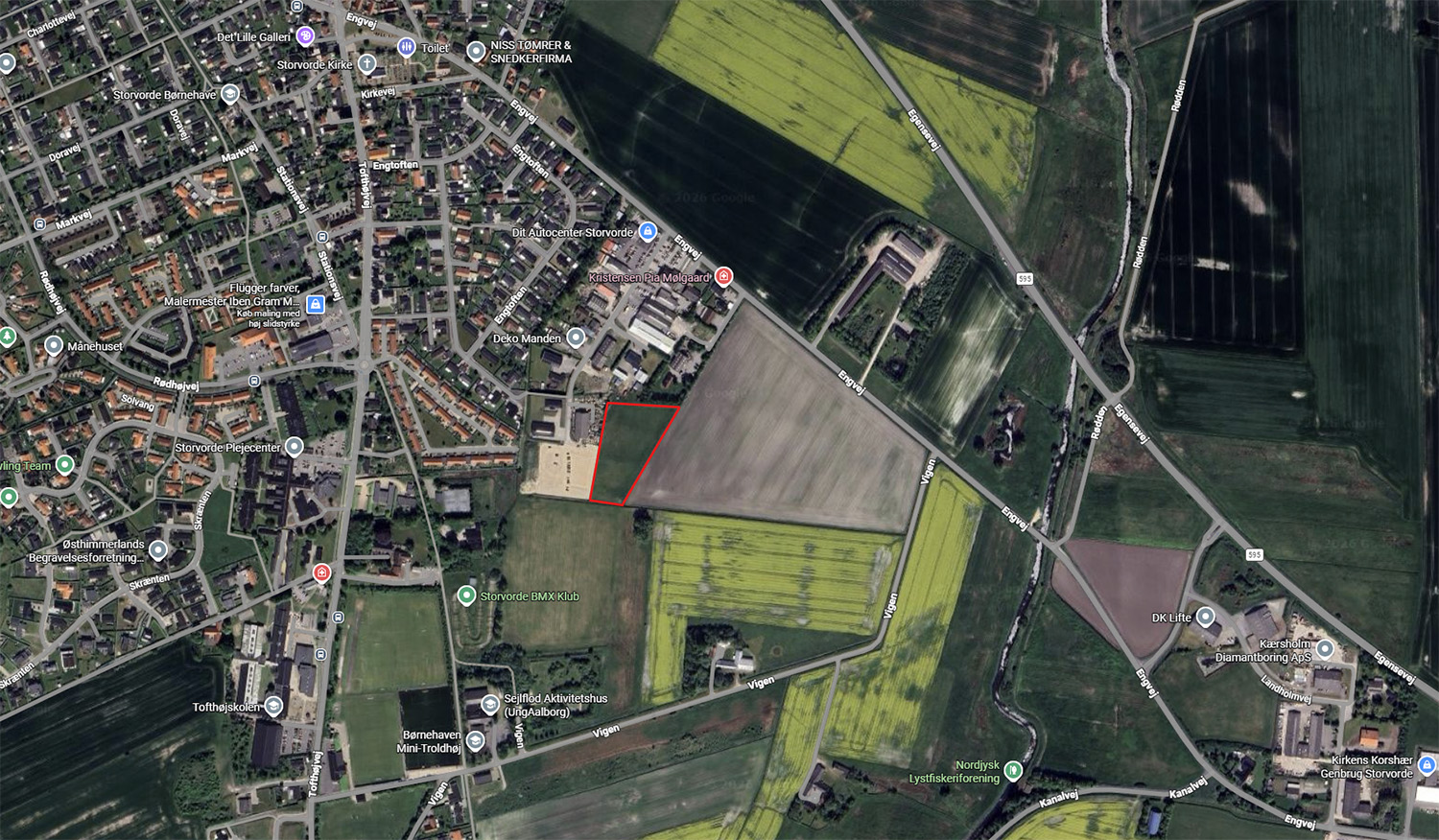
Figure 3: Storvorde well location
The Storvorde location was chosen for its favourable underground geological conditions and proximity to the existing district heating network. These two factors are crucial for the plant to be established. When the plant is completed, it does not take up much space on the surface.
Prior to drilling the well, a 2-dimensional seismic survey of the subsurface will be conducted by trucks driving along roads in the area around Storvorde, emitting a pressure wave into the ground and recording the response. The seismic acquisition results in a better understanding of the local geology, enabling optimization of the final well design.
The total well length is 7 km: 4–5 km vertically, followed by a 2–3 km horizontal section. The vacuumized pipe-in-pipe solution, consisting of a 4.0-inch inner pipe and a 5.5-inch outer pipe, will be installed to maintain a continuous vacuum from the surface to 7 km.
With a geothermal temperature increase of roughly 30°C per km, a virgin temperature of 120–150°C is predicted, with a long-term minimum of 80°C at the surface for more than 50 years, while the return temperature from the district heating grid after heat exchange will be around 40°C. The only energy demand is a 45 kW for a circulation pump for <2 MW well.
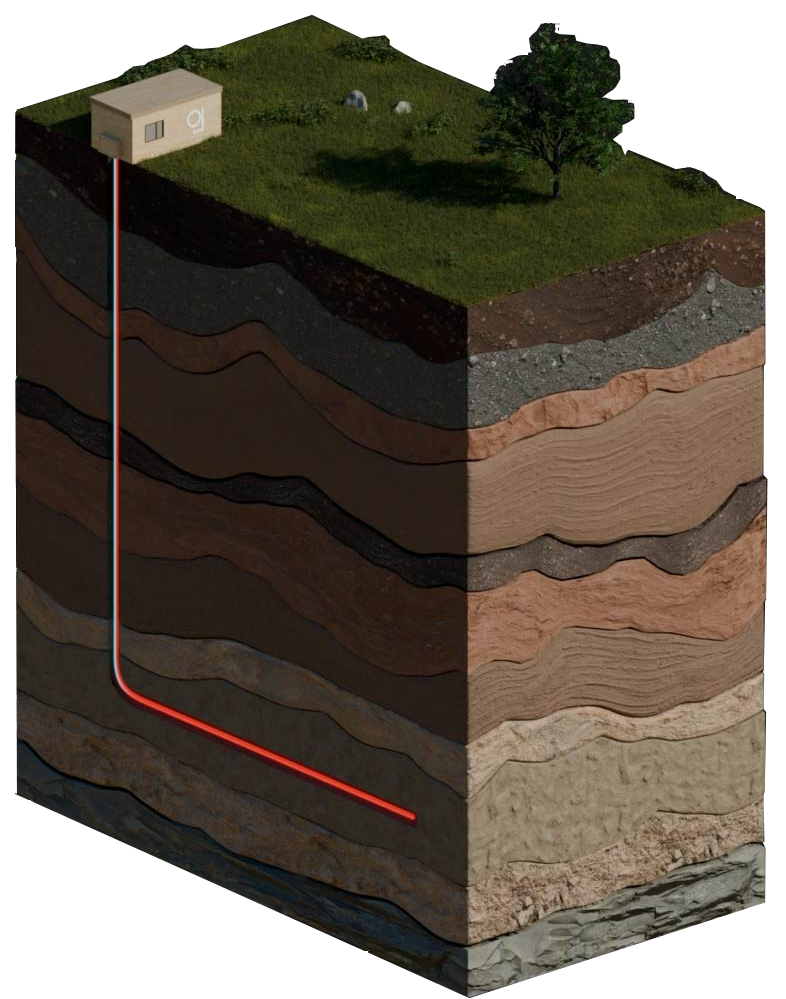
Figure 4: Schematic subsurface model.
Becoming competitive through technology transfer from the oil and gas industry
Previously, the economics of coaxial closed-loop geothermal solutions has been questioned because they cannot produce sufficient geothermal heat at a competitive price. This issue is addressed through reduced heat loss from the vacuumized pipe-in-pipe solution, the long lateral well section increasing the heat uptake area, and industrialization of the geothermal drilling process.
A long horizontal section to harvest heat is a best practice and an improved well design, especially from the USA onshore unconventional oil and gas industry. The designs have demonstrated the ability to drive the major production increase in oil and gas production since 2010, and horizontal wells have become the predominant method when drilling for oil and gas in the USA, with more than 75% of all newly drilled wells having a horizontal section.
In a 2024 International Energy Agency report, it was estimated that 80% of the investment required in a geothermal project involves capacity and skills that are common in the oil and gas industry. Furthermore, it was estimated that with the engagement from policymakers and the oil and gas industry, the costs for next-generation geothermal wells could decrease by up to 80% by 2035.
What is next: A multi-well geothermal project
While the operations in Aalborg involve a single well, the plan for future projects is to take a “multi-well” approach across global sites, drilling a sequence of 5–10 wells from a single surface location, each with horizontal sections extending in different directions (Figure 5). This approach will reduce costs per well by minimizing rig mobilization expenses and leveraging drilling efficiency through repetition.
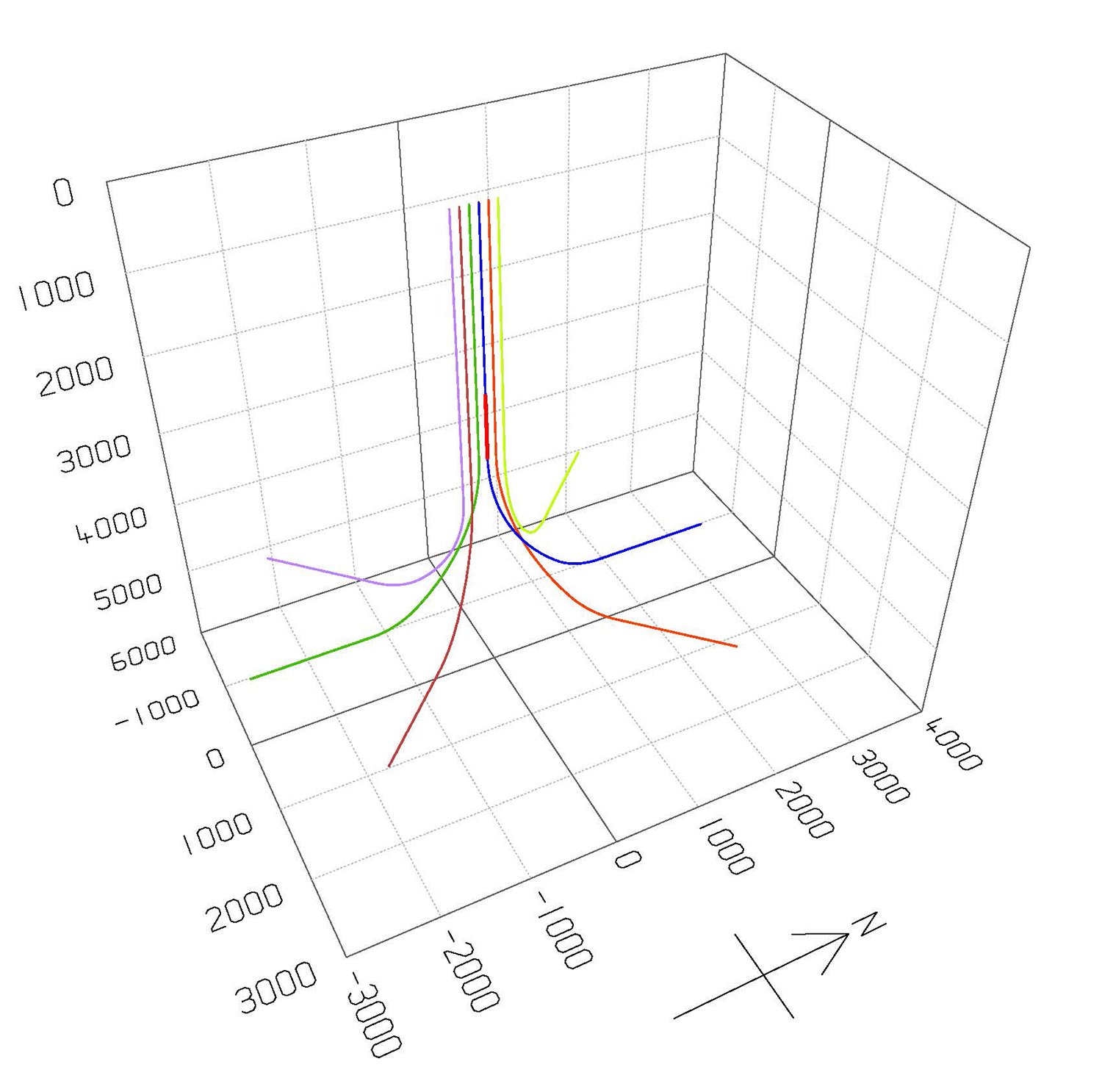
Figure 5: Example of a 5-well closed-loop geothermal well design.
For further information, please contact: Kim Gunn Maver, at kgm@greentherma.com