Ireland’s energy transition is often described in terms of wind turbines, electrification, and interconnectors. However, beneath this visible transformation lies a quieter, more strategic opportunity – one that could define the success of renewable power systems across Europe. That opportunity is thermal energy storage (TES) – integrated into district heating (DH) networks.
By John O’Shea, Senior Energy Systems Analyst / Heat & Electricity Lead, Codema – Dublin’s Energy Agency
Published in Hot Cool, edition no. 3/2026 | ISSN 0904 9681 |
Codema’s HeatNEWS research, funded by the Sustainable Energy Authority of Ireland, shows that TES is not merely a supporting technology for heating systems. It is emerging as one of the most powerful enablers of cost-effective decarbonisation in electricity systems dominated by variable renewables.
Ireland is an island nation with limited interconnection and one of the highest wind penetration rates in Europe. In this context, thermal storage is proving to be a critical flexibility resource. When heat and power are planned together, TES becomes far more than a hot water tank. It becomes strategic infrastructure.
Ireland: A glimpse into Europe’s energy future
Ireland operates a relatively small, isolated electricity system with limited interconnection to neighbouring markets. At the same time, it has a high proportion of wind power. Wind now represents over 40% share of generation, and this share will increase further in the coming decade. This combination of high renewable penetration and limited cross-border balancing creates a structural need for flexibility.
During windy periods, electricity prices fall, and carbon intensity drops significantly. During low-wind periods, prices rise and carbon intensity increases. Managing these fluctuations without overbuilding grid infrastructure or relying excessively on fossil-fuel backup is the central challenge of the energy transition. This is where thermal energy storage enters the picture.
District heating systems equipped with TES can shift electricity demand from high-carbon, high-price periods to low-carbon, low-price periods. Unlike many other loads, heat demand – when paired with storage – can be decoupled from real-time electricity production. In other words, heat can be produced when the electricity system needs it and delivered when people need warmth.
The cost and space advantage: TES vs batteries
Energy storage discussions are often dominated by lithium-ion batteries. While batteries play an important role in short-duration balancing, Codema’s analysis demonstrates that, when it comes to heat storage, thermal systems offer significant advantages in cost, resource efficiency, and spatial footprint.
Large-scale tank thermal energy storage (TTES) typically costs around 1% as much as battery energy storage systems (BESS), giving it roughly a 100-fold cost advantage. We see a similar pattern when it comes to space efficiency. According to the HeatNEWS analysis, battery systems typically require 35–45 m² per MWh, while large-scale tank storage requires just 2–7 m² per MWh. For urban district heating systems, where land availability matters, this difference is transformative.
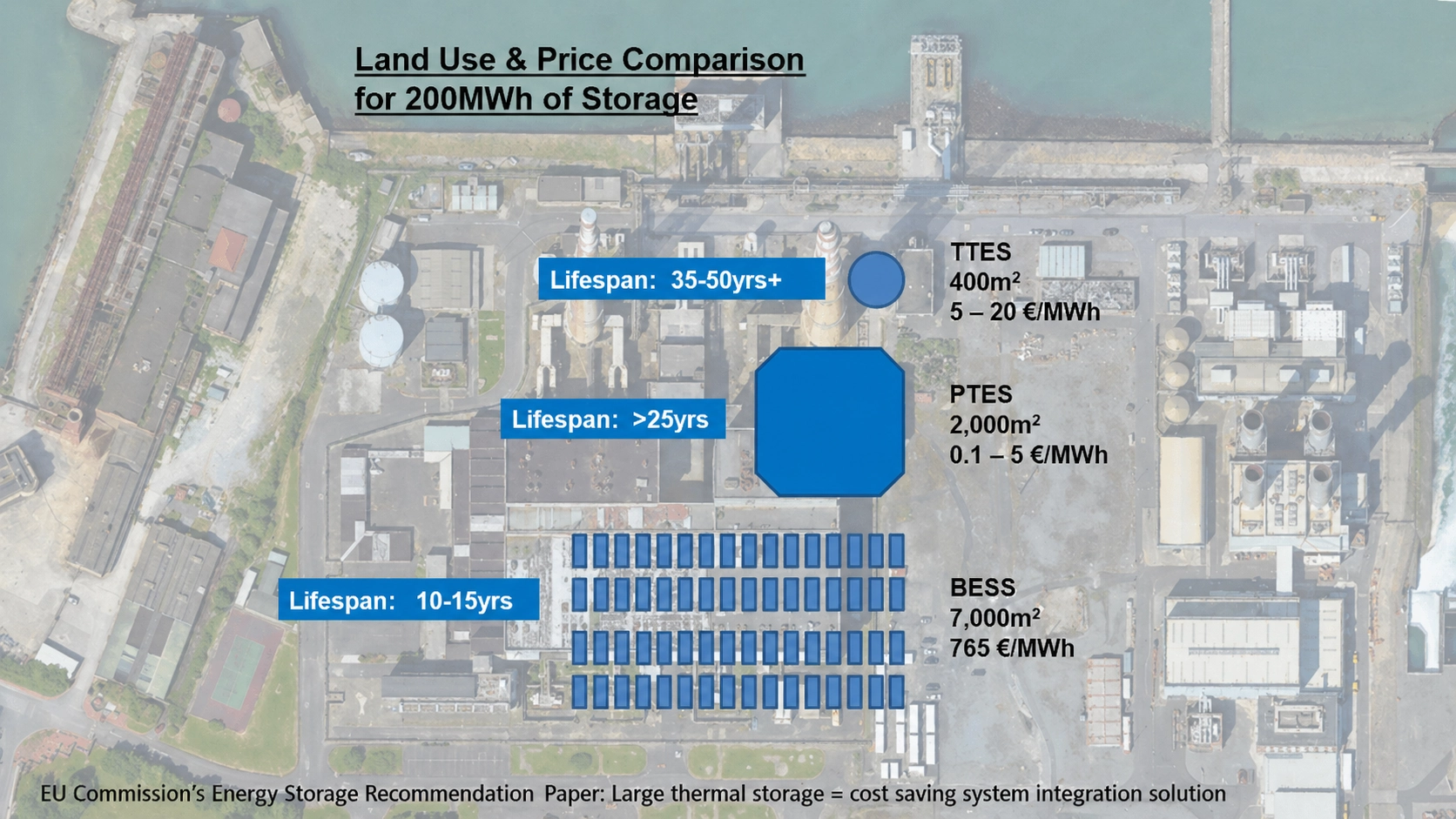 Figure 1: Cost and land use comparison of large-scale tank thermal energy storage (TTES), pit storage (PTES), and battery energy storage systems (BESS) – 200MWh installation, Source: Codema
From a materials perspective, the contrast is even more striking. Codema’s resource-efficiency comparison shows that battery systems require approximately 9 tonnes of materials per MWh of storage, compared to approximately 3 tonnes per MWh for tank-based TES, since most of the TES mass is simply water.
Batteries rely heavily on metals and critical minerals such as lithium, copper, aluminium and graphite, all of which carry supply-chain and sustainability risks. Thermal storage, by contrast, relies on water and steel – abundant, recyclable materials with long lifetimes.
This is not to suggest batteries are unnecessary. Rather, it highlights that, in terms of bulk, long-duration storage aligned with heating systems, TES is simply the more resource-efficient solution.
Unlocking greater CO₂ savings by recognising seasonal variations
Electrification alone does not automatically maximise emissions reductions. The timing of electricity consumption matters.
Ireland’s carbon intensity varies seasonally and daily depending on wind availability. Winter months – which coincide with peak heating demand – are also periods of high wind generation. This creates a unique synergy; when wind output is high, electricity is both cheaper and cleaner.
Codema’s analysis shows that, when district heating is combined with thermal storage, it can deliver 21% greater CO₂ savings than electrification of loads that remain steady throughout the year.
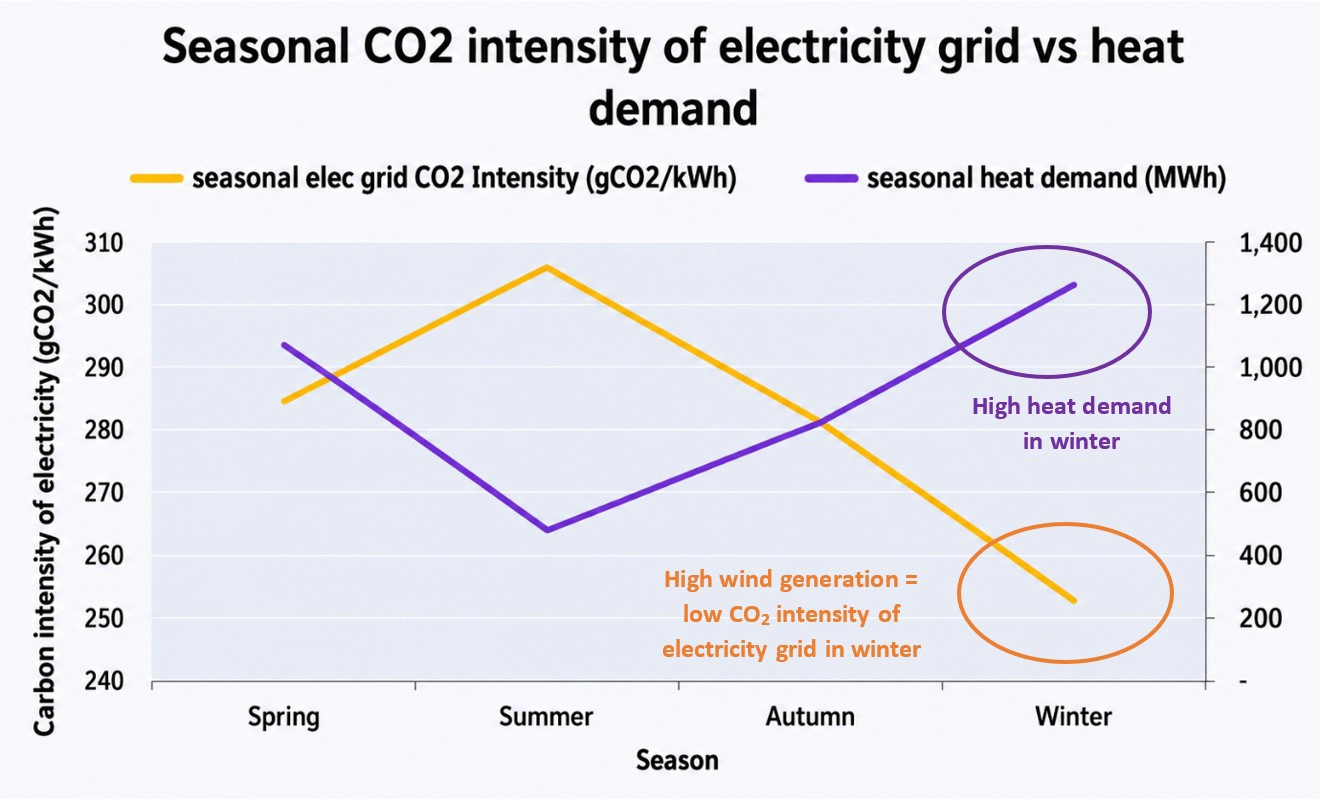 Figure 2: Seasonal electricity grid carbon intensity vs heat demand
Grid services: TES as a system asset
The value of TES extends beyond emissions and cost savings. It also delivers measurable benefits to the electricity grid.
Ireland’s Climate Action Plan sets ambitious flexibility targets. HeatNEWS modelling indicates that TES-enabled district heating could deliver approximately 76% of Ireland’s flexible-demand target for 2030. This is a remarkable finding.
TES can provide:
- Peak demand reduction
- Renewable curtailment absorption
- Congestion management
- Load shifting
- Ancillary service participation (frequency response, etc.)
One of the most striking modelling results? Electrifying heat without storage could increase peak electricity demand by over 30%, whereas electrification combined with TES limits this increase to approximately 12–13%. This difference represents roughly 1 GW of avoided peak demand – equivalent to deferring the need for a large power plant or major network reinforcement.
By absorbing excess wind generation that might otherwise be curtailed, TES reduces wasted renewable energy and increases system efficiency. In constrained regions, it can reduce the need for costly grid upgrades. Thermal storage effectively transforms district heating networks into distributed, dispatchable energy buffers.
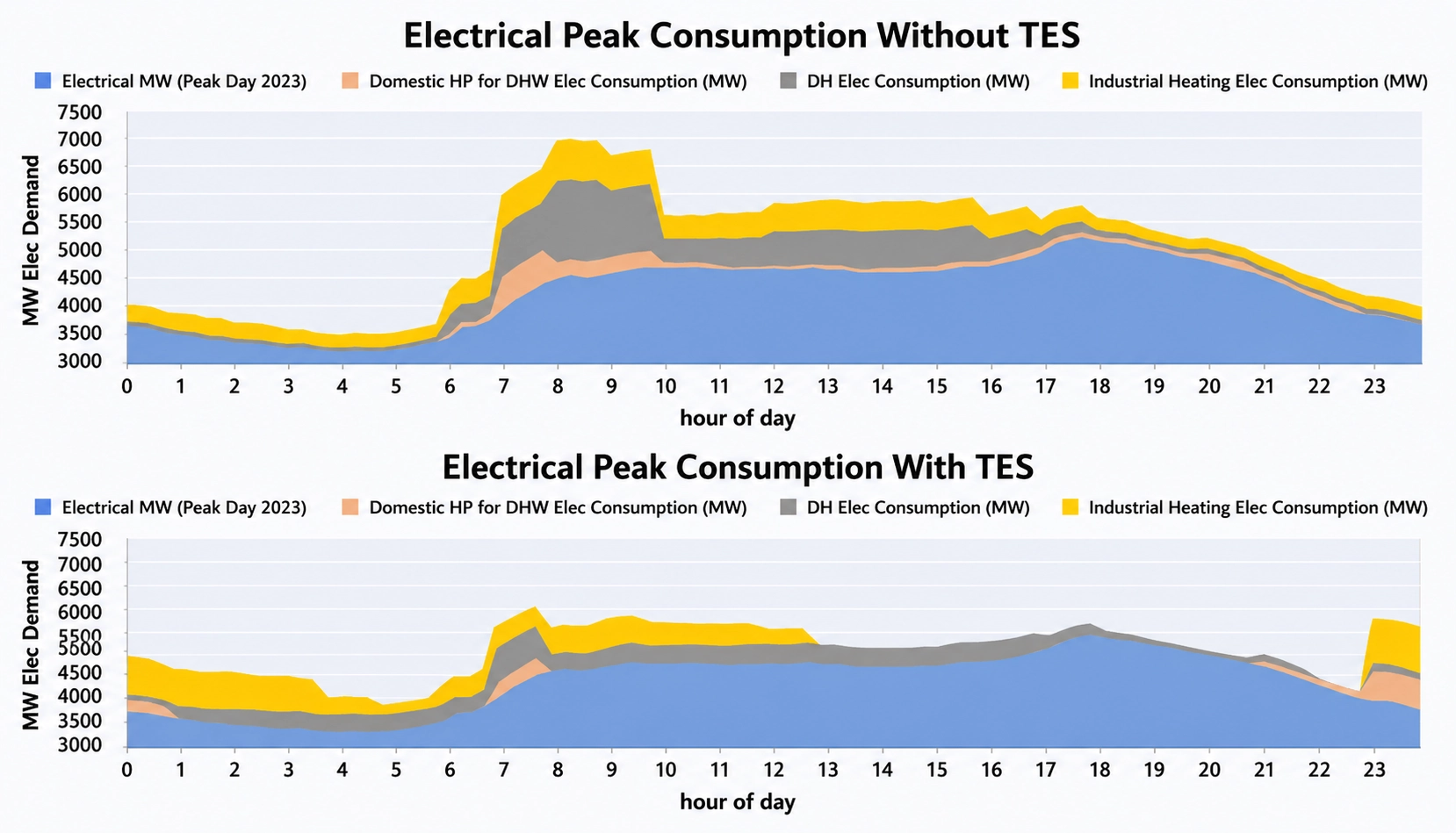
Figure 3: Difference in national peak electrical consumption both with and without TES
Case studies: Learning from Europe
The HeatNEWS case studies report covers a wide range of heat storage projects, from small hot water tanks in homes and businesses to large underground and district heating storage systems.
It also includes newer options such as sand, brick, and rock-based heat storage for industry, phase change materials, and thermochemical storage. These projects demonstrate that TES is not theoretical. It is commercially deployable and already transforming heating systems across Europe.
Aside from differences in storage media, it is also worth noting how scale has an impact on the performance of TES. The image below shows how heat losses are dramatically lower in large-scale TES primarily due to a higher volume-to-surface area ratio. It also shows that domestic thermal storage is typically limited to load shifting for DHW.
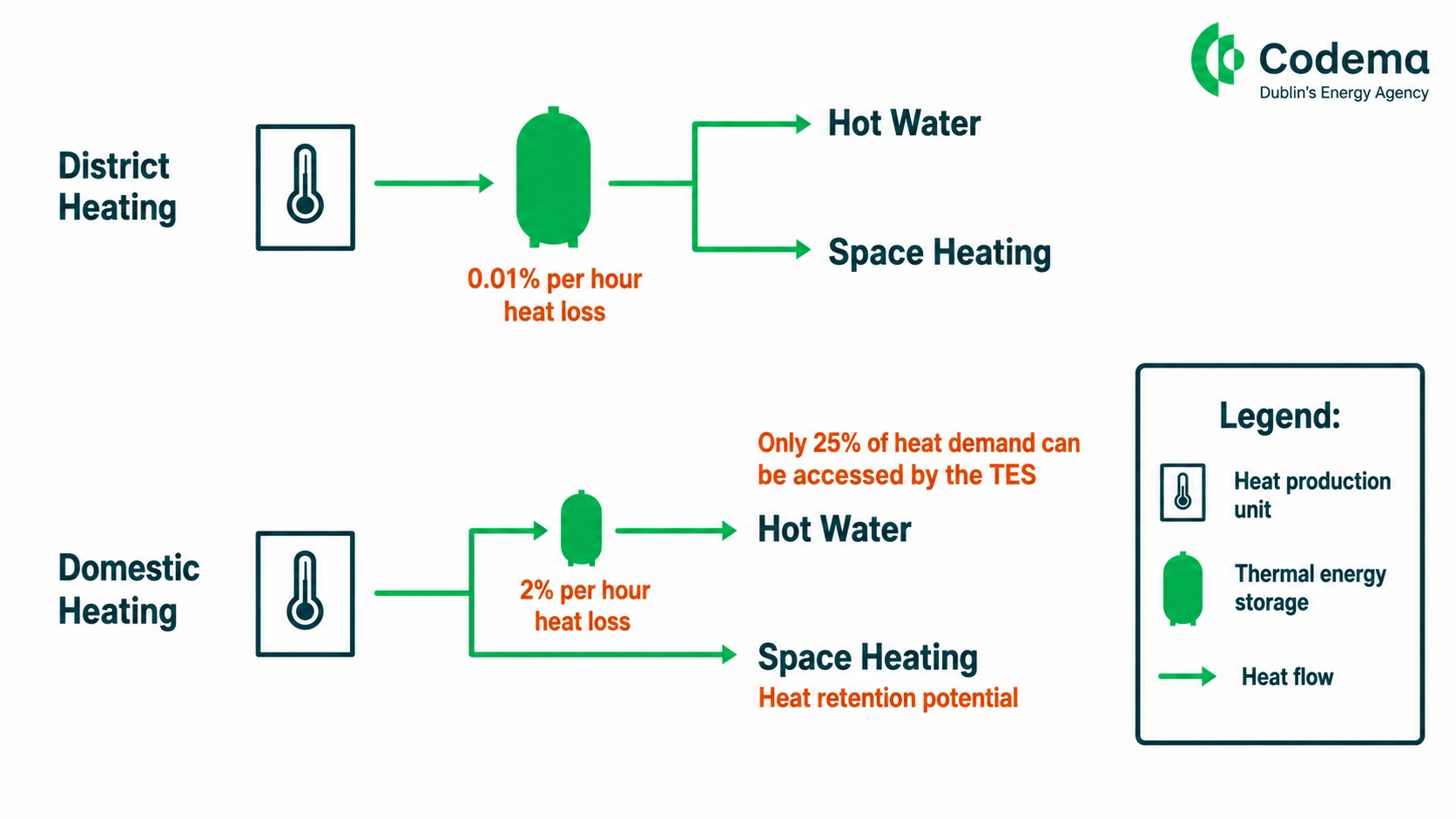 Figure 4: Typical heat loss and heat demand access across district and domestic TES systems
Resource efficiency and strategic autonomy
In a world increasingly concerned with supply chains and critical minerals, the resource efficiency of TES becomes strategically important.
Large-scale water-based storage consists predominantly of water — up to 94% of its mass — with steel accounting for a small fraction. As tank size increases, the material intensity per unit of storage decreases further due to surface-area-to-volume efficiencies. By contrast, battery systems scale almost linearly in terms of demand for materials.
From a policy perspective, this means TES offers:
- Lower exposure to global commodity price volatility
- Reduced critical mineral dependence
- Long asset lifetimes
- High recyclability
In the context of European strategic autonomy, thermal storage strengthens resilience.
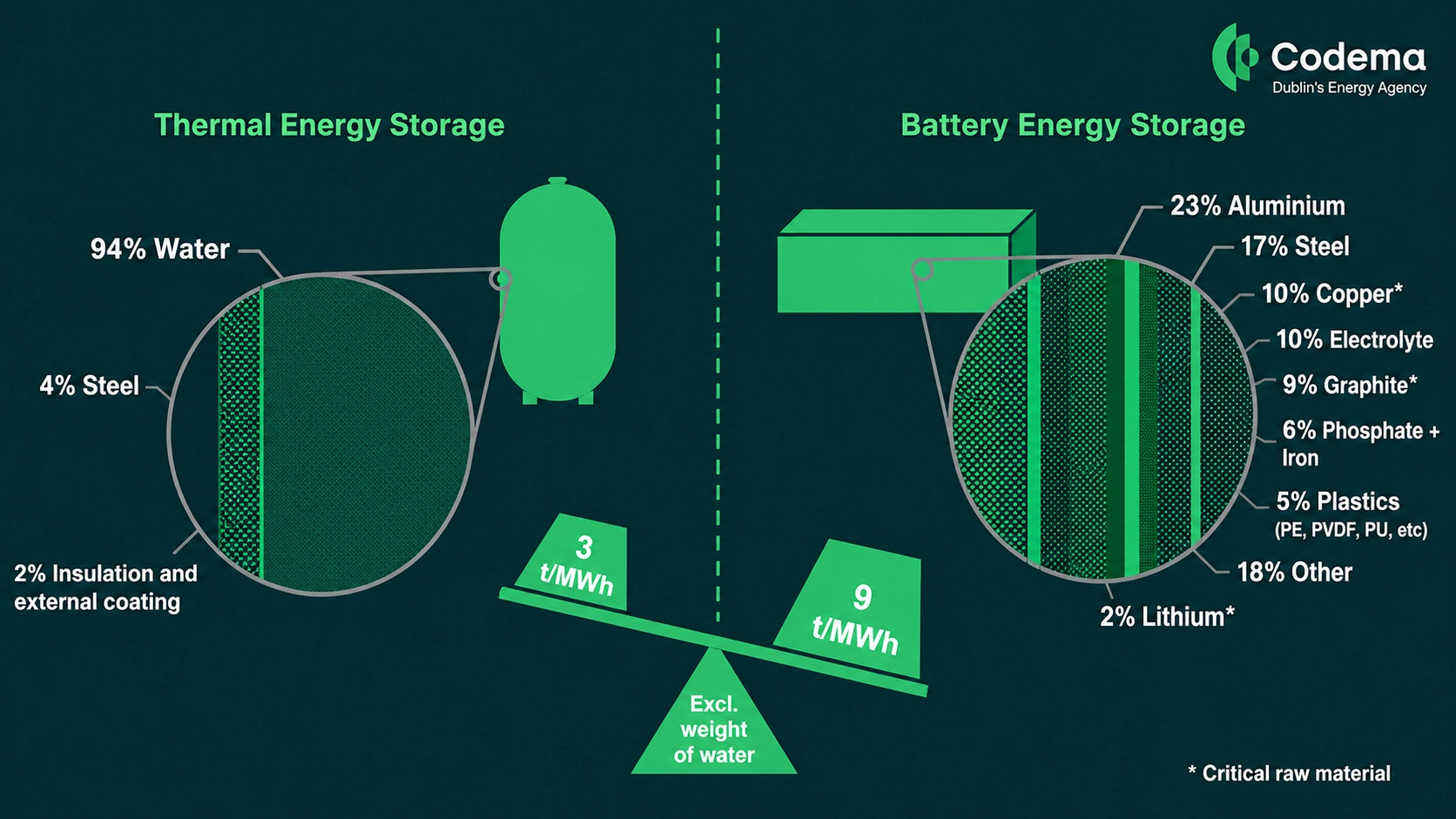 Figure 5: Resource efficiency comparison for large-scale energy storage (TTES and BESS at 5MWh scale), Source: Codema
Market barriers and policy opportunity
Despite its clear advantages, TES is often undervalued in electricity market design.
Balancing markets, capacity markets, and congestion mechanisms are typically structured around battery response characteristics. Thermal storage, while capable of delivering bulk, long-duration flexibility, may not always fit neatly into existing product definitions.
Codema’s Policy & Market Roadmap identifies several barriers:
- Lack of formal recognition of thermal storage as a flexibility asset
- Tariff structures that penalise electrified heat
- Limited procurement of non-wire alternatives
- Administrative complexity for new flexibility providers
Addressing these barriers could unlock significant system value at a lower cost than alternative flexibility investments.
Planning heat and power together
Perhaps the most important insight from this research is conceptual rather than technical. When electricity and heating are planned separately, storage appears as an add-on technology. When they are planned together, storage becomes central infrastructure.
District heating networks equipped with TES:
- Reduces electricity system stress
- Enhances renewable integration
- Delivers cheaper heat
- Improves energy security
- Lowers material intensity
In Ireland’s island energy system, this integration is not optional. It is essential. Also, what happens in Ireland today will increasingly happen across Europe tomorrow as renewable penetration rises.
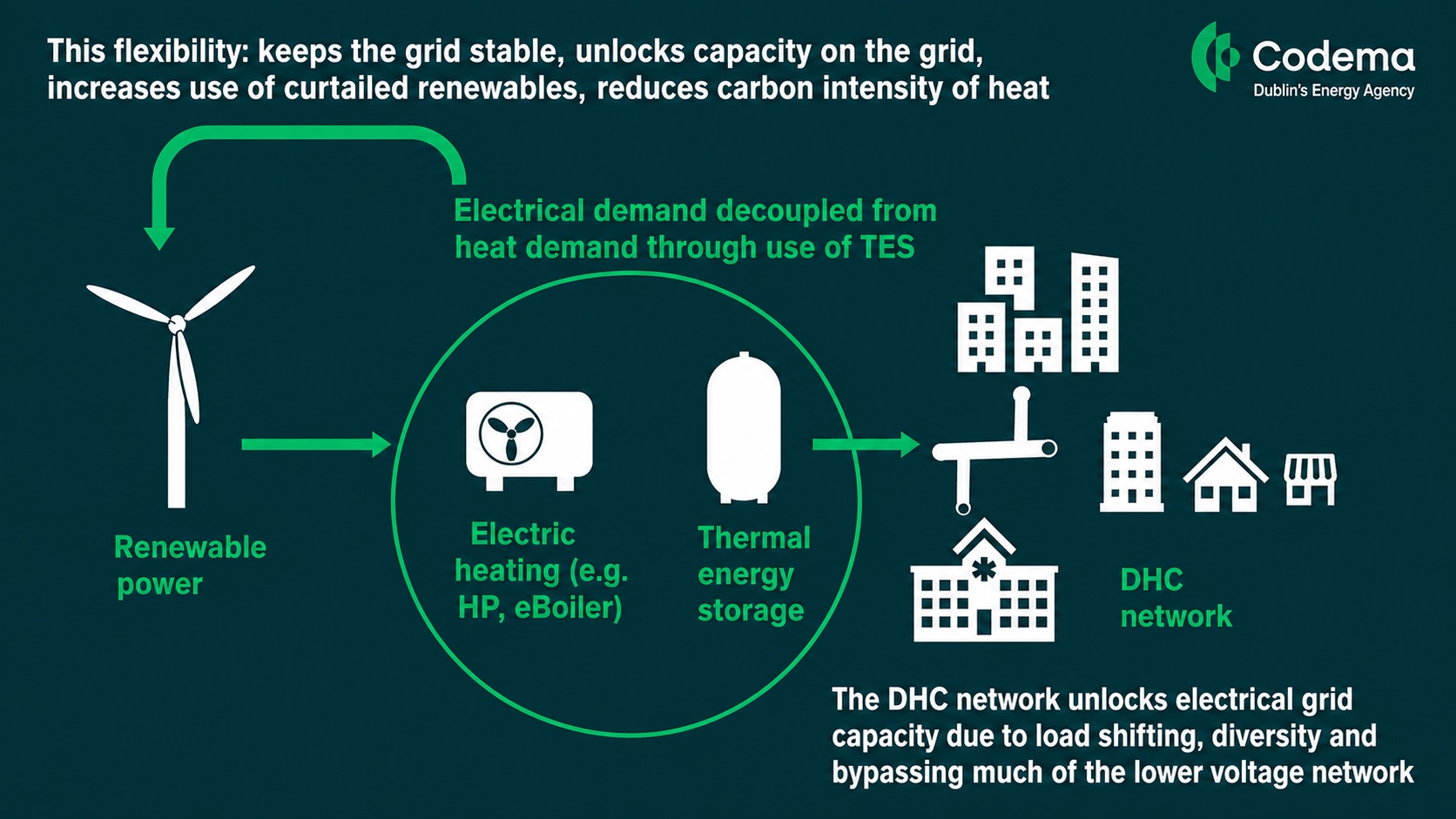
Figure 6: Integrated heat and power system diagram
A strategic asset for the energy transition
Thermal energy storage may lack the glamour of battery factories or offshore wind farms, but its strategic value is profound. Codema’s research shows that TES:
- Delivers storage at a fraction of the cost of battery energy storage systems
- Uses significantly fewer critical raw materials
- Reduces peak electricity demand by up to 1 GW
- Can meet approximately 76% of Ireland’s flexibility target
- Enables 21% greater CO₂ savings when intelligently aligned with seasonal carbon intensity
In an island nation with limited interconnection and a rapidly decarbonising power system, this is not marginal value. It is a system-defining value.
Ireland offers Europe a glimpse into its renewable future – where flexibility is the central currency of decarbonisation. In that future, thermal energy storage is not simply a heating technology. It is a vital piece of infrastructure.
Full details of this project are available on the Codema website
For further information, please contact: John O’Shea at john.oshea@codema.ie