The need for additional capacity is driving Sønderborg Varme to invest millions in a new heat pump and an electric boiler, with the ambition of becoming CO₂-neutral by 2029.
8 January 2026 | Original article in Danish by Karen Grønning Mikkelsen, the Danish District Heating Association
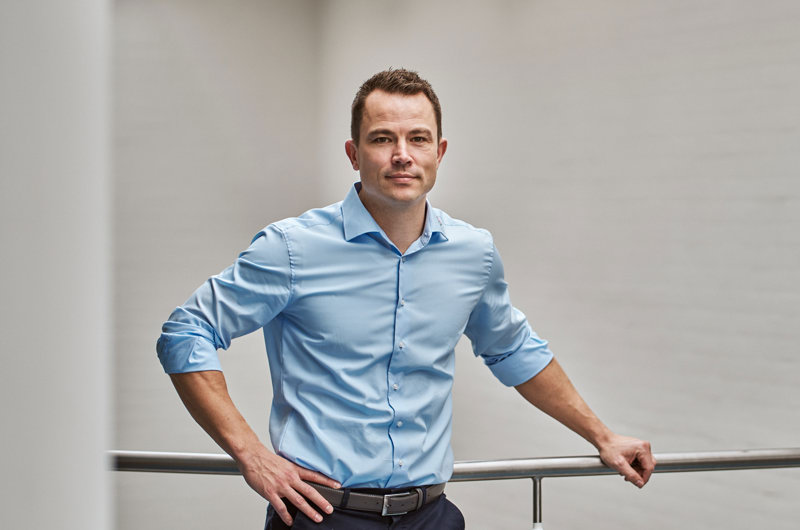
Photo above: Sønderborg Varme’s new CEO, Anders Kruse, looks forward to entering 2026 and continuing the electrification of heat production. Photo: Sønderborg Varme
In October 2025, the utility announced that its long-serving CEO, Erik Wolf, would retire at the end of the year. He leaves after 12 years at the southern Jutland utility, which is currently undergoing significant development.
In autumn 2025, the Danish district heating utility Sønderborg Varme also announced the appointment of its new CEO, Anders Kruse, who already lives in Sønderborg and brings solid management experience from the energy sector as well as strong local engagement.
“I have been a district heating customer for more than ten years. Sønderborg Varme is well known for being well run, and I am very much looking forward to getting properly started,” says Anders Kruse.
In addition to the change in management, the utility is undertaking two new district heating projects.
“This year, we are establishing a 25 MW electric boiler at the combined heat and power plant in Sønderborg, which we expect to be commissioned in 2026. In addition, the district heating plant on Sønderborg Landevej in Gråsten will receive a new 13 MW air-to-water heat pump, which is expected to enter operation in 2027,” Anders Kruse explains.
As such, Sønderborg Varme is one of many district heating companies accelerating electrification in these years.
Since 2019, Danish electricity consumption has increased by 3.05 TWh. The district heating sector accounts for 61% of this increase, driven by electrification through large heat pumps and electric boilers.
More flexible district heating
Sønderborg Varme is also rolling out district heating to the five villages of Nybøl, Vester Sottrup, Avnbøl, Ullerup, and Blans. As a result, the company needs more capacity and is investing in its future.
Until now, the towns of Blans, Ullerup, and Avnbøl have been supplied with gas. They now have the opportunity to connect to the district heating network. The food company Danish Crown has already chosen to become a heat customer and has invested nearly 3,35 million euros in its slaughterhouse in Blans to join the district heating system.
Danish Crown will annually consume heat equivalent to the total heat demand of approximately 1,200 standard homes. The agreement is between Sønderborg Varme and Danish Crown.
Sønderborg Varme currently supplies around 18,000 customers. With the expansion into the five villages, there is potential to add 1,600 additional customers.
“These are relatively large investments running into millions for a heat pump and an electric boiler, but they are both necessary and strategically important. They ensure the required capacity expansion and support our ambition to become CO₂-neutral by 2029,” says Anders Kruse.
According to the CEO, achieving this ambition requires access to green electricity starting in 2029. The investments in the 13 MW heat pump and the 25 MW electric boiler will also make Sønderborg Varme’s heat production more robust.
“By establishing a three-legged system consisting of electricity-based heat, biomass, and waste-to-energy, we gain greater flexibility and more options. In the longer term, this also allows us to eliminate gas from daily operations,” Anders Kruse explains, adding:
“We also gain opportunities to further develop our competencies and better utilise the heat sources we already have.”
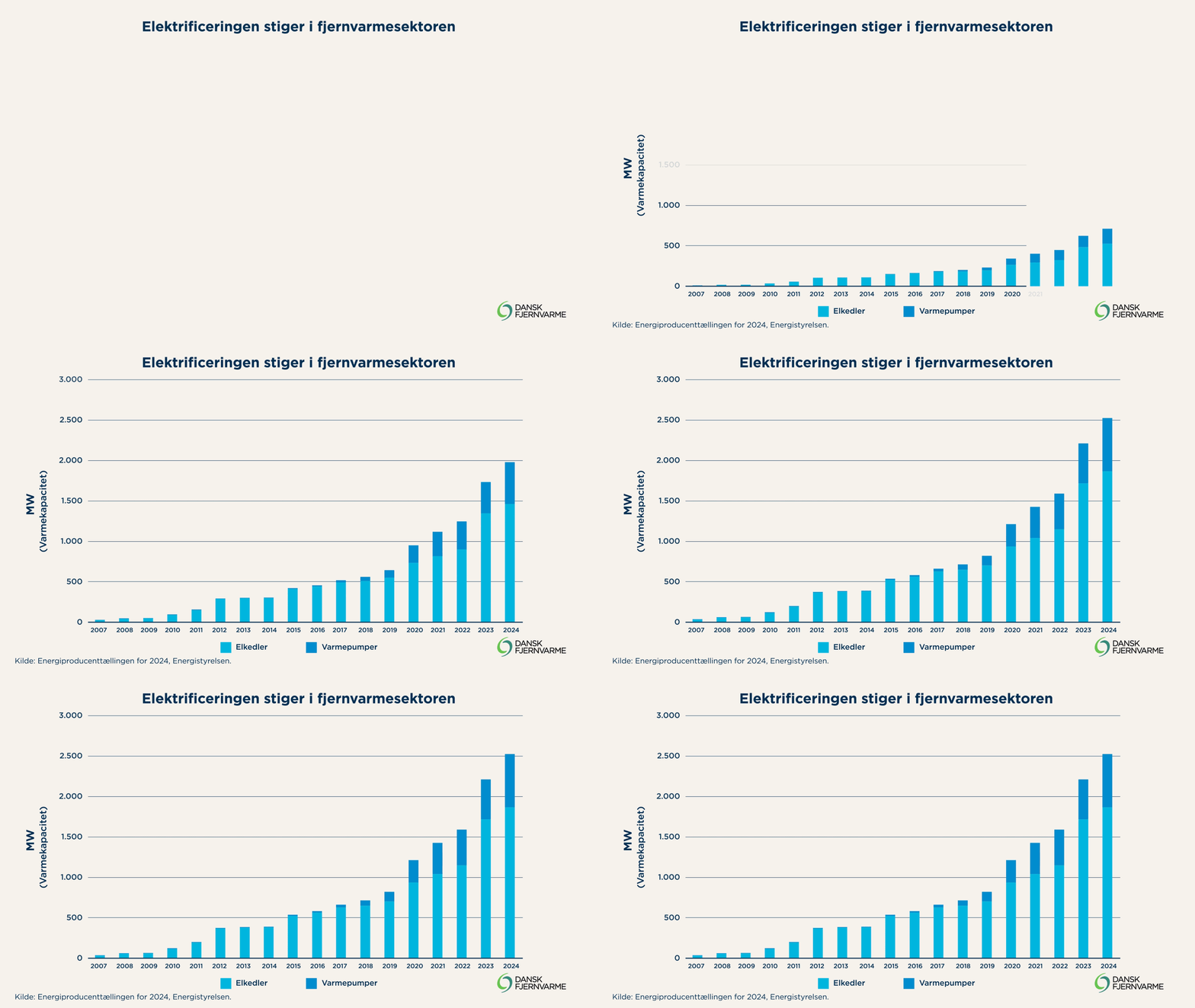
In 2024, 33 new electricity-based plants (heat pumps and electric boilers) were added with a combined heat capacity of 164 MW – the largest increase since 2020. Since 2019, total capacity from electric solutions has more than tripled.
Benefits for consumers
The annual price for a standard home supplied by Sønderborg Varme is 1600€, including VAT. Despite the utility investing millions in electricity-based heat sources, consumers are not expected to pay more. According to Sønderborg Varme’s projections, prices can be maintained at the current level.
“Our goal is to become CO₂-neutral by 2029 without additional costs for consumers, while future-proofing the utility and supporting the green transition,” says Anders Kruse.
He emphasizes that the district heating sector has electrified massively in recent years, and Sønderborg Varme is following this path because the development of heat production points toward renewable energy and because it benefits consumers.
“It is crucial for us that investments in the heat pump and electric boiler do not burden our customers, while contributing to our goal of CO₂ neutrality. When consumers in the five villages switch from gas to district heating, it helps reduce the municipality’s overall climate impact.”
The CEO stresses that the decision to invest in electrification was made well before he assumed the role.
Sønderborg Varme has conducted extensive analyses and looked 10 to 20 years ahead at future technology and the energy mix. In October 2025, the company announced a price reduction from 1 January 2026 to 1,590 € per year, including VAT, for a standard 125 m² home. In 2025, the price was 2.037€ for a standard 130 m² home.
Due to changes in the definition of a standard home, prices are not directly comparable; however, according to Sønderborg Varme, this corresponds to a savings of around 3%. The utility also states that its heat price is among the lowest 25% in Denmark.
The forecast is that prices will be maintained through 2029, unless unforeseen events occur, such as the 2022 energy crisis.
“This is not a decision based on opinions or assumptions. It is based on thorough, rigorous calculations conducted by Sønderborg Varme’s own professional staff in close cooperation with our advisers. Our ambition is to act as a watchdog for consumers and ensure a robust system capable of supporting the green transition,” the CEO explains.
________________________________________
This article was translated into English by DBDH with the assistance of AI tools. The content has been reviewed and edited by the editorial team.
 Curious to learn more?
Read the latest industry news on dbdh.org here.