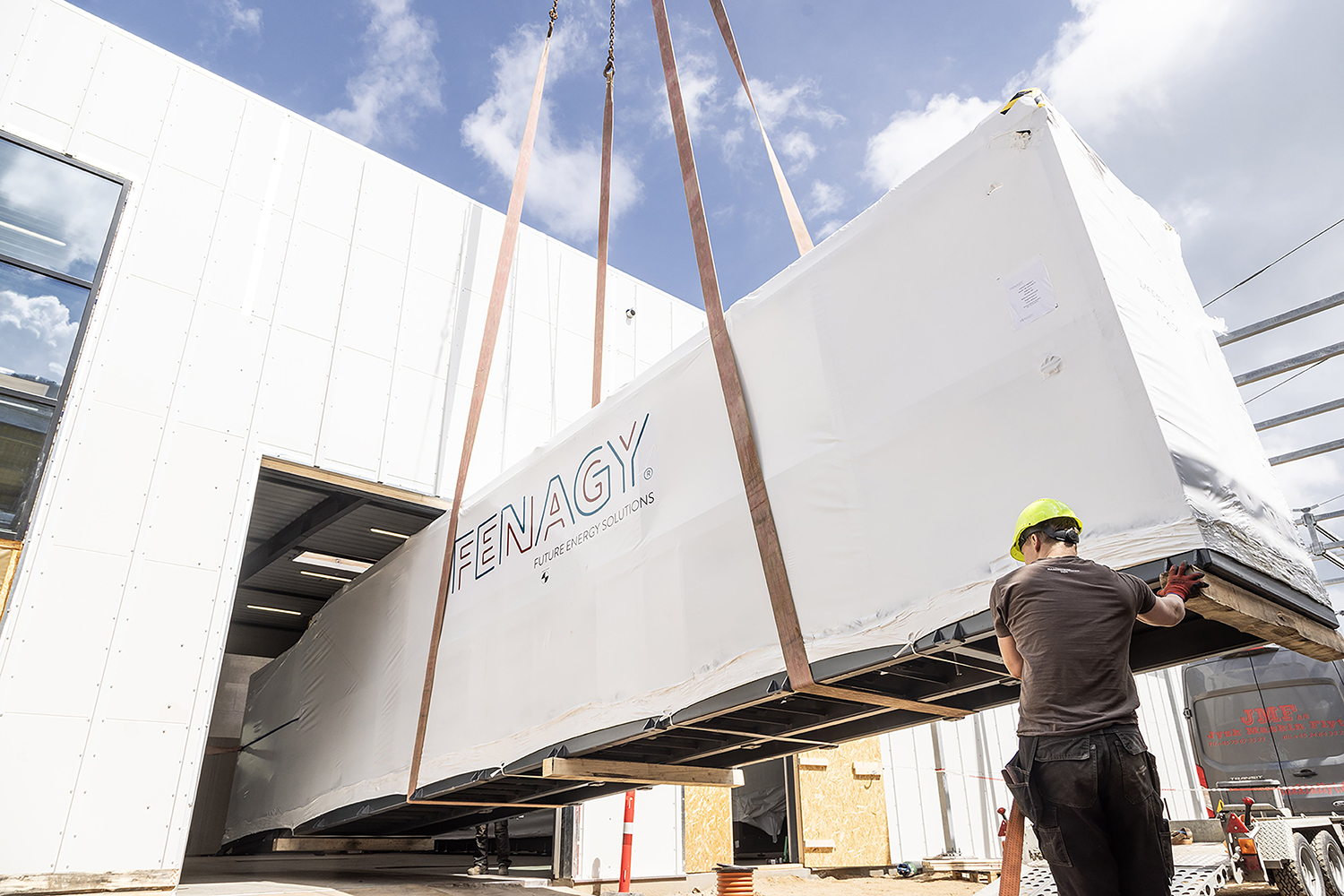
When a large heat pump leaves Fenagy’s factory in Denmark, the project is far from finished. Unlike many manufacturers, the company adheres to its systems throughout installation, commissioning, and operation – often long after start-up.
5 January 2026 | Original article in Danish by Anna Cæcilie Majholm, Energy Supply
Photo above: One of six heat pumps being hoisted into place in Billund. Photo: Fenagy
 When a large heat pump leaves Fenagy’s factory in Denmark, the project is far from finished. Unlike many manufacturers, the company adheres to its systems throughout installation, commissioning, and operation – often long after start-up.
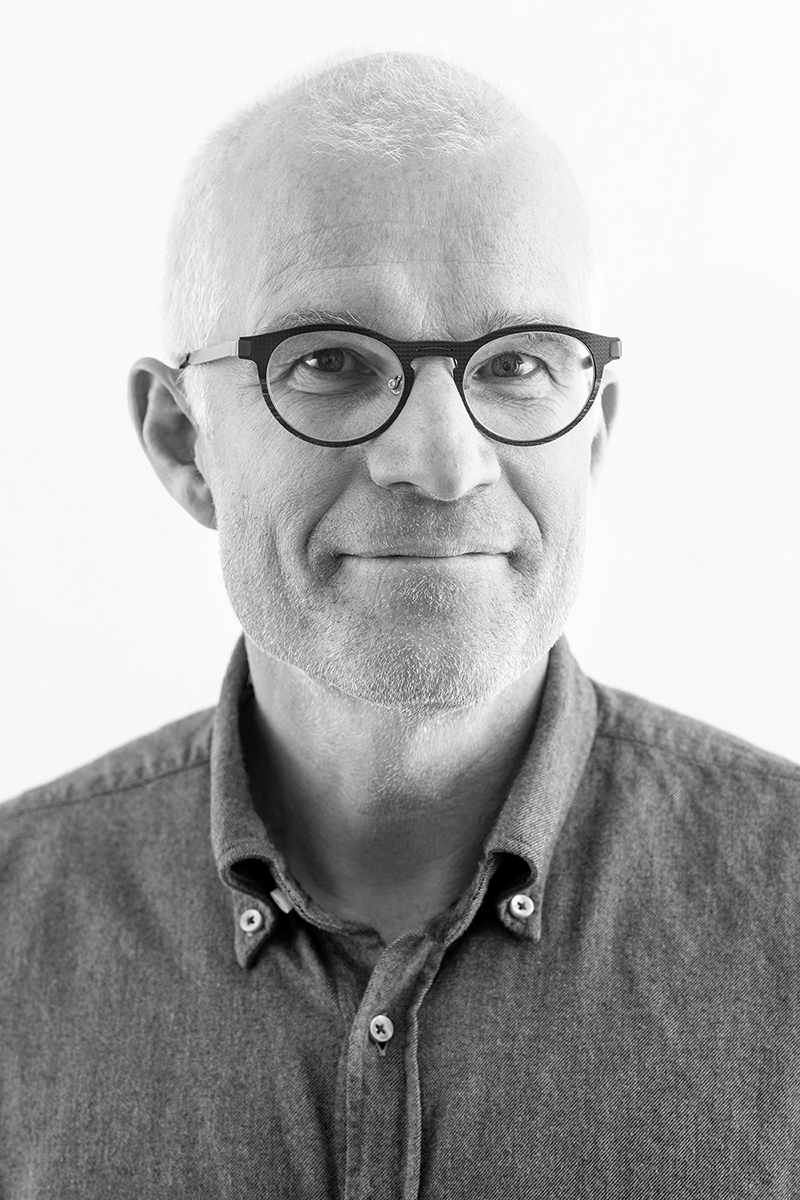
“If we were just a factory shipping a heat pump to another country, it would go wrong. That model simply doesn’t work for large heat pumps,” says CEO Kim Gardø Christensen.
Low market maturity is the real bottleneck
Fenagy is currently active in the UK, Germany, Finland, and Sweden. Across all markets, the challenge is the same: insufficient competence around large-scale heat pump systems.
“Installers and end users are used to boilers. Heat pumps are fundamentally different,” Christensen explains.
The knowledge gap is evident in basic questions about system design, heat sources, and operations. According to Fenagy, this is not a question of willingness, but of market maturity.
From product delivery to execution responsibility
In response, Fenagy has developed a high-involvement delivery model. The company remains physically present throughout the project lifecycle, working in parallel with local partners on installation, commissioning, and service.
“If we want projects to succeed, we have to take shared responsibility all the way,” says Christensen.
This approach is not framed as a premium service, but as risk management.
“You can destroy your reputation in a week. It takes years to rebuild. That’s why we follow our systems to the end.”
20% of resources spent on post-production
The model has structural consequences. Roughly 20% of Fenagy’s total man-hours are spent after the factory gate.
“That tells you how demanding this is – and how critical it is to get right,” Christensen says.
The post-production effort is commercially viable, but its primary strategic function is to enable international sales while protecting both the company’s and the industry’s credibility.
“I would honestly prefer not to do it. But without it, the risk would be too high.”
Growth with limits
The strategy works. Fenagy expects revenues exceeding DKK 400 million next year, split evenly between Denmark and international markets.
There is, however, a clear trade-off.
“We are less scalable. Building organisations and partner networks country by country takes time,” Christensen acknowledges.
Fenagy has chosen a slower, heavier, but more robust expansion model – one where growth is not measured by units shipped, but by systems that perform as intended.
This article was translated into English by DBDH with the assistance of AI tools. The content has been reviewed and edited by the editorial team.
 Curious to learn more?
Read Fenagy’s full company profile on DBDH.org.