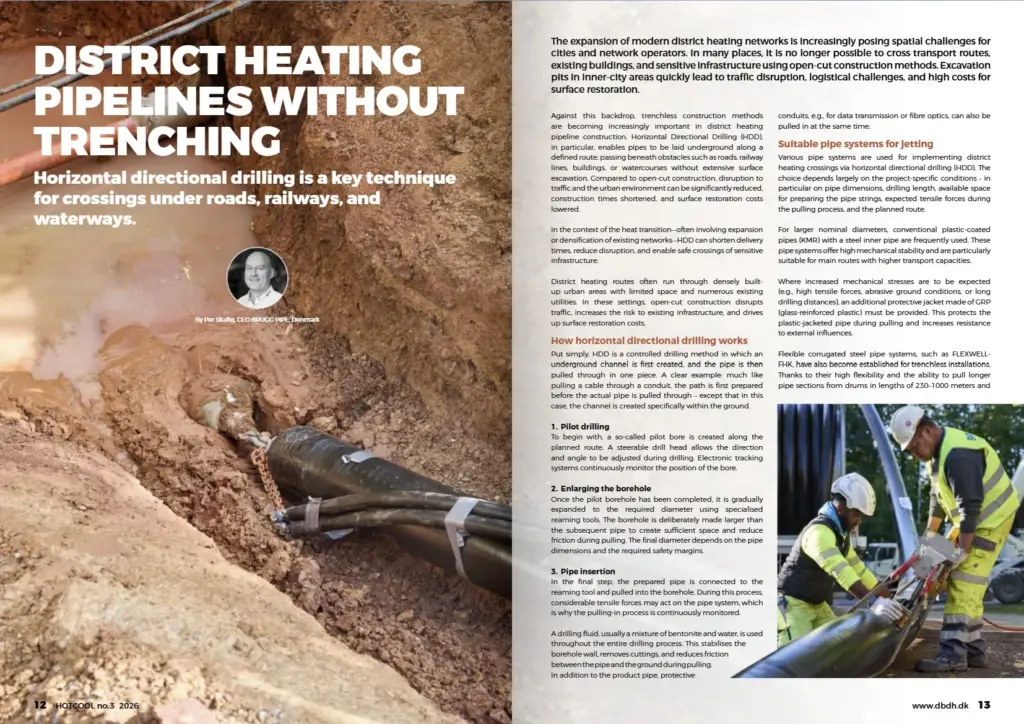
The expansion of modern district heating networks is increasingly posing spatial challenges for cities and network operators. In many places, it is no longer possible to cross transport routes, existing buildings, and sensitive infrastructure using open-cut construction methods. Excavation pits in inner-city areas quickly lead to traffic disruption, logistical challenges, and high costs for surface restoration.
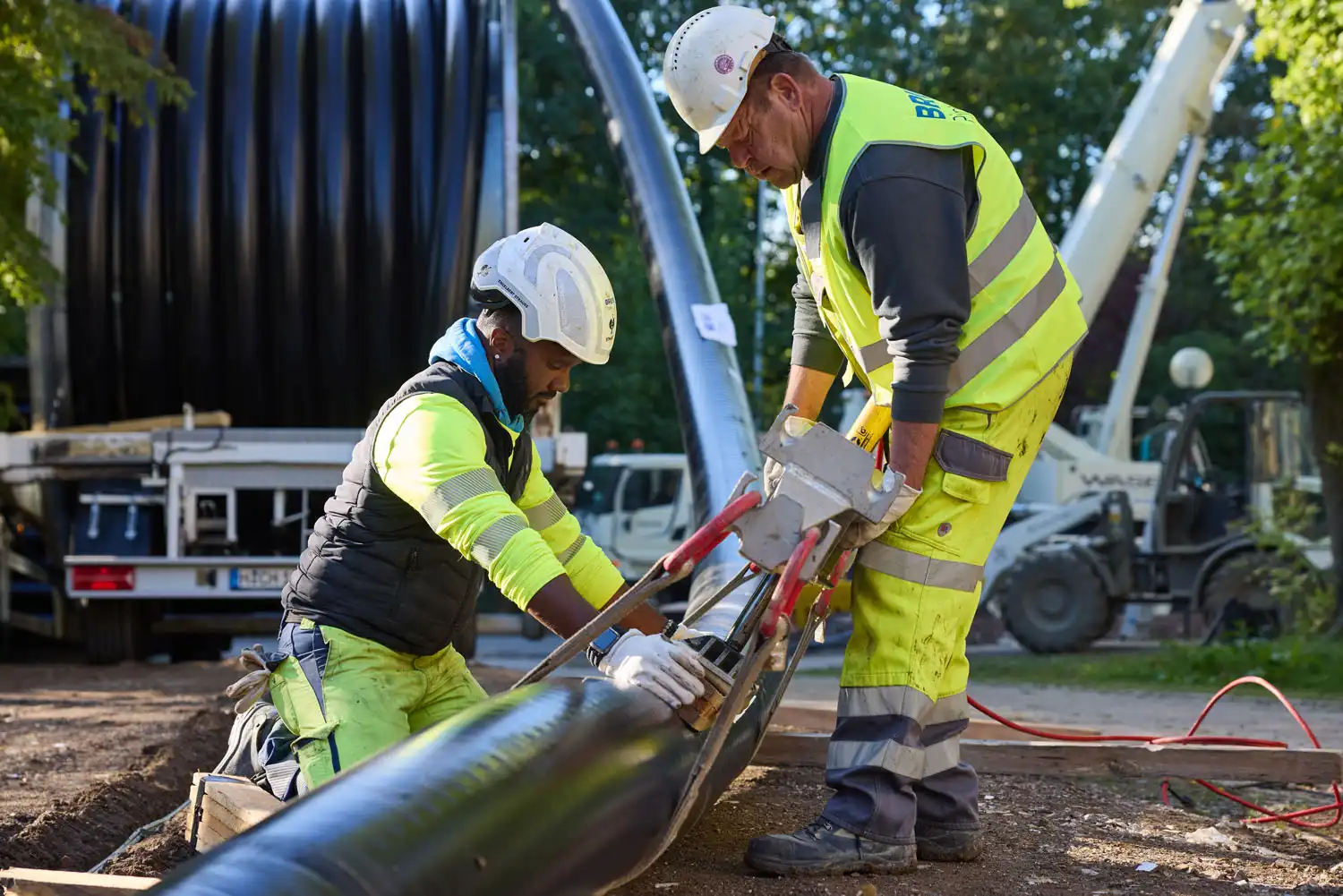
By Per Skafte, CEO, Brugg Pipes, Denmark
Published in Hot Cool, edition no. 3/2026 | ISSN 0904 9681 |
Against this backdrop, trenchless construction methods are becoming increasingly important in district heating pipeline construction. Horizontal Directional Drilling (HDD), in particular, enables pipes to be laid underground along a defined route, passing beneath obstacles such as roads, railway lines, buildings, or watercourses without extensive surface excavation. Compared to open-cut construction, disruption to traffic and the urban environment can be significantly reduced, construction times shortened, and surface restoration costs lowered.
In the context of the heat transition—often involving the expansion or densification of existing networks —HDD can shorten delivery times, reduce disruption, and enable safe crossings over sensitive infrastructure.
District heating routes often run through densely built-up urban areas with limited space and numerous existing utilities. In these settings, open-cut construction disrupts traffic, increases the risk to existing infrastructure, and drives up surface restoration costs.
Suitable pipe systems for jetting
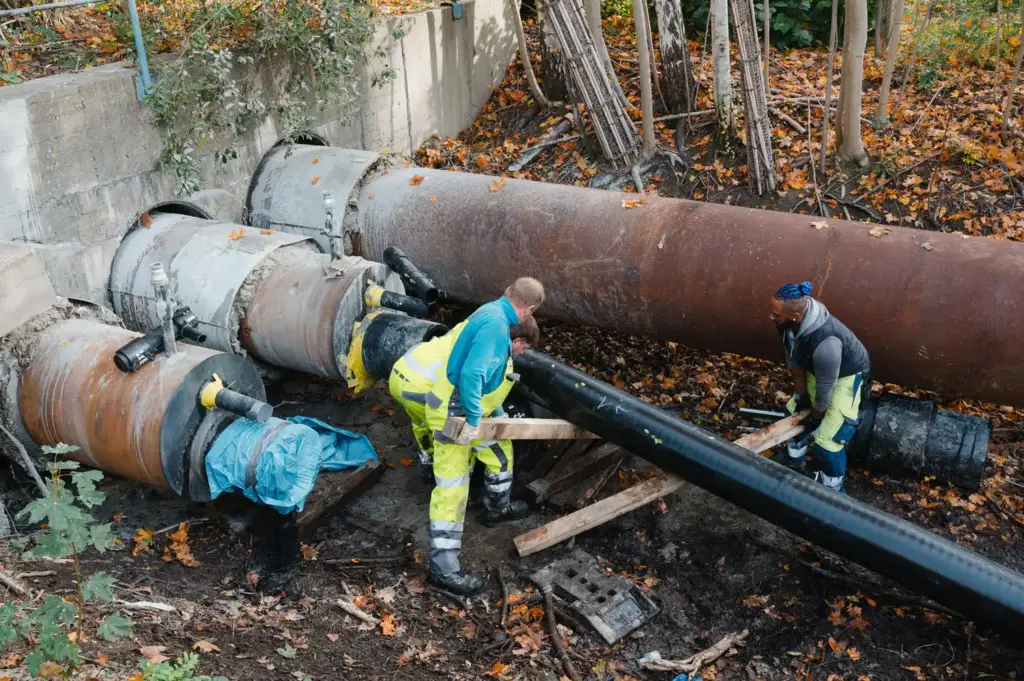
Various pipe systems are used for implementing district heating crossings via horizontal directional drilling (HDD). The choice depends largely on the project-specific conditions – in particular on pipe dimensions, drilling length, available space for preparing the pipe strings, expected tensile forces during the pulling process, and the planned route.
For larger nominal diameters, conventional plastic-coated pipes (KMR) with a steel inner pipe are frequently used. These pipe systems offer high mechanical stability and are particularly suitable for main routes with higher transport capacities.
Where increased mechanical stresses are to be expected (e.g., high tensile forces, abrasive ground conditions, or long drilling distances), an additional protective jacket made of GRP (glass-reinforced plastic) must be provided. This protects the plastic-jacketed pipe during pulling and increases resistance to external influences.
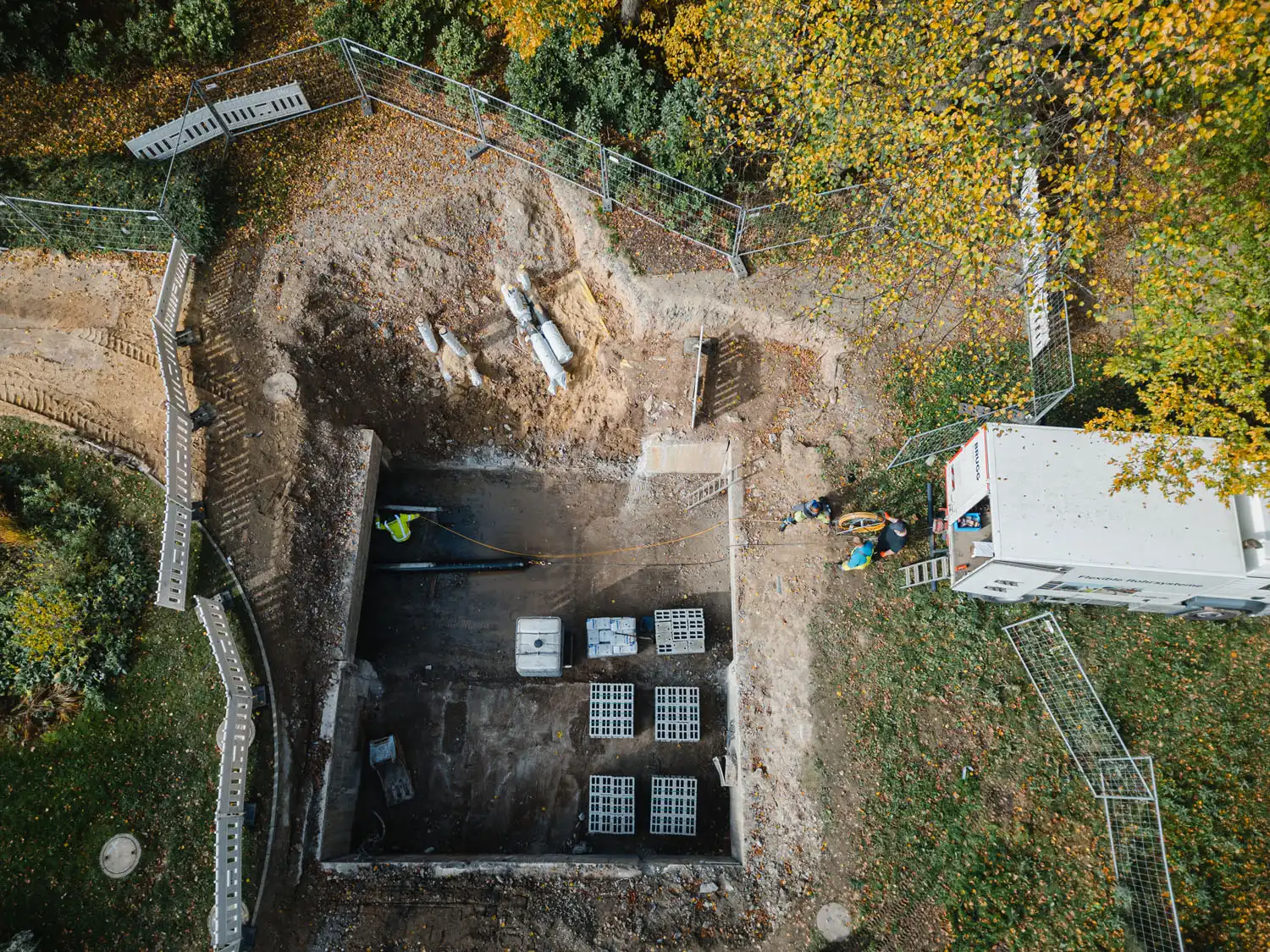
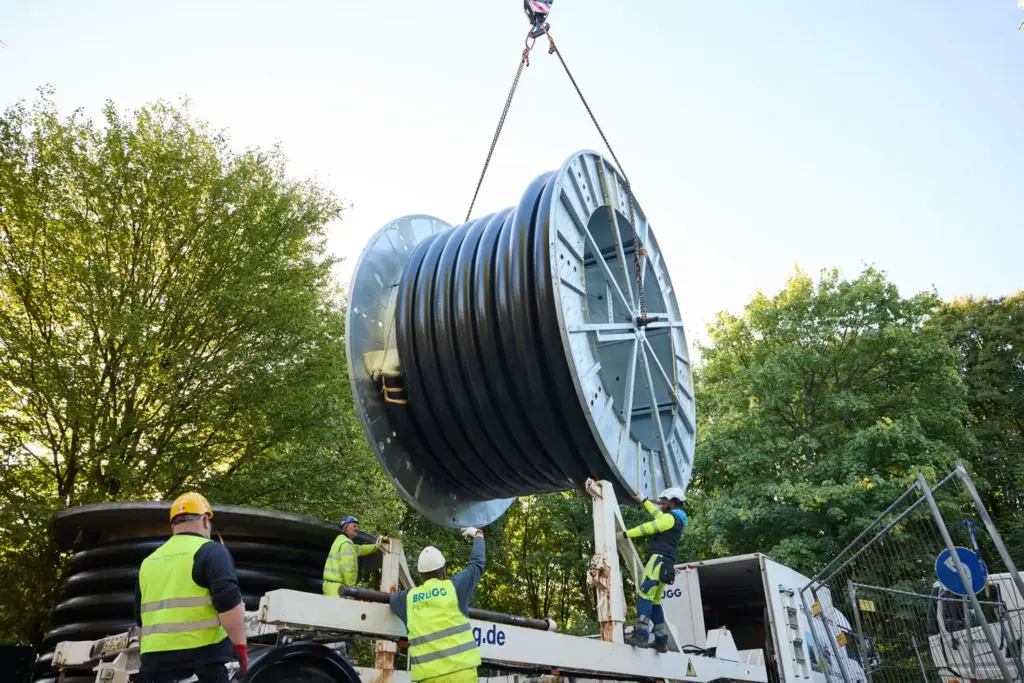
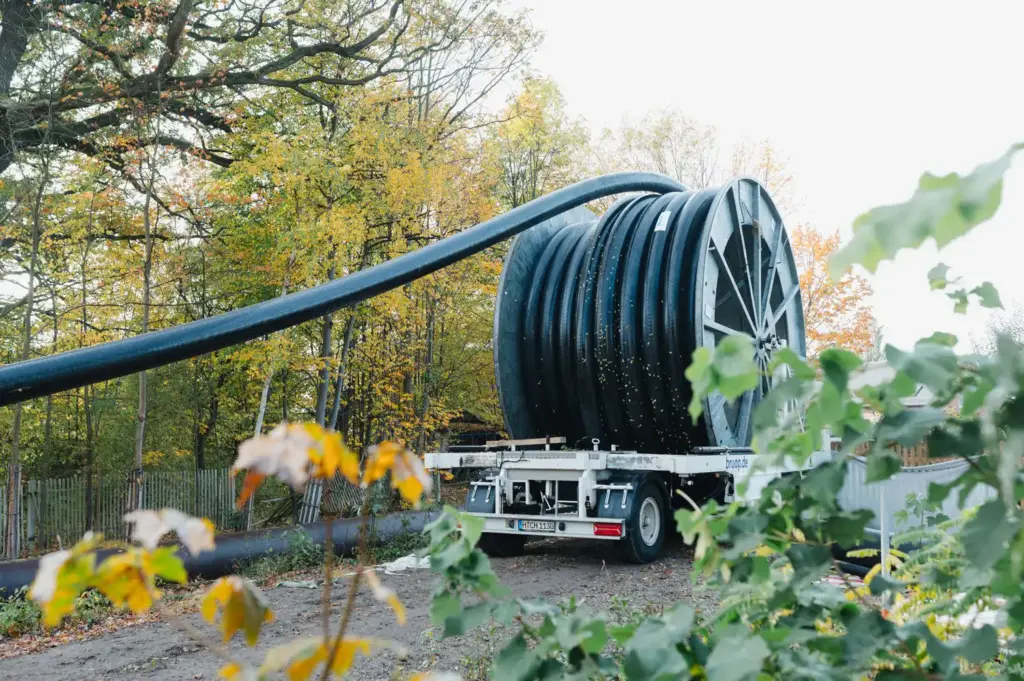
Flexible corrugated steel pipe systems, such as FLEXWELL-FHK, have also become established for trenchless installations. Thanks to their high flexibility and the ability to pull longer pipe sections from drums in lengths of 230–1000 meters and dimensions of DN25–DN150, they are particularly well suited for jetting and complex route layouts. This reduces the number of joints, making installation faster, safer, and less prone to faults – a decisive advantage for long or complex drilling operations.
For smaller diameters, flexible composite plastic pipes based on PEX or PE-RT, or CASAFLEX stainless steel, are frequently used. These systems are characterised by small bending radii and high installation flexibility and are often used for house connections or shorter crossings.
However, installing these pipe systems via horizontal directional drilling is only possible to a limited extent, as they generally lack sufficient mechanical protective casing. For use in HDD procedures, additional mechanical protection (e.g., via protective pipes or special casings) must therefore be provided to prevent damage during the pulling process.
Typical crossings in district heating construction
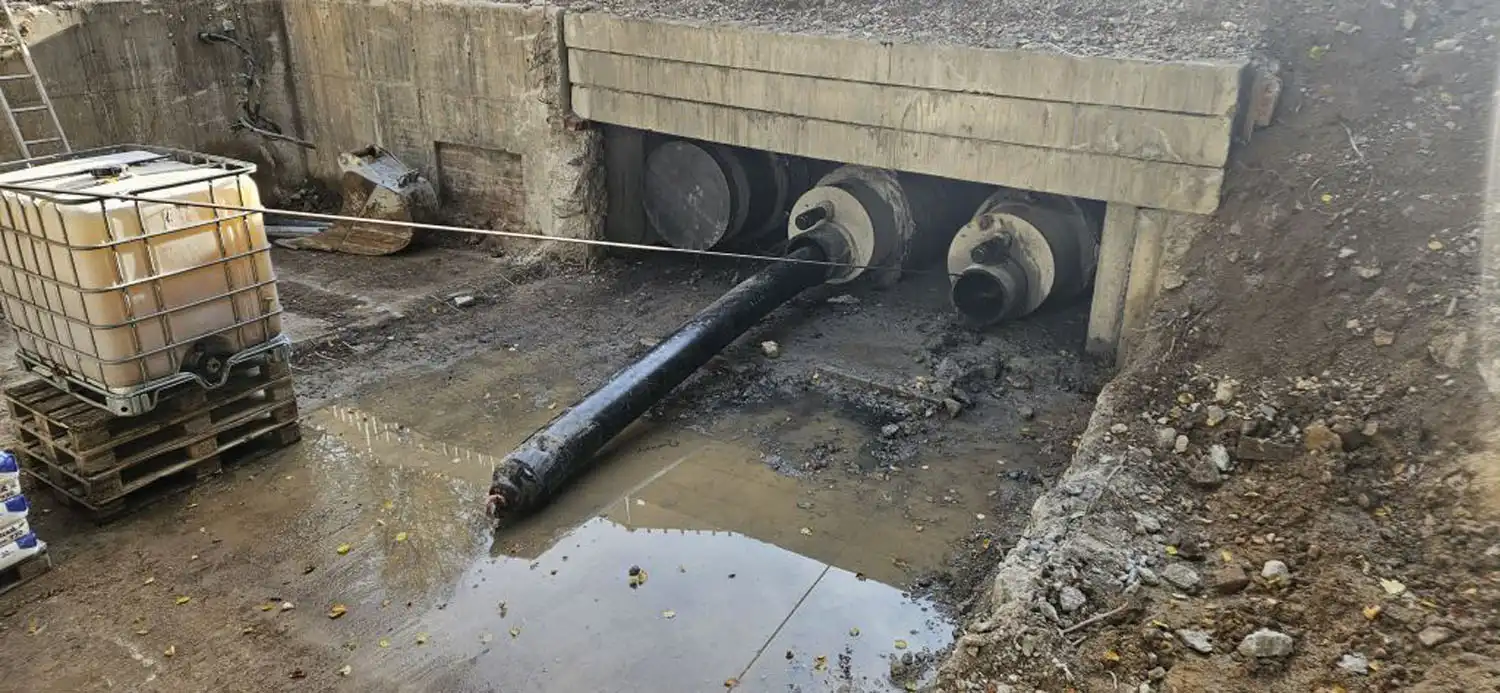
Horizontal directional drilling (HDD) is used where obstacles cannot be crossed economically with open-cut methods, or where surface excavation would cause unacceptable disruption.
Roads and motorways
One of the most common applications is the crossing of roads. Particularly on busy transport routes, open-cut construction would entail significant restrictions. HDD avoids road closures and reduces both construction time and the costs of resurfacing.
Railway lines
Even higher standards apply when crossing railway lines. Track systems are sensitive to settlement or ground movements. Construction work in the immediate vicinity of the tracks is therefore subject to strict technical specifications.
Horizontal directional drilling allows pipes to be laid under railway lines without opening the track bed. This requires precise planning of the drilling route and continuous monitoring during construction. Important specifications set by railway operators must be strictly adhered to; where necessary, the pipe systems must be certified for railway use. One example is the DB-InfraGO certification in Germany.
Runways
Airports are also among the most sensitive infrastructure areas. Runways must always remain operational, which is why major surface construction is virtually impossible.
Here, horizontal directional drilling offers a practical solution. Pipes can be laid beneath the runways without disrupting flight operations.
Rivers and waterways
HDD methods also offer significant advantages when crossing waterways. Whilst open-cut construction would require intervention in the riverbed, horizontal directional drilling allows the pipeline to be laid at a greater depth beneath the river.
This leaves ecological systems largely undisturbed, and shipping is unaffected as well.
Buildings
The HDD method also offers considerable advantages in urban areas. Tunnelling beneath structures and buildings is technically feasible and is successfully implemented in practice. One example of this is the project in Solingen, Germany, where such work was carried out beneath existing building structures. This requires careful planning, considering the ground conditions, settlement risks, and existing foundations.
Planning as a key success factor
The success of an HDD crossing depends largely on careful planning. Geotechnical investigations, which provide information about the ground conditions, play a central role in this.
Different soil types place different demands on drilling technology. Loose sands, cohesive clays, or rocky formations each require adapted tools and drilling parameters.
Furthermore, the drilling route must be planned in such a way that:
- the minimum bending radii of the pipe systems are maintained,
- sufficient cover is ensured and
- existing pipes or structures are not endangered.
During the pulling-in process, the pulling forces are also monitored. They must not exceed certain limit values to prevent damage to the pipe system.
Case study: Solingen – District heating pipeline beneath existing buildings
A district heating project on Herbergerstrasse in Solingen, Germany, illustrates the challenges of trenchless installation in a densely built-up area.
After a failure in an existing district heating duct, Technische Betriebe Solingen had to install a new supply line at short notice. Because the alignment ran beneath existing buildings and along a slope, open-cut construction would have been disproportionately costly.
Heat supply was maintained using three mobile heat-generating units.
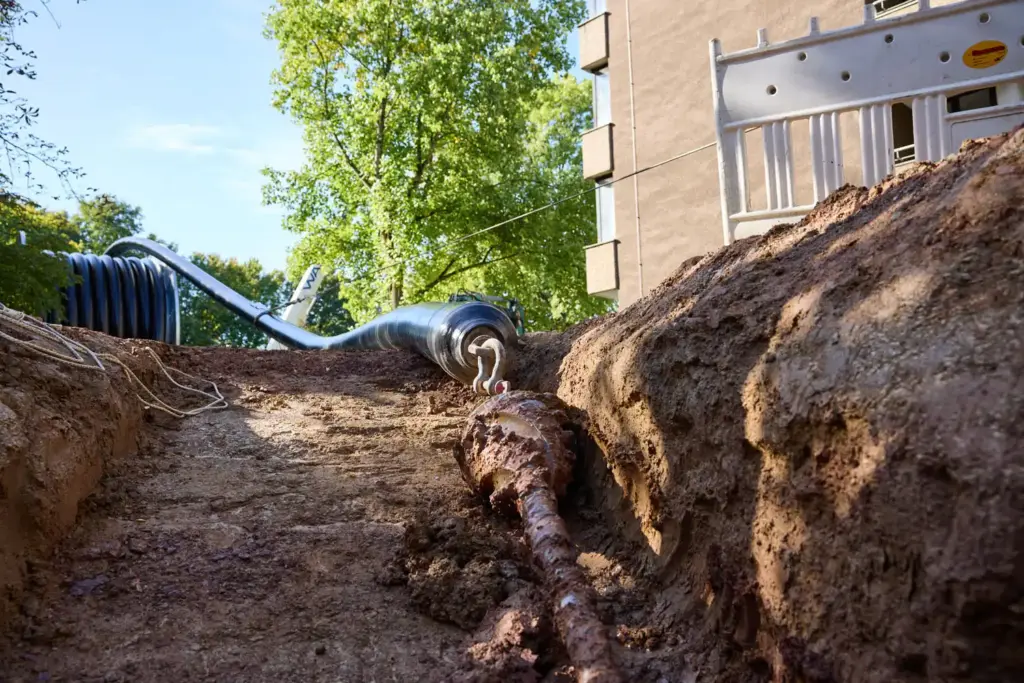
In close coordination between the design office, the pipework contractor, and the system supplier BRUGG Pipes, a solution combining multiple pipe systems was developed: FLEXWELL-FHK (200/310) for the pilot bore, CASAFLEX (48/126), and rigid PREMANT plastic-coated pipes (DN 80d1DN 150) for the connections. The flexible systems enabled a continuous route under confined conditions with fewer joints.
Given the constraints, parts of the route were installed by jacking in two sections of around 130 meters each, improving control of steering and pulling forces.
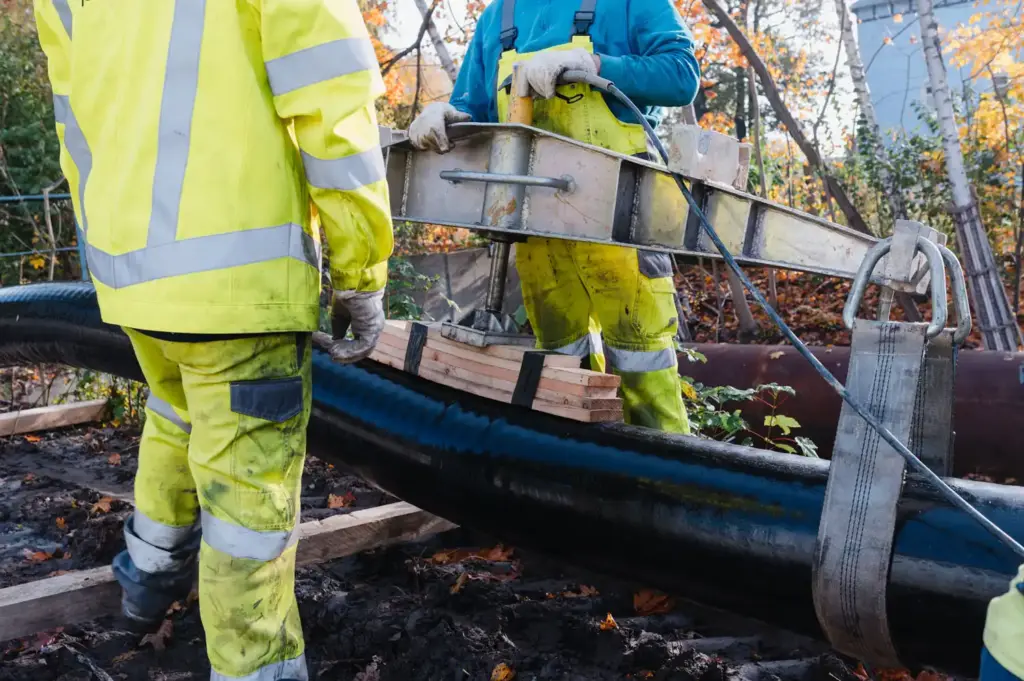
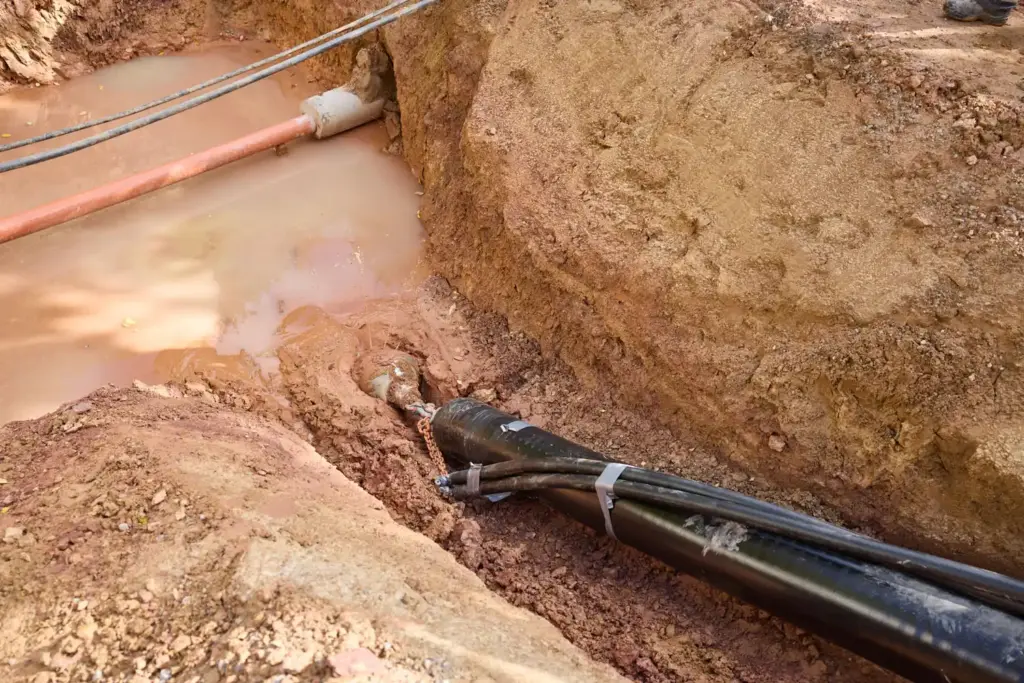
Crossing beneath the buildings required special pulling heads and continuous monitoring to ensure safe installation.
After completion, the new line was connected to the existing network. Despite the difficult conditions, the project was finished within three weeks and achieved cost savings of around 30–35% compared to open-cut construction.
 Case study: Chemnitz – Trenchless crossing in the district heating network
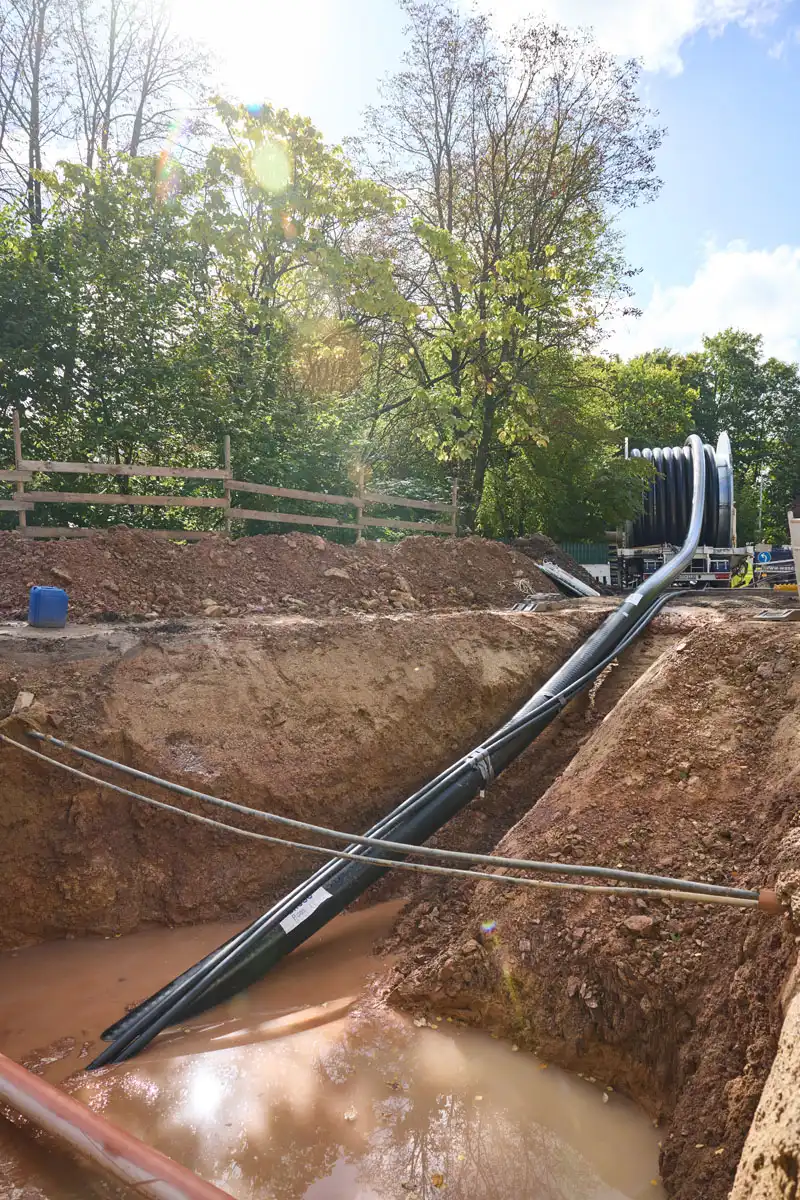
A second example comes from Chemnitz, Germany, where the district heating network has been modernised and expanded over several years.
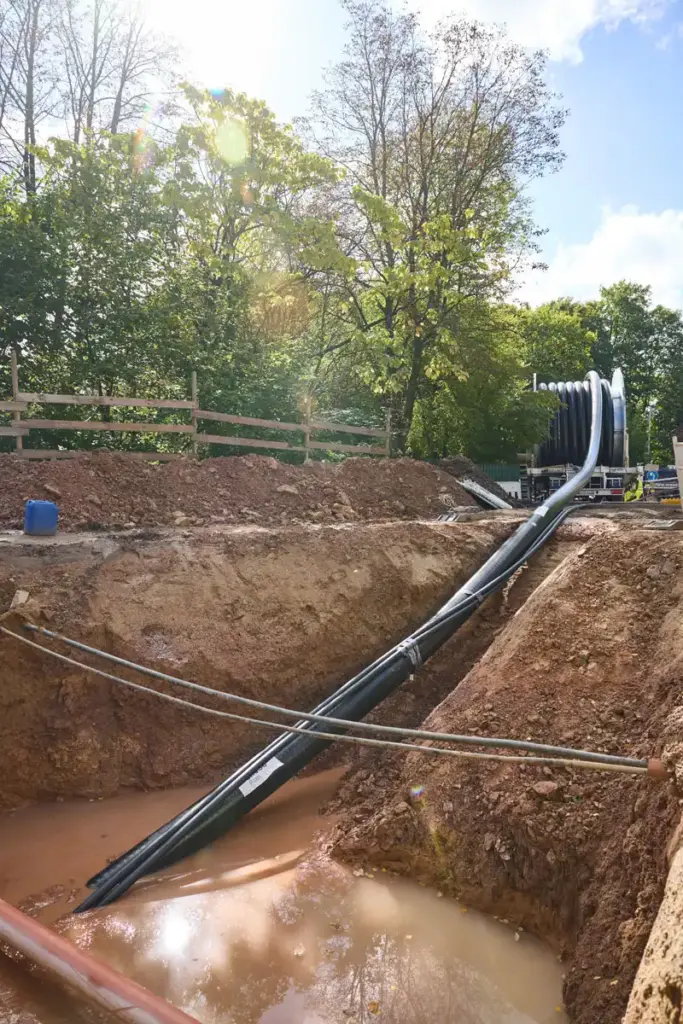
A key challenge was crossing a heavily trafficked A-road, where open-cut construction would have severely impacted traffic and site logistics.
A trenchless solution was selected using FLEXWELL-FHK, enabling long, continuous pull-in sections with fewer additional joints, reducing weak points, shortening construction time, and improving operational reliability.
The project demonstrates how trenchless methods can support inner-city network expansion while minimising traffic disruption.
Significance for the expansion of modern heating networks
As the energy sector transforms, the demand for high-performance district heating networks is growing. Many cities are planning major expansions and the integration of renewable heat sources into existing systems.
In parallel, the technology continues to develop. Modern drilling rigs allow longer boreholes and larger pipe diameters than in the past, while improved tracking systems enable more precise control of the drilling route.
As a result, trenchless methods are increasingly cost-effective and can be applied not only to individual crossings but also to longer sections of the network.
This enables faster network expansion and more efficient modernisation of existing routes, while reducing overall construction time. Disruption to the urban environment is also minimised – an important advantage, especially in densely built-up cities.
Conclusion
Over the last 60 years, horizontal directional drilling has developed into a key technology in modern pipeline construction. Practical projects such as those in Solingen and Chemnitz demonstrate that trenchless construction methods can be reliably employed even under challenging conditions. However, this requires careful planning, detailed ground investigations, and precise monitoring of the construction process.
Looking to the future, the technology is expected to evolve: longer drilling distances, larger pipe diameters, and more efficient, cost-effective construction processes will expand the scope of applications and accelerate the implementation of infrastructure projects.
For further information, please contact: Per Skafte, at per.skafte@brugg.com