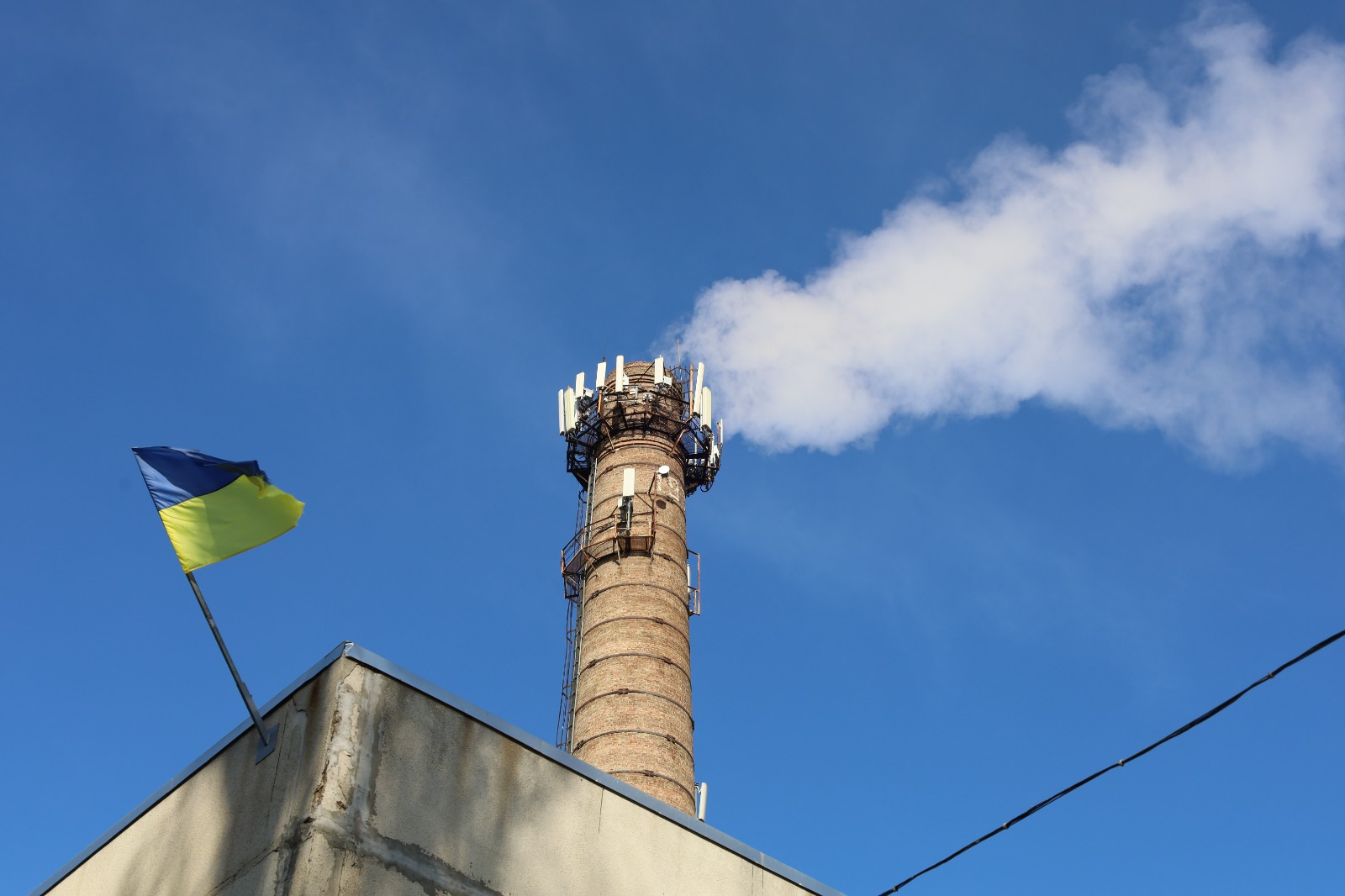
Ukraine’s district heating sector entered the war already severely run down. Four years of war have done more than expose its weaknesses – they have begun to reshape the very logic of how a city’s heating system should work.
By Lesia Logvynenko, project manager, DBDH, and Mykola Logvinov, district heating director, MOTE
Published in Hot Cool, edition no. 6/2026 | ISSN 0904 9681 |
One night, a boiler house in the Mykolaiv city was hit by a Russian missile during an attack. A team from Mykolaivoblteploenergo (MOTE), the district heating company serving the Mykolaiv region in southern Ukraine, arrived at the site. It was dark and cold, and the staff were wearing body armour and carrying weapons. A piece of shrapnel lay on the boiler, and a hole gaped in the roof. Meanwhile, the boiler house operator was simply sweeping the floor, clearing away dust and debris.
The system had to be brought back online. Setting the usual safety rules aside, the electrician opened the switchboard, reconnected the equipment, and restarted the boiler.
There was no alternative: people needed heat.
Perhaps more clearly than any statistic, this scene captures what it means to keep heat flowing in a Ukrainian city during wartime.
At the same time, it raises a more troubling question: if the system depends on extraordinary human effort every time it is struck, where does the system’s reliability end and the heroism of those who restart it begin?
A system that was already struggling before the war
The first uncomfortable truth is that the war did not create the crisis in Ukraine’s district heating (DH) sector. The sector was already struggling before the full-scale invasion; the war only accelerated its decline.
“The district heating infrastructure was not reliable before the full-scale invasion,” says Mykola Logvinov, Executive Director of MOTE. According to Mykola Logvinov, the sector operated for years under chronic financial pressure: there was too little money for modernisation, and what investment there was often went into “patching holes” rather than into redesigning the system.
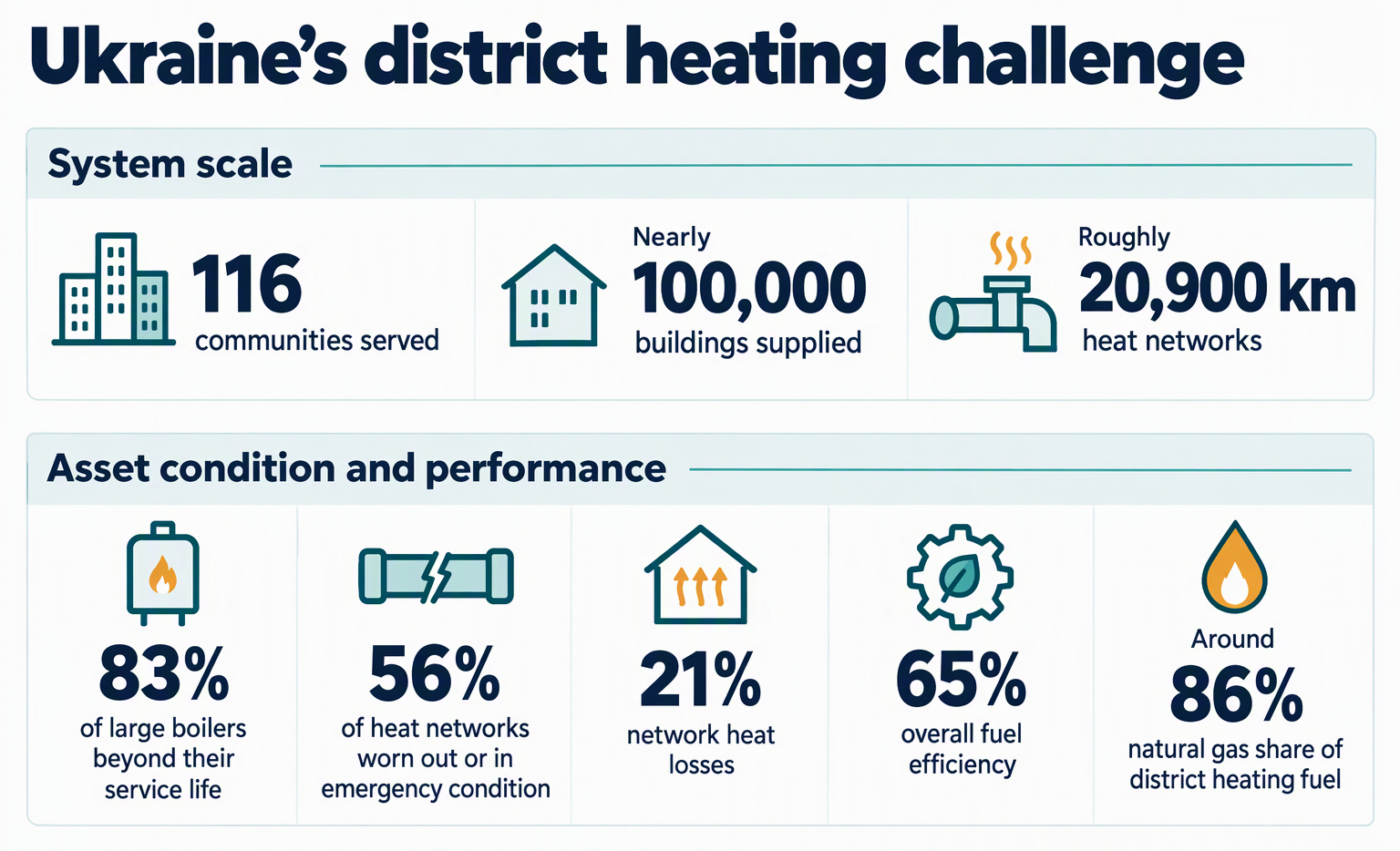
Figure 1. Key figures on the condition of DH in Ukraine. Source: Energy Security Project study, 2025
Study by the USAID-funded Energy Security Project confirms this picture.
DH operates in 116 Ukrainian communities and supplies heat to nearly 100,000 buildings through roughly 20,900 km of pipes. Yet 83% of large boilers have already exceeded their service life, and 56% of heat networks are classified as worn out or in an emergency condition. Around 21% of the heat produced is lost in the pipes before it reaches customers, and the systems turn only 65% of the energy in their fuel into useful heat. Natural gas accounts for around 86% of the fuel used to produce district heating.
These figures explain why, before 2022, much of the sector lurched from one repair to the next, without the resources needed for systemic change.
Here lies one of the war’s starkest paradoxes.
On the one hand, the war is physically destroying infrastructure. On the other, it has forced the sector to look – at far greater speed – for solutions it often lacked both the resources and the incentive to pursue in peacetime.
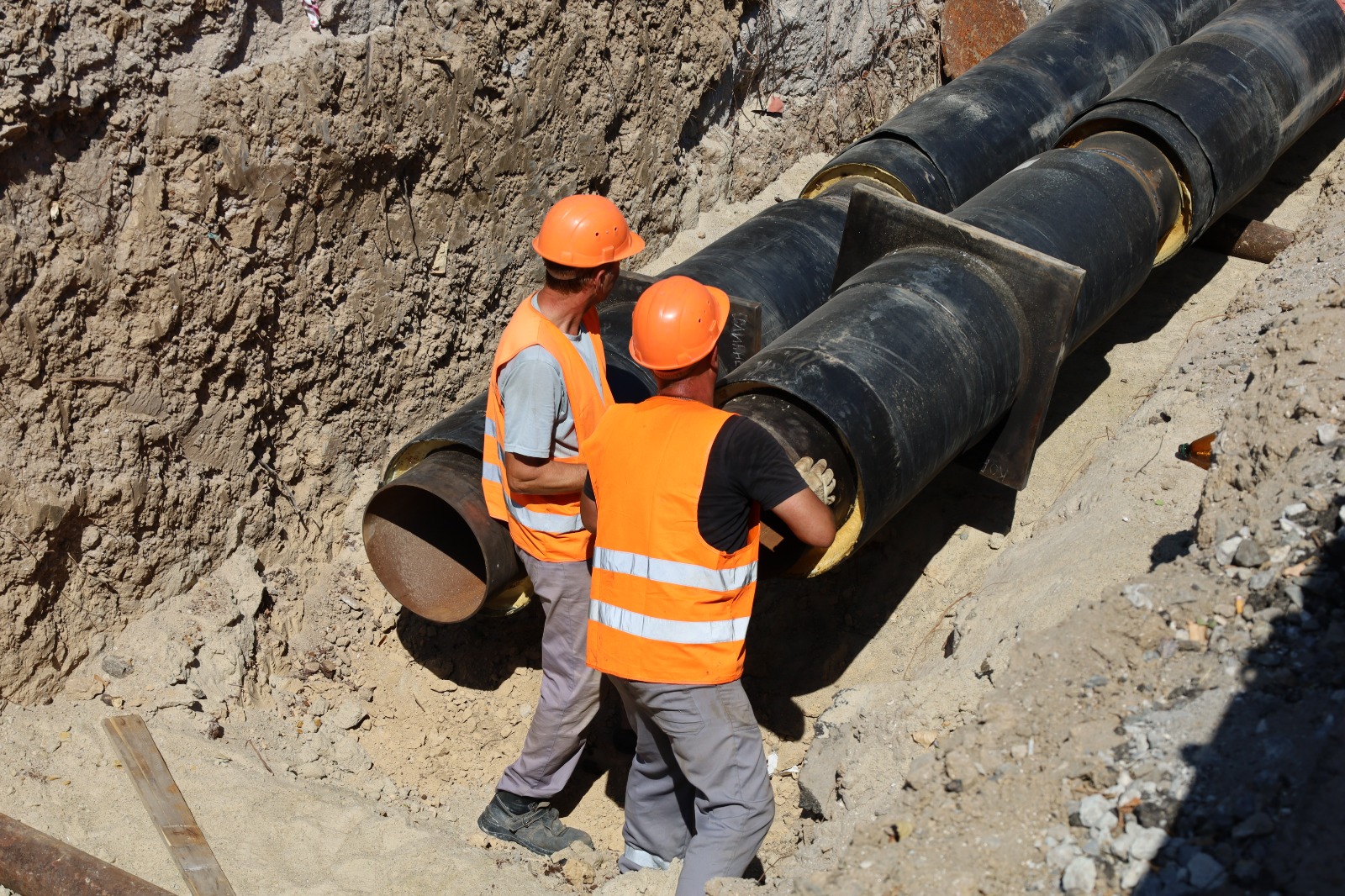
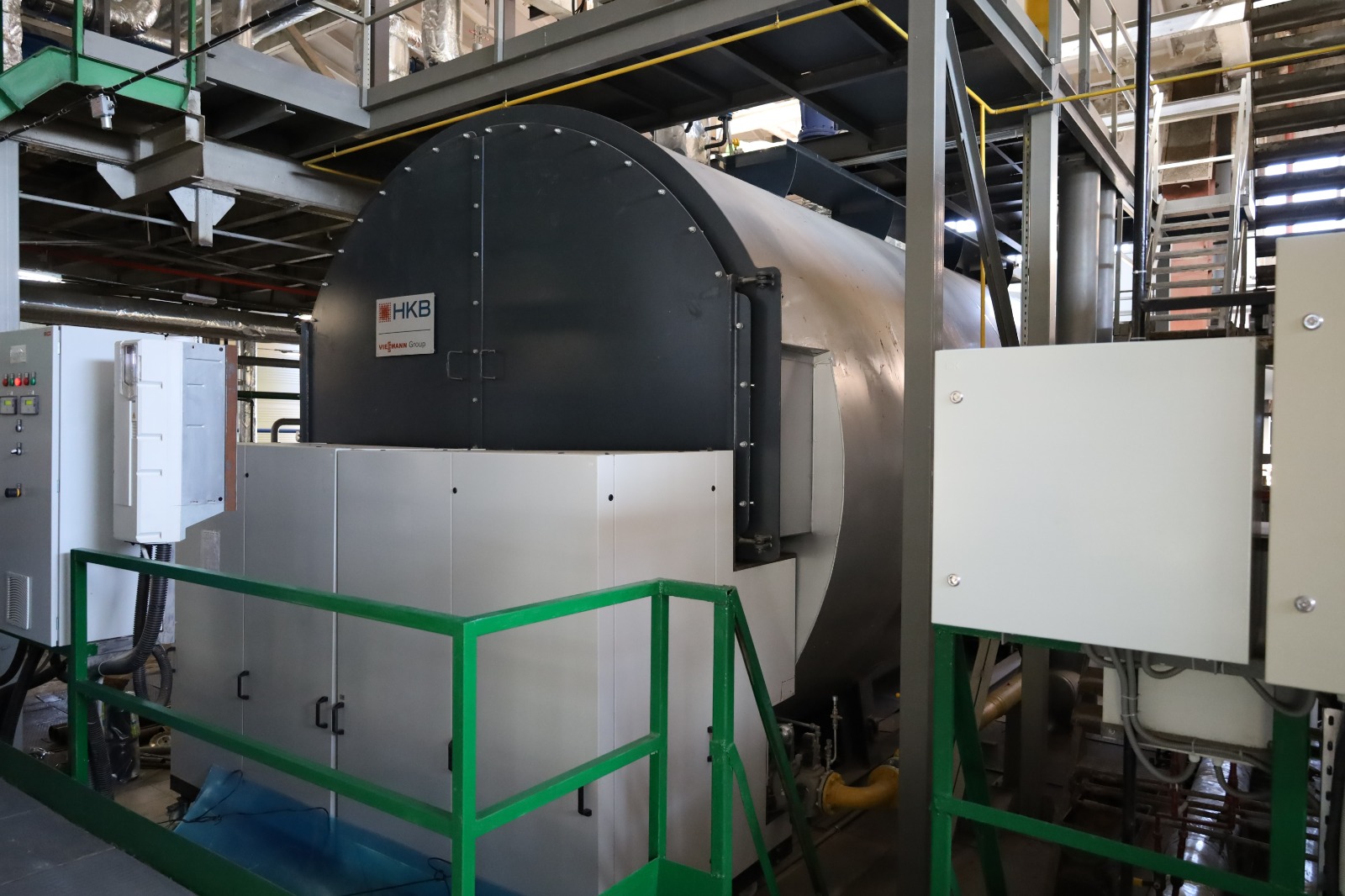
According to Mykola Logvinov, before the war utilities mainly repaired existing assets. Since 2022, however, new pipes, new heat production capacity, cogeneration units (which produce heat and electricity at the same time), solar installations and storage systems have begun to appear – mostly with the support of international donors.
In other words, the war has made the system more physically vulnerable and, at the same time, accelerated the search for a different way of operating it. This contradiction now defines Ukraine’s heating sector.
Reliability no longer simply means “providing heat”
For MOTE, this shift is particularly visible.
Mykolaiv, a city of approximately 400,000 people, lives under constant wartime threat. Before the full-scale invasion, the utility provided heat. Today it is also responsible for electricity generation, water, and other critical services.
Repeated attacks on the power grid and the resulting blackouts have forced DH utilities to broaden their role: building their own generating capacity, securing independent power supplies for their sites, managing electricity, and supporting other critical municipal systems.
This is more than a longer list of services. The role of the DH utility within the city is changing fundamentally.
If a heat utility failure can disrupt not only heating but also power to hospitals, water supply, sewerage, and other critical services, then its function extends far beyond producing and distributing heat.
The war has shown that heat utilities are not stand-alone municipal services, but an integral part of a city’s life-support system.
The reliability of a DH system is no longer measured solely by whether a boiler house can produce enough heat. It is measured by whether the system as a whole can keep operating when one or more of its components fail.
That is why decentralisation, spreading heat production across many smaller sites instead of relying on a few large plants, has become a central measure of reliability.
MOTE operates 93 boiler houses, most of which already function as independent heat sources. At the same time, the region is building another 18 backup boiler houses.
In wartime, decentralisation has become a practical way for Ukrainian cities to limit the damage caused when any single large facility is destroyed.
But even this has proved insufficient.

Keeping heat flowing when the power fails
In the traditional model of DH, the basic questions were relatively straightforward: where to get fuel, how to produce heat, and how to deliver it to consumers.
Wartime has added another: Can the system keep running when the electricity supply fails?
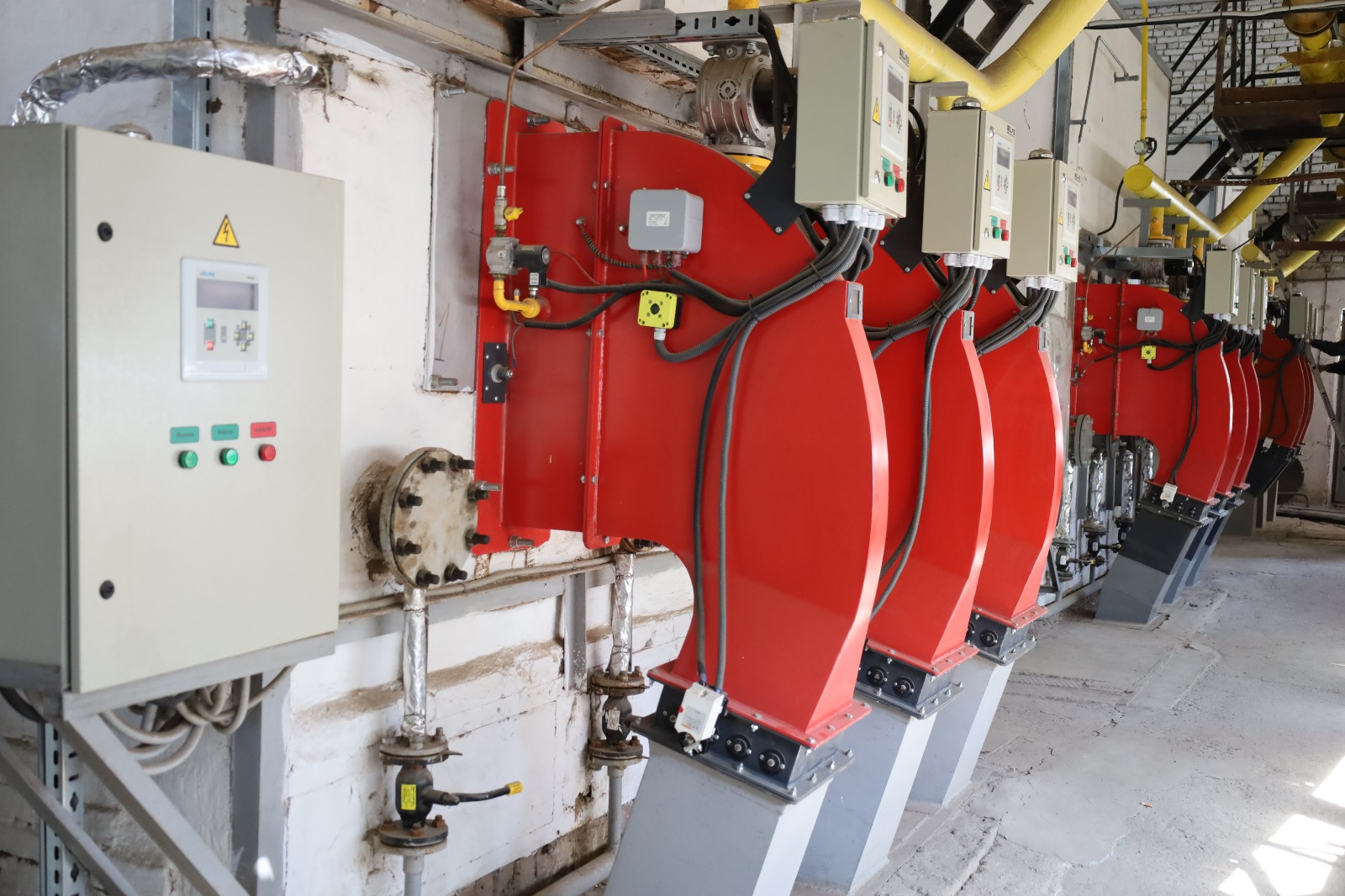
Even a gas-fired boiler house needs electricity to run its pumps, fans and control systems. Without power, it cannot deliver heat, no matter how much fuel it has.
A 2025 study by the Energy Security Project shows the scale of the problem: most Ukrainian boiler houses could not withstand power outages. During the blackout in Kyiv in December 2022, 132 of 154 boiler houses stopped operating.
Backup power, generators and backup heat sources are therefore no longer optional extras. They are becoming part of the basic design of heat supply.
In Mykolaiv, another element is being added: electricity storage.
MOTE has already installed around 100 small battery storage units at block substations – the local stations that pass heat from the main network on to a group of buildings. It is also considering large-scale battery systems with capacities in the tens of megawatts. Mykola Logvinov estimates that the city may initially need around 45 MW of electricity storage capacity.
This changes the very understanding of the role a heat utility can play in a city’s energy system.
Southern Ukraine has substantial solar and wind potential, and electricity prices can vary sharply over the course of a day. A heat utility that can not only consume electricity but also store it and use it when needed gains far greater flexibility in managing its energy.
In the longer term, this means combining several elements within a single energy system: electricity generation, heat storage and electricity storage, heat pumps, and combined heat and power (CHP) plants.
From heat supply to an urban energy hub
European energy policy has long embraced sector integration: treating heat and electricity as interconnected parts of a single energy system rather than as separate worlds. Heat pumps, cogeneration, storage, renewable energy and flexible demand make it possible to take advantage of that connection.
These approaches are not new to Ukraine. But the war has turned them from a long-term energy policy question into a question of whether a city can keep functioning today.
The destruction of large central power plants has increased the importance of local cogeneration of heat and power. DH utilities that were once large electricity consumers have begun to consider generating their own power. DH systems are no longer viewed in isolation, but as part of a city’s broader energy system.
The Energy Security Project study mentioned above explicitly calls for gas boiler houses to be transformed into integrated energy complexes – systems that are energy-efficient, resilient to supply disruptions and able to operate at an acceptable cost throughout their lifetime.
For Ukraine, this means another shift in perspective.
Mykolaiv’s experience shows that a city does not need a single “right” technology, but a mix of sources and the ability to compensate quickly when any one of them is lost.
That mix may include cogeneration, gas-engine units, solar and wind power, heat storage, heat pumps or backup boiler houses. What matters is not any single asset, but the system’s ability to keep functioning when part of its infrastructure is unavailable.
In this sense, the DH system of the future may look less like the traditional “boiler house – pipes – consumer” chain and more like a network of interconnected energy resources.
And this may be one of the most interesting lessons of Ukraine’s war for the European DH community.
Not because European systems should copy Ukraine.
Rather, Ukraine is being forced to test in practice a question that peacetime energy systems usually explore only through scenarios: How should a decentralised system be organised so that the loss of one or more key components does not bring the entire heat supply to a halt?

Physical reconstruction will not work without economic reconstruction
Ukraine’s DH sector entered the war burdened by accumulated debt and chronic underfunding. A key reason was the tariff model, the regulated price customers pay for heat, which for years failed to generate the money needed for systemic investment.
This is not merely an accounting problem. It is a question of whether a utility can plan for the future at all.
As long as revenues barely cover basic operating costs, modernisation will continue to depend on outside financing. A substantial share of modernisation projects in Ukraine is being carried out with support from international financial institutions and donors.
Donor funding can help build a new system. It cannot sustain that system’s economics indefinitely.
Rebuilding physical infrastructure without rebuilding the economic model will not create a resilient heat supply.
New infrastructure requires not only capital investment, but also a model that allows utilities to cover the costs of operation, maintenance and future modernisation.
Without this, even the most modern equipment will gradually become just another asset in need of repair, replacement and new investment.
Rebuild or reconstruct?
At first glance, planning 20 years ahead in a country where a facility that works today may be damaged tomorrow seems almost impossible.
Mykola Logvinov believes the opposite. “Now is the right moment,” he says, referring to the urgent need to plan.
The paradox is that the war itself is forcing cities and utilities to think far more practically about the future. When an old solution no longer works, there is little point in recreating it unchanged. Instead, cities have an opportunity to apply, right away, both the lessons of recent years and approaches that have long proved effective elsewhere.
The question today, therefore, is not merely what must be restored. More importantly, it is why the old system proved so vulnerable and which principles should underpin the next one.
This may be the principal difference between rebuilding and reconstructing: rebuilding puts back what was there; reconstructing designs something better on the basis of what has been learned.
What will the post-war system look like?
Ukraine’s DH sector now stands between two realities.
One contains ageing boilers, worn-out networks, debt, staff shortages and a system that for decades survived rather than developed.
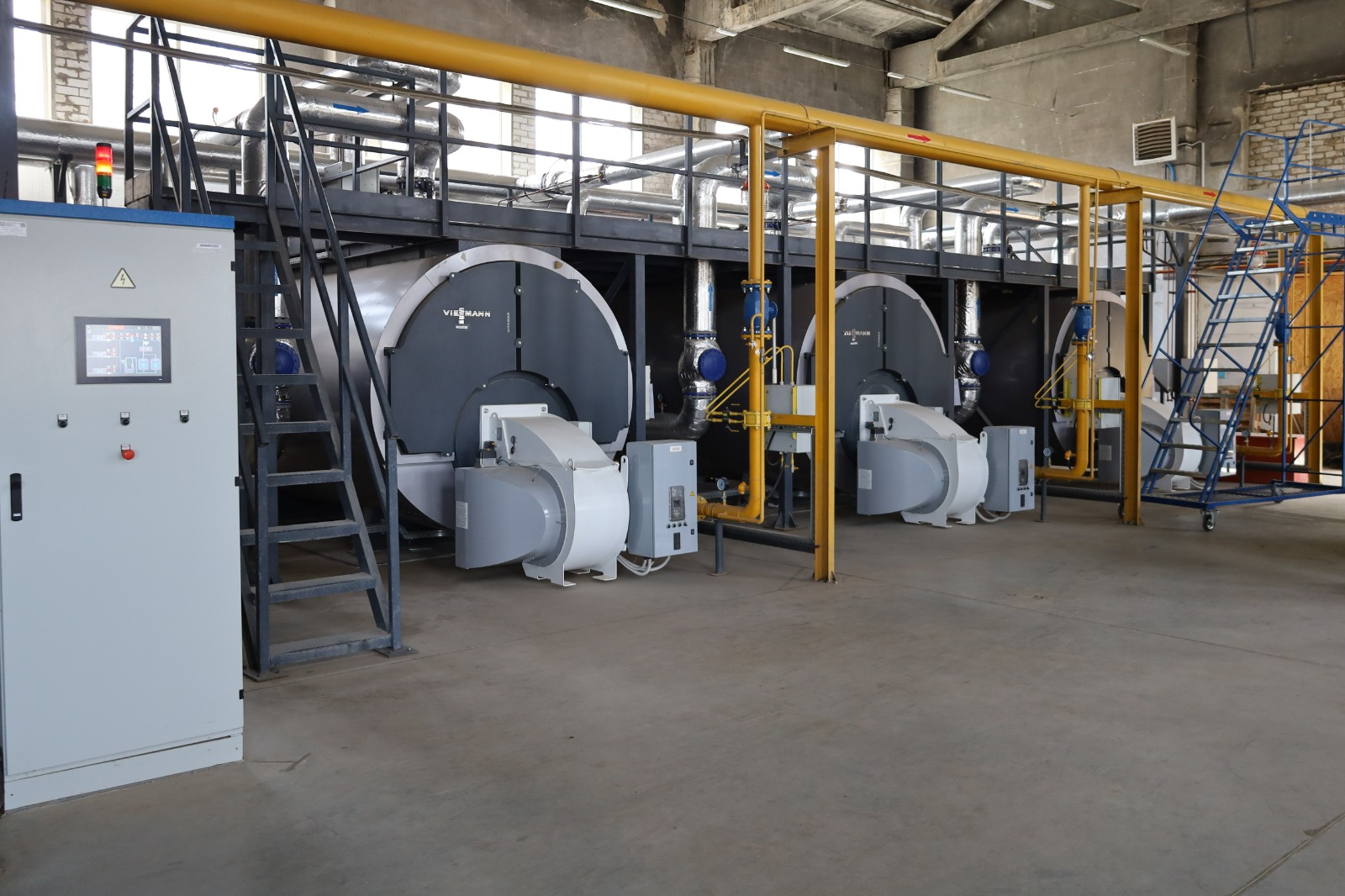
The other offers cogeneration, decentralised generation, heat storage, solar energy, heat pumps, independent power supplies and a new understanding of the role of the DH utility.
The war gave Ukraine no opportunity to follow this path gradually. It thrust the system straight into the most difficult scenario.
So what will emerge after the war: new boiler houses and new pipes, or a fundamentally different heat supply system?
The answer will not depend on how much equipment is purchased. It will depend on whether that equipment becomes part of a system designed to keep working when parts of it fail and is backed by an economic model that can keep it running.
Perhaps the most important lesson of the past four years is this:
Reliability does not mean that a system never fails. It means that the system can remain functional even after part of it has failed.
In Mykolaiv, this idea began with a boiler house operator who, after an attack, simply picked up a broom and started clearing the debris.
The question now is whether the system of the future can ensure that, next time, its survival does not depend solely on people like him.