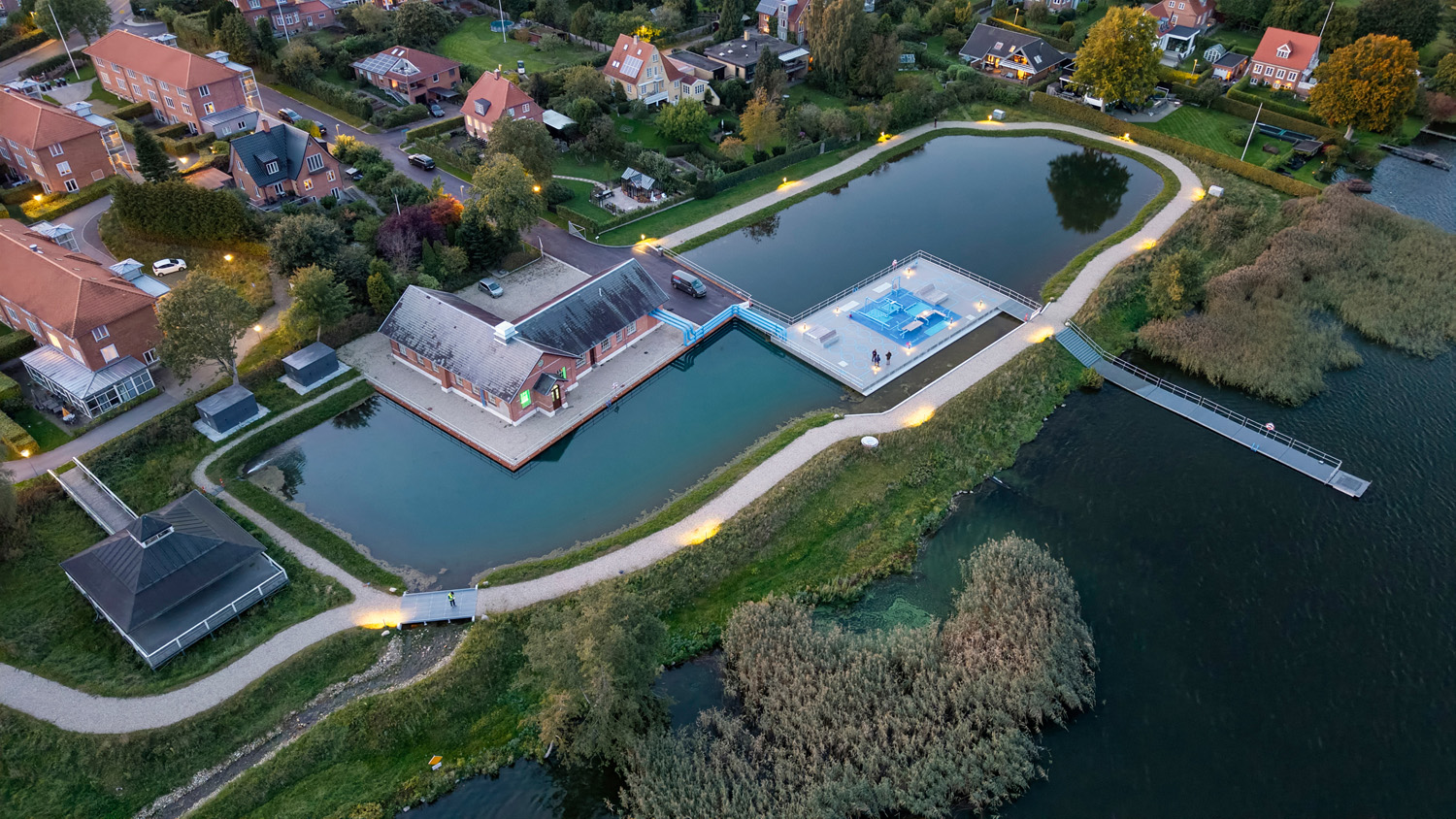
The former waterworks “Søværket” gives new life through energy production, rainwater management, and a public park.
Original text in Danish by Marie Larsen
Photos: Thomas Mølvig and Julian Weyer
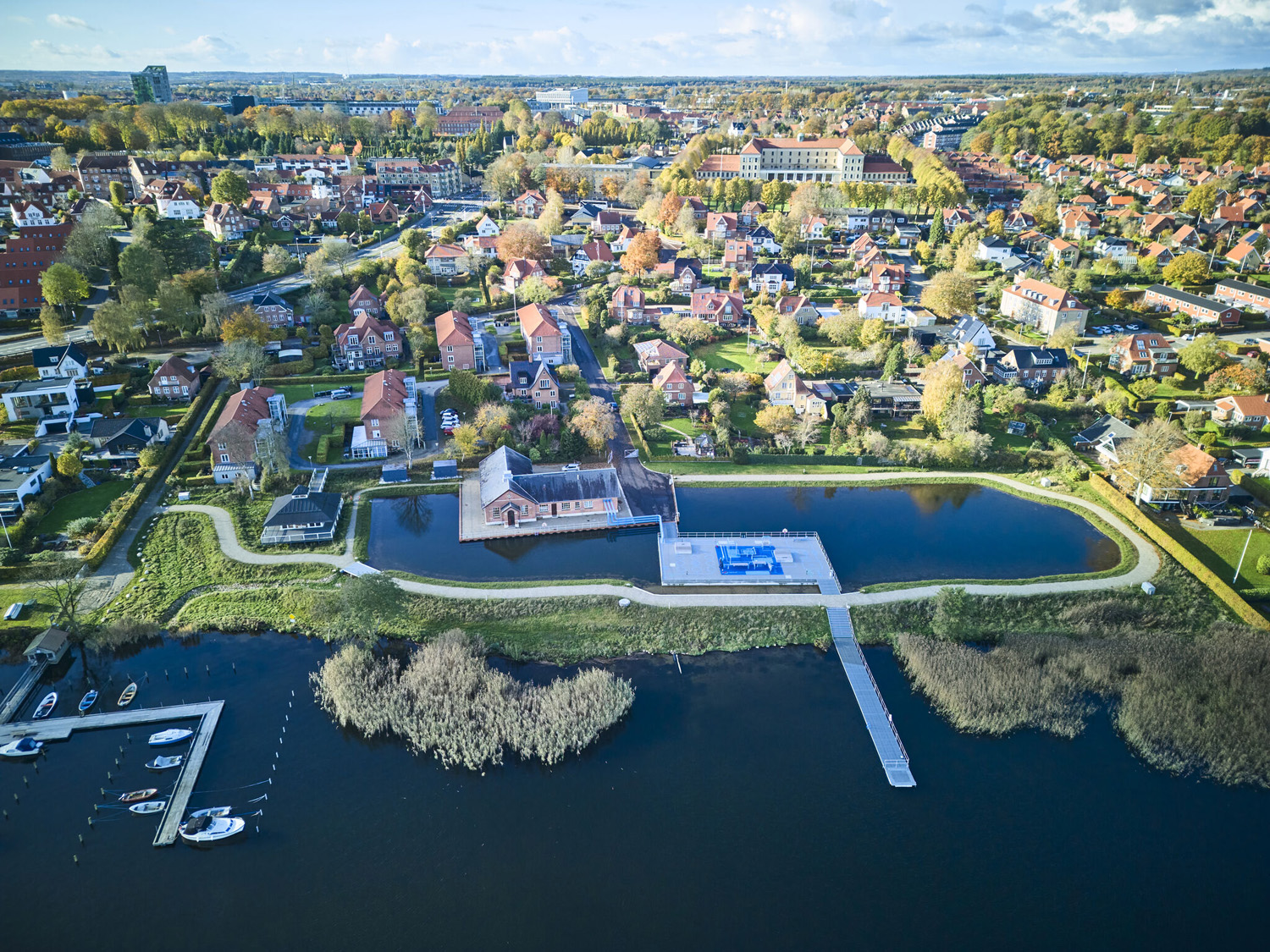
On the edge of Lake Nørresø, an early waterworks facility has been transformed into a hybrid site that integrates energy production, rainwater management, and public life. Søværket builds on the site’s technical heritage while changing its function and scale – from a closed utility facility to an open public space where history is not hidden but actively used as an architectural and landscape resource.
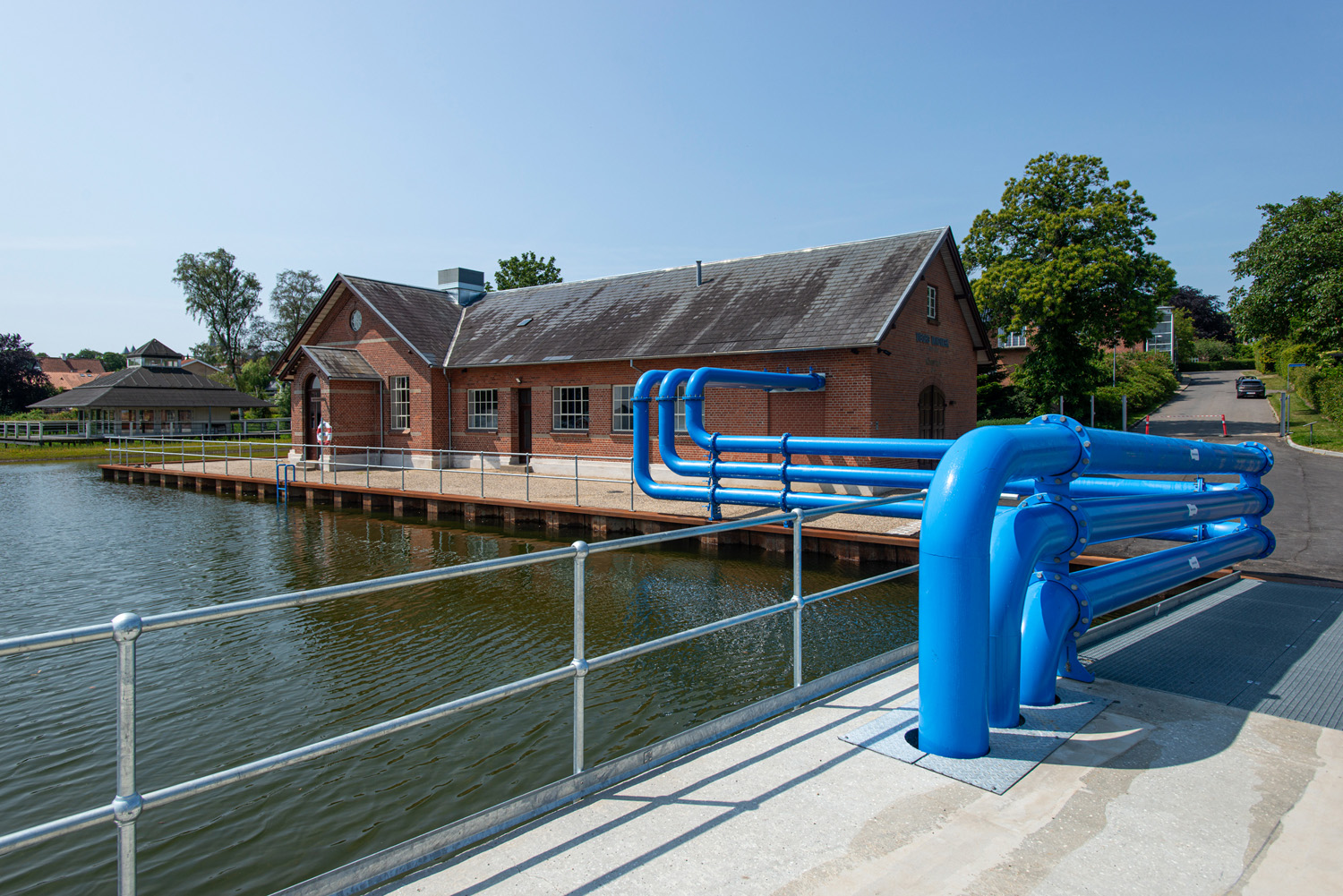
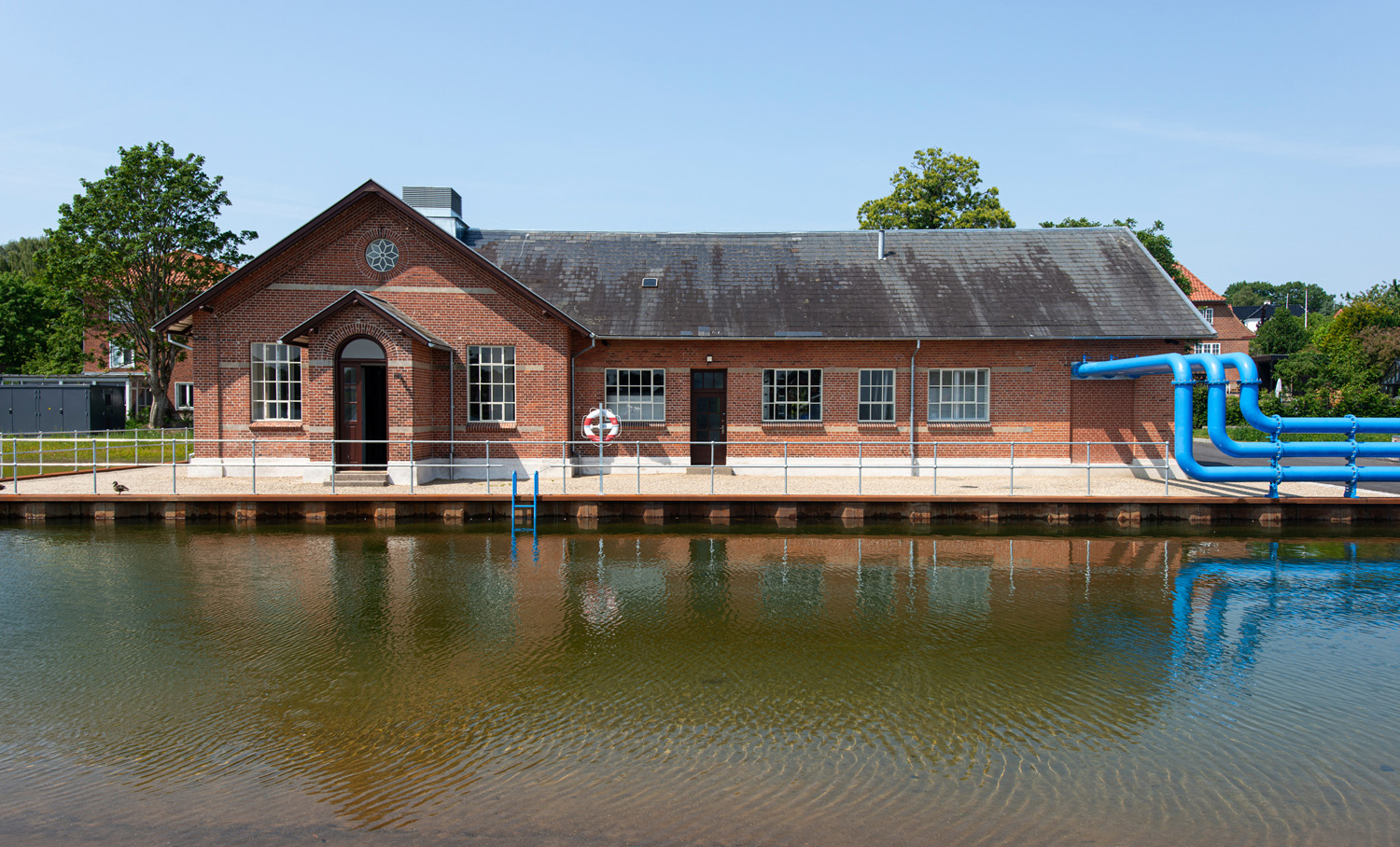
At the heart of the project is the former waterworks building from the early 1900s. Today, it houses a heat pump system that uses existing boreholes and extracts heat from the lake water.
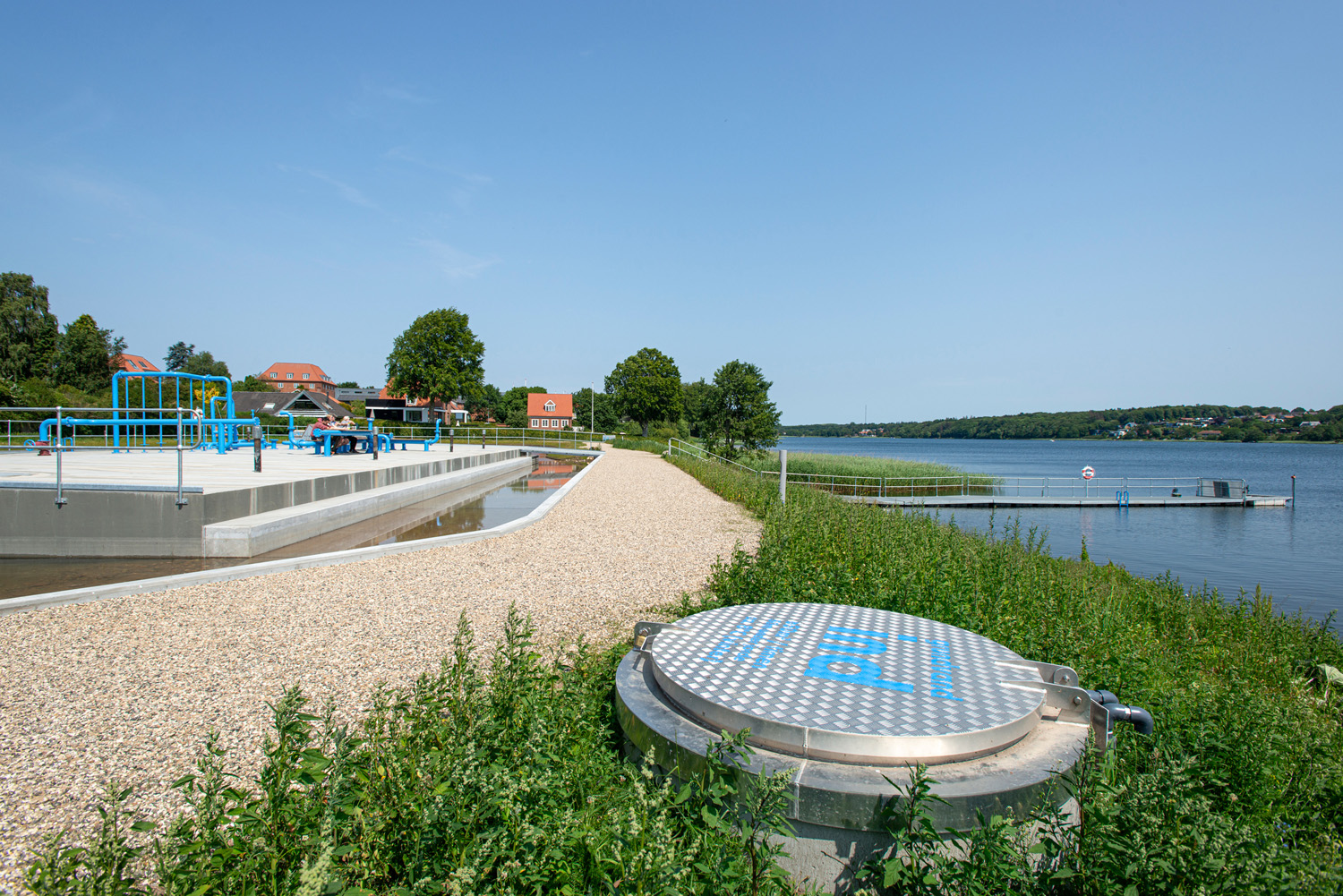
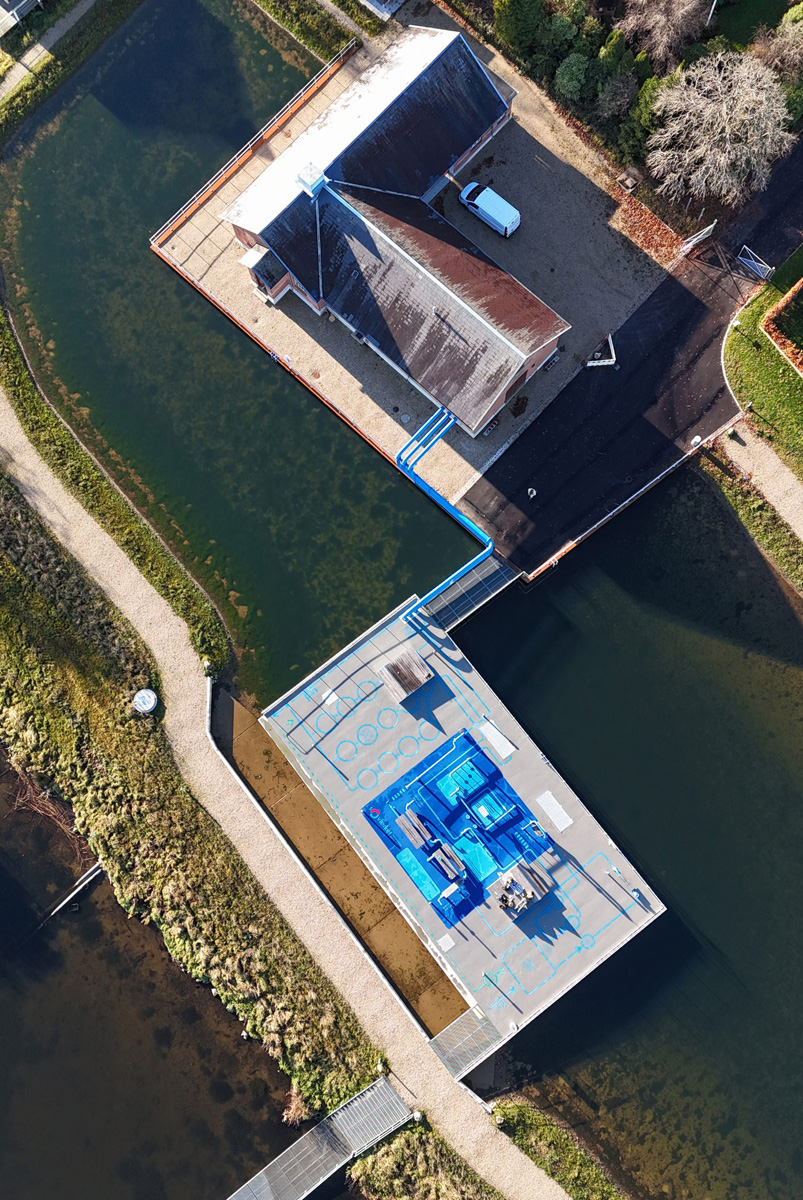
Adjacent to the building is the preserved clean water tank, now transformed into a public platform and exhibition space. Inside, it accommodates a phosphorus treatment system used for heat production. Surrounding the tank is a large rainwater basin with a capacity of 5,500 m³, where rainwater is treated through an open and legible flow before being discharged into Lake Nørresø.
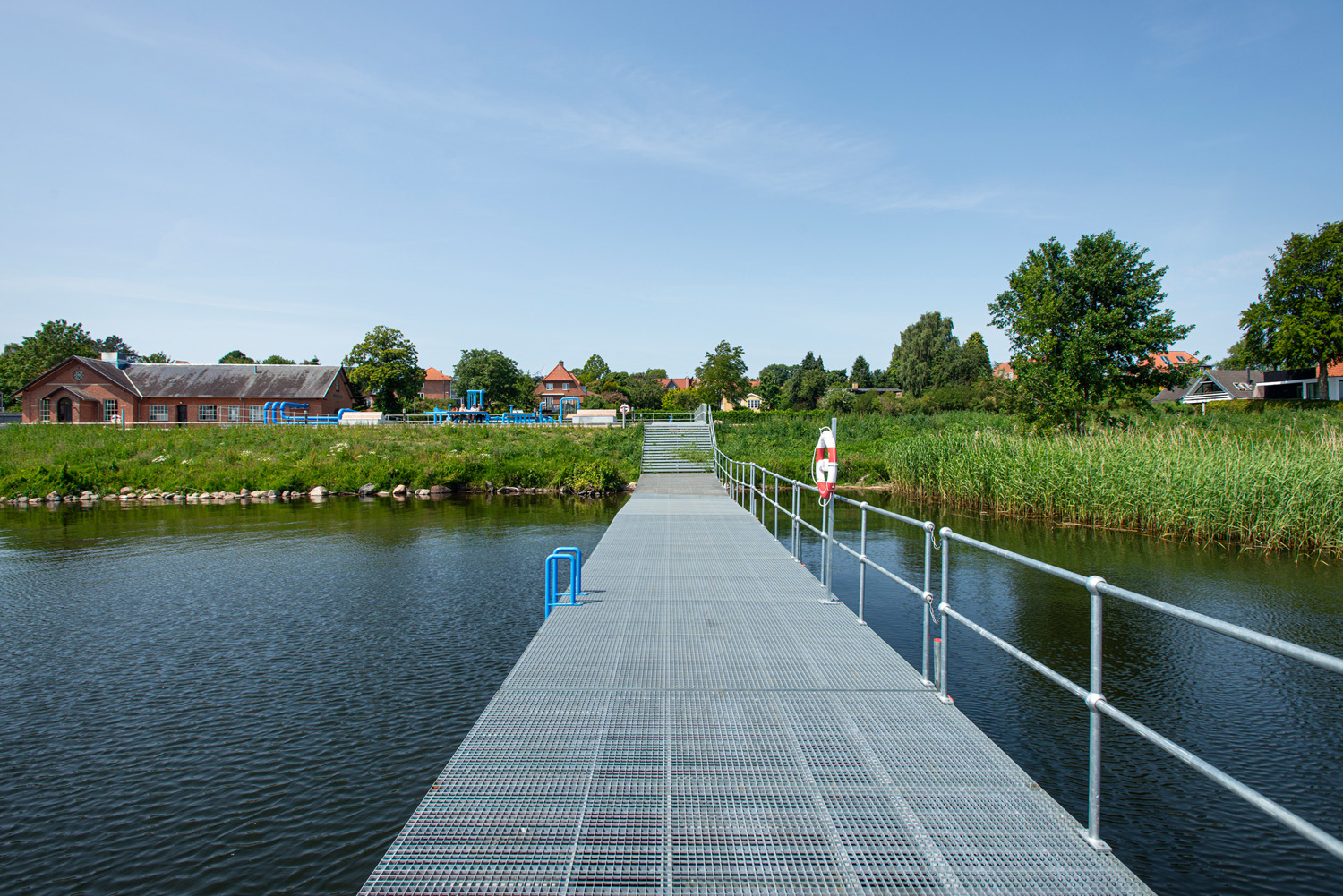
The publicly accessible outdoor space is designed as a combined technical and recreational landscape. Terrain modelling, embankments, and pathways are organised to make the basin an active part of the park, while bridges allow visitors to experience the facility up close.
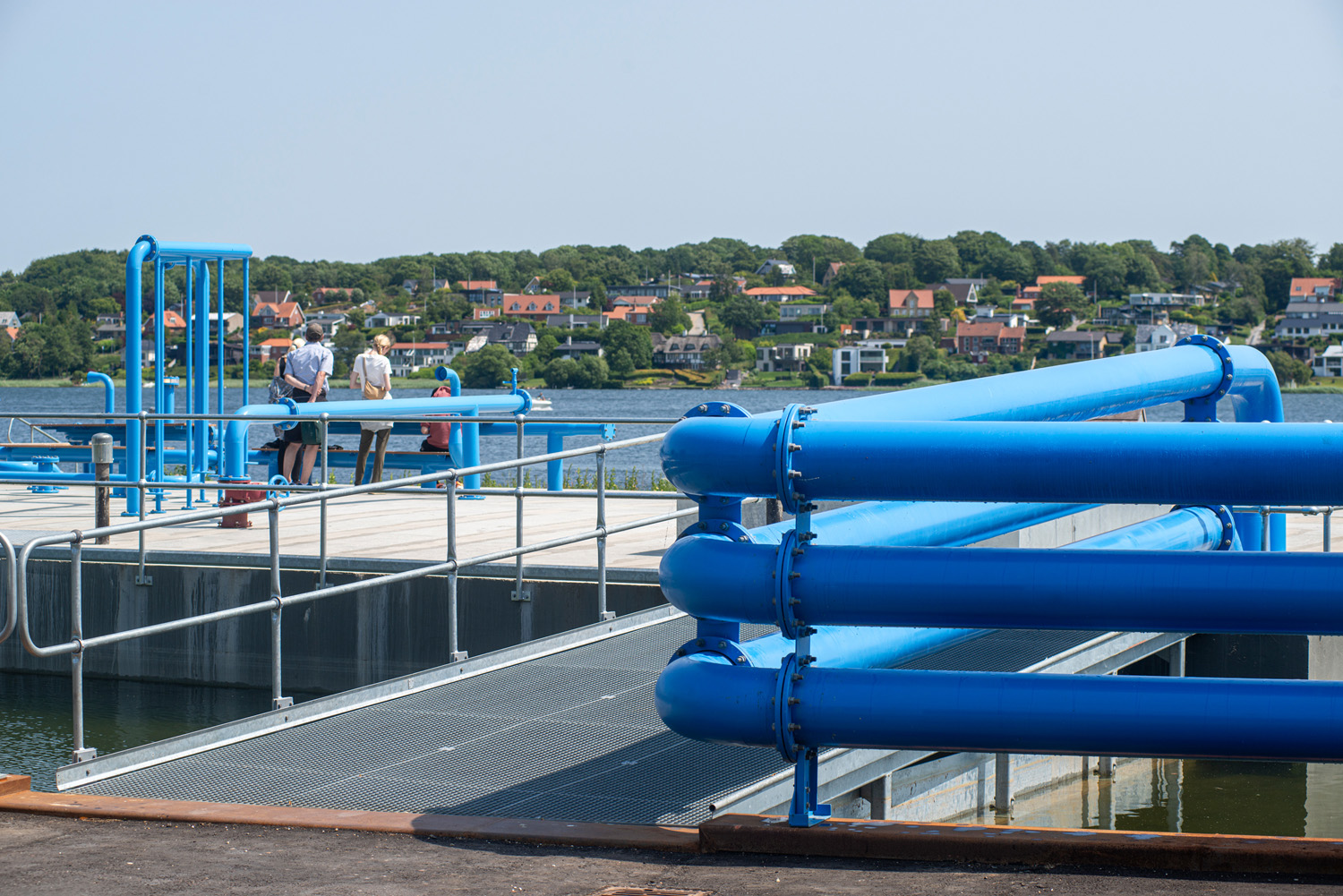
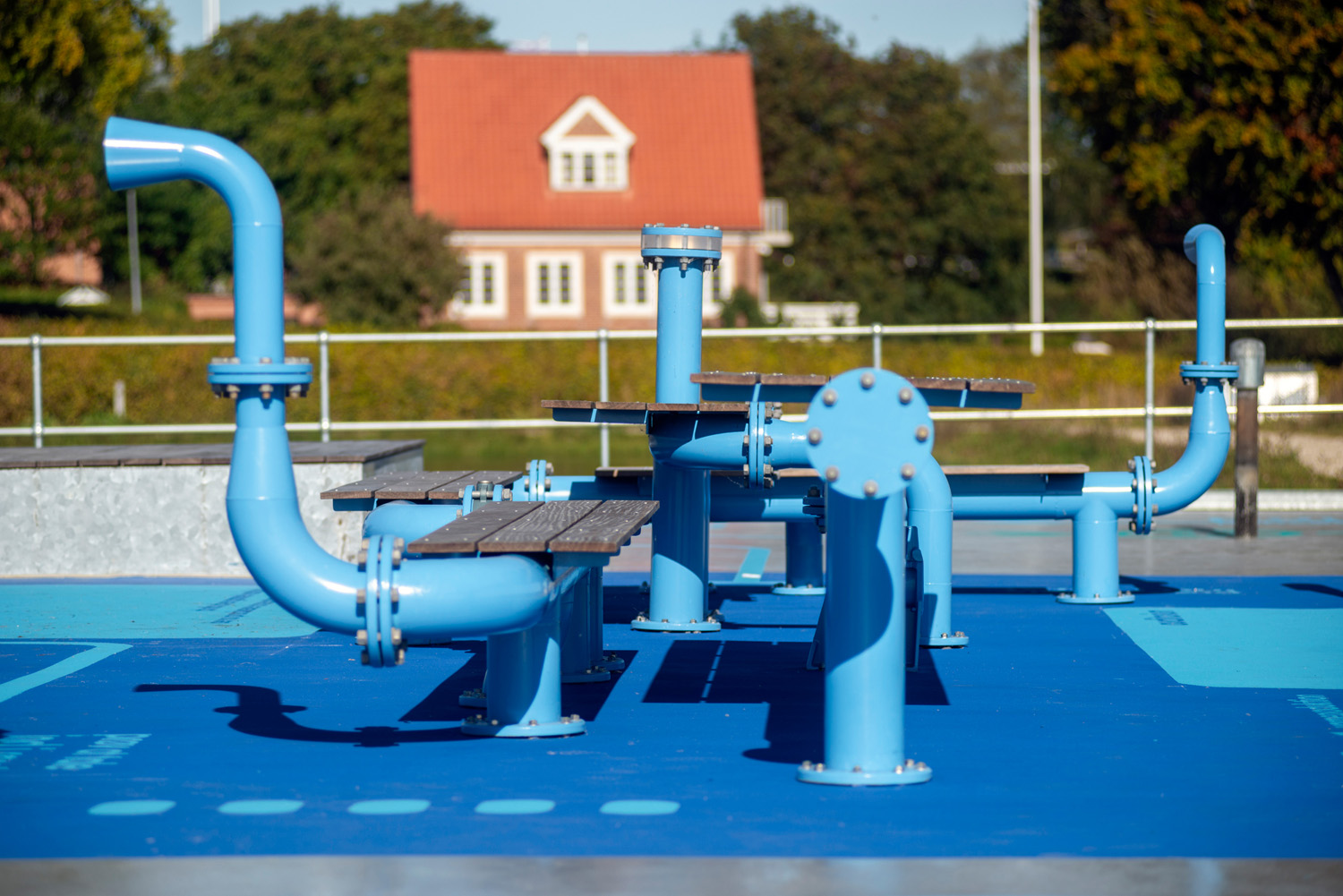
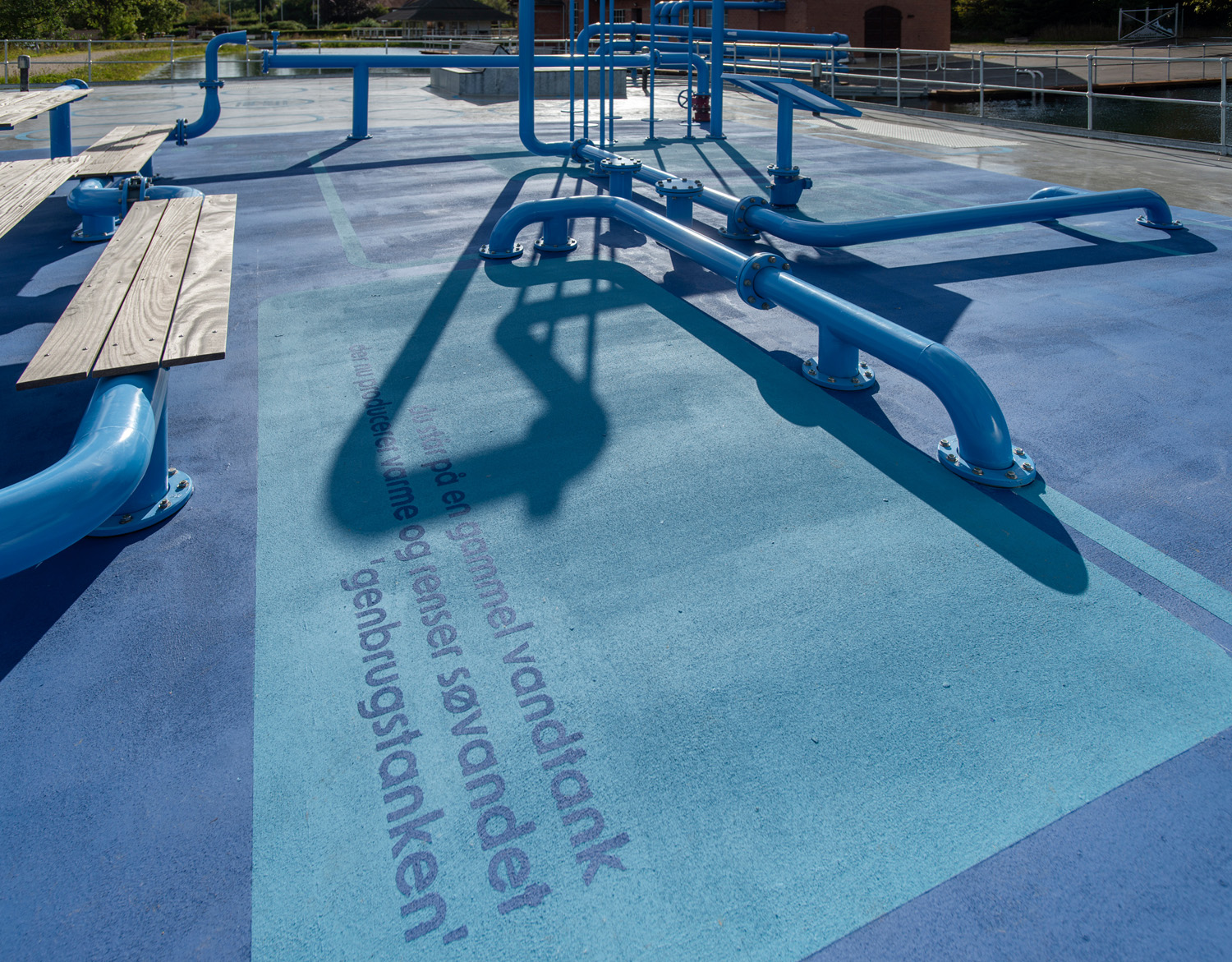
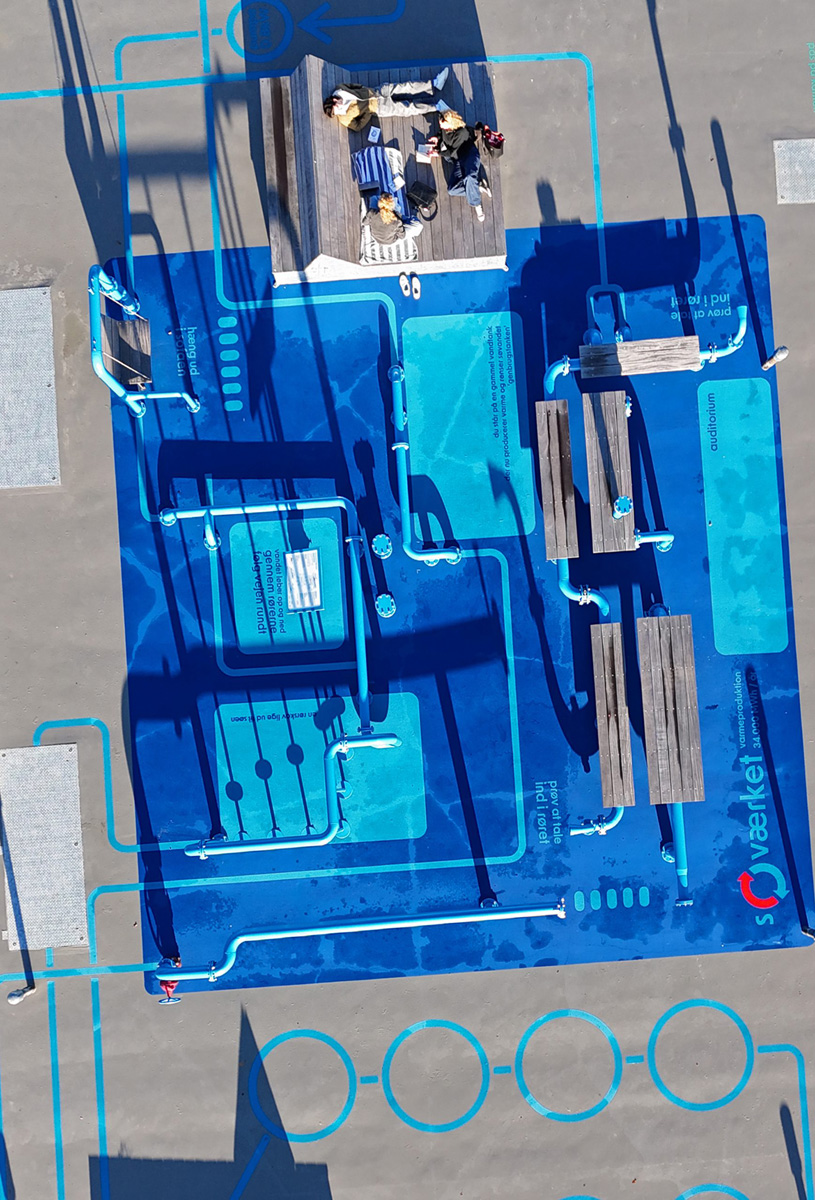
Elements such as benches and information installations are made from reused water pipes, referencing the site’s original function and making the technical processes visible. This playful approach gives the project an accessibility rarely associated with utility infrastructure.
Søværket demonstrates how existing technical structures can be given new life without losing their functional logic. The project shows that climate adaptation, energy production, and urban life need not be separate themes; they can be integrated into places where recreation, resilience, and communication go hand in hand.
Jury Statement
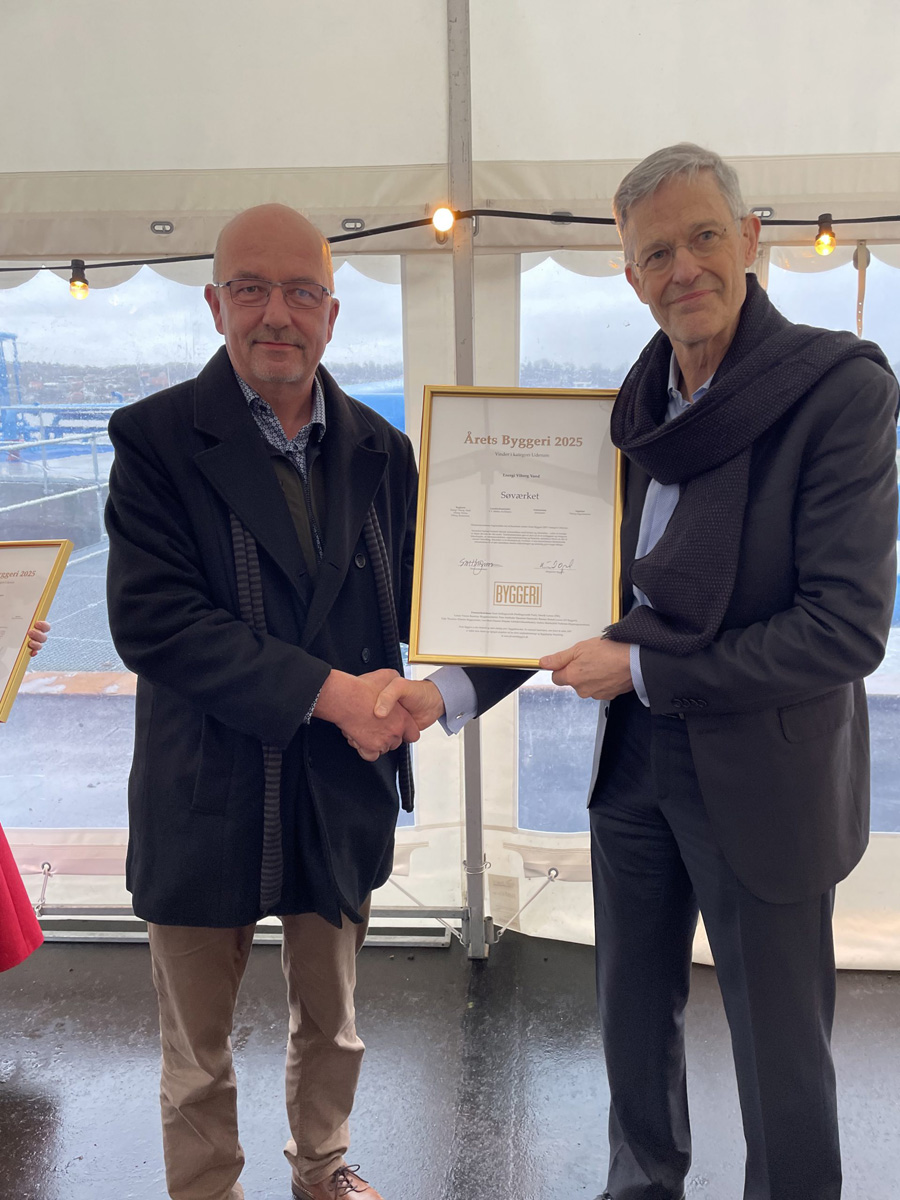
Søværket in Viborg is a project that successfully integrates technical infrastructure with public space and recreation – without concealing one from the other. On the contrary, the transformation deliberately highlights and integrates the technology, allowing heat production, rainwater treatment, and historical architecture to become part of a single narrative.
The former waterworks and treatment facility at Lake Nørresø has not merely been renovated, but reinvented as a public urban space with strong climate ambitions and a clear identity.
The architecture treats the site’s history with respect. The original red-brick waterworks buildings remain, with their distinctive details intact, while new technical elements, such as heat pumps and treatment basins, are introduced using modern materials, including corten steel and glass. This creates an honest, readable contrast in which old and new complement rather than compete with one another.
The functions are integrated with precision: heat extraction, rainwater collection, and landscape design merge into a single solution that reduces CO₂ emissions, relieves pressure on the sewer system, and adds valuable green space to the city.
Most notably, the project does not attempt to hide the technical installations. Instead, it invites understanding. Pipes, pumps, and tanks are integrated into the park’s design and given architectural presence, while surfaces and public areas reflect the character of the functions they support. This generous approach allows citizens to experience the technology up close – to see where heat comes from and how it is produced – creating both ownership and insight.
Søværket is therefore more than a facility. It is a living example of how existing infrastructure can be transformed to address today’s major challenges, while giving something back to the city. The project bridges the gap between supply and consumption, and between technology and aesthetics. It demonstrates that function and form can go hand in hand when there is the will to do so.
Project Facts
- Area: 1 ha
- Architect: C F Møller Architects
- Client: Energi Viborg, Viborg Varme, Viborg Municipality
- Contractor: Krebs
- Engineer: Viborg Ingeniørerne
- Landscape Architect: C F Møller Architects
Read the original article in Danish here.
gallery

 Curious to learn more?
You can find all our district energy news here.