For district heating (DH) utilities planning a transition to lower temperatures, Albertslund offers a broader lesson: the benefits extend well beyond reducing heat loss. The transition can also be used to redesign the network for better day-to-day operation.
By Pernille Salomonsen, Energy and Development Consultant, Albertslund Municipality
Published in Hot Cool, edition no. 5/2026 | ISSN 0904 9681 |
By combining lower temperatures with smaller hydraulic zones, local shunt and booster units, and systematic work in customer installations, Albertslund Utility has created a DH network that is easier to control, maintain, and troubleshoot, with fewer disturbances for consumers.
The case is relevant far beyond Denmark because many utilities face the same question: how can an existing DH network be prepared for new heat sources and lower temperatures without compromising security of supply? Albertslund’s answer is practical rather than prescriptive: start with the buildings and the data, divide the network into manageable steps, and treat low-temperature operation as an operational program, not only as a technical target.
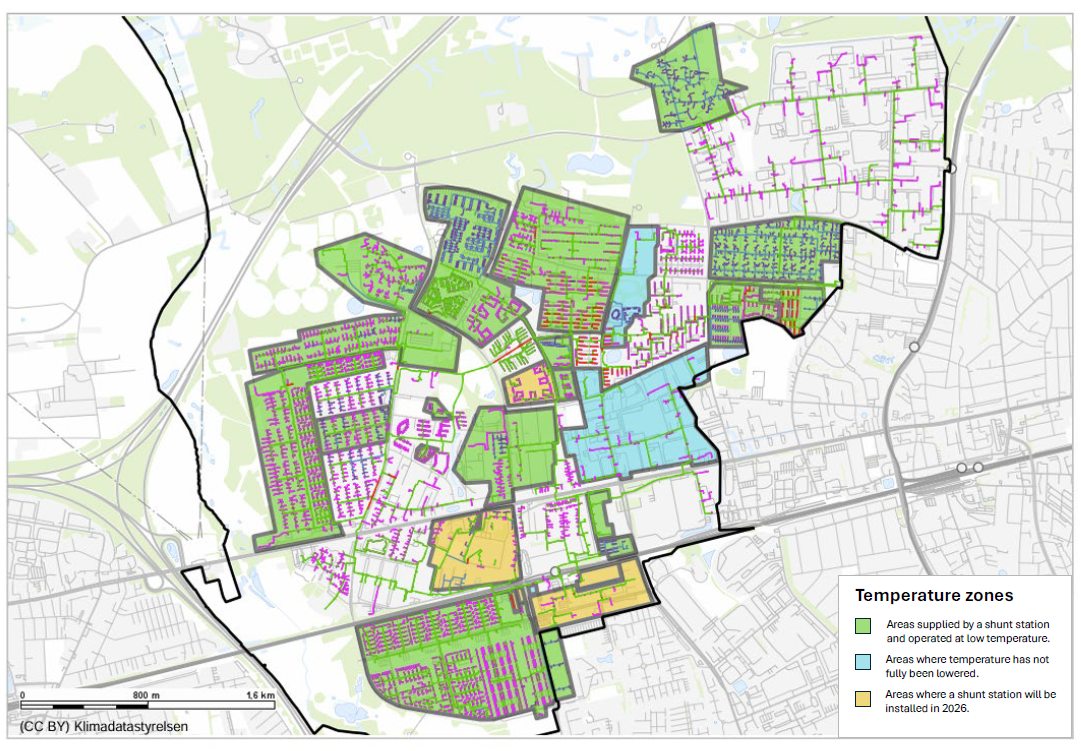 Figure 1. Over several years, Albertslund utility has lowered flow temperatures in large parts of the network and installed around 20 local shunt and substation solutions.
More than lower temperatures
Low-temperature DH is often presented as an efficiency measure. When the water in the network does not have to be as hot, it loses less heat on the way to the consumer. Lower temperatures can also improve the heat pump performance and make it easier to integrate low-grade sources such as industrial surplus heat, supermarket refrigeration, data centres, wastewater, and geothermal energy.
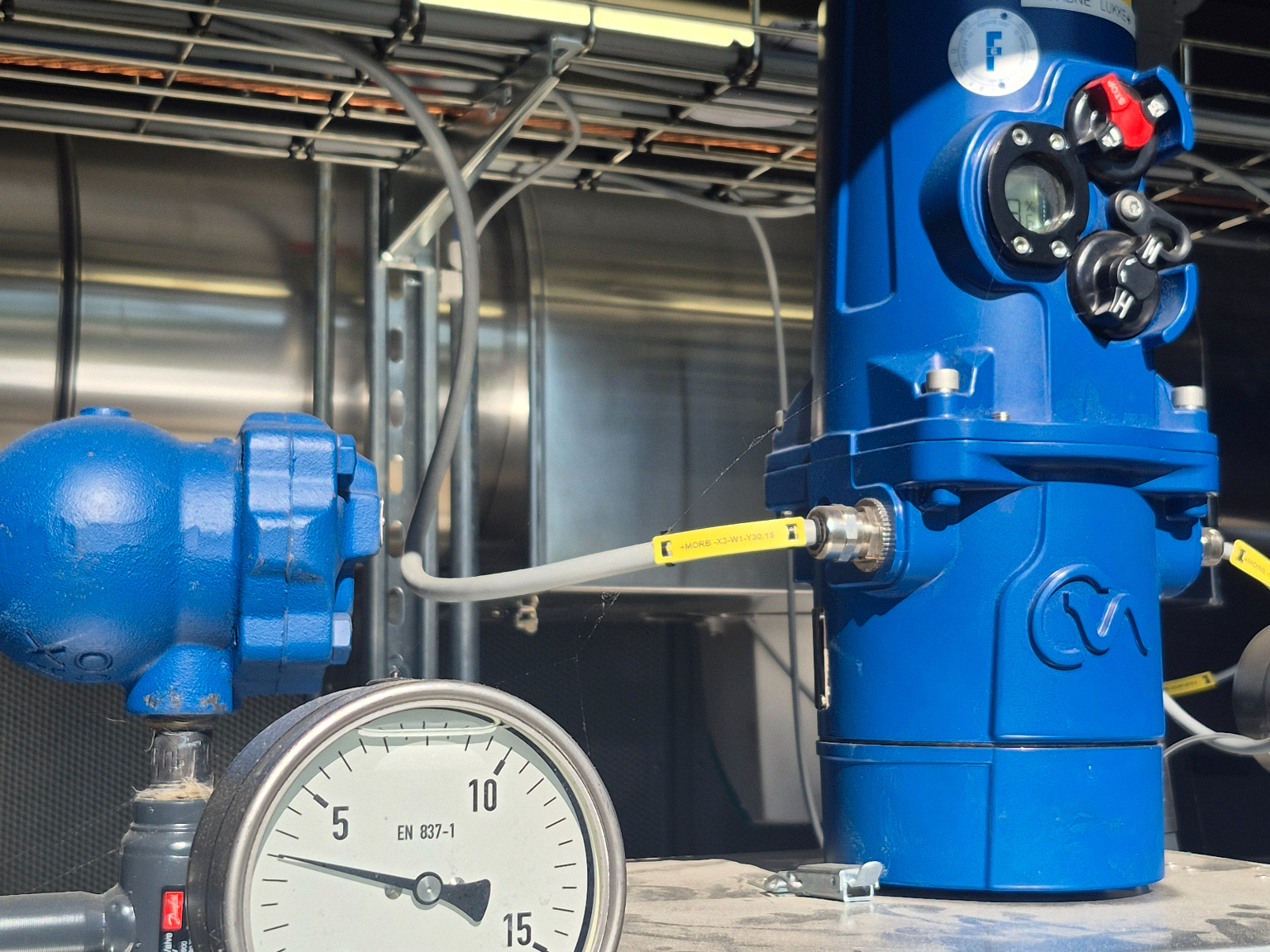
Those benefits have been an important part of the transition at Albertslund Utility. Over several years, the utility has lowered flow temperatures in large parts of the network and installed around 20 local shunt and substation solutions. The units support temperature, pressure, and circulation closer to end-users, so the entire main network does not have to operate at the highest requirement found anywhere in the system.
But the experience from Albertslund also points to something less often discussed: low-temperature DH can change how a network is operated. In Albertslund, the move towards lower temperatures has gone hand in hand with a more zoned network. That has proven valuable in day-to-day operations. Operators can respond locally instead of changing conditions for every consumer. This provides more options during normal operation, planned work, and unexpected events.
Why zones matter
A DH network can be compared to a road system. If all traffic depends on a few main roads, a single problem can affect a wide area. If the system has smaller, connected sections, it becomes easier to isolate a problem, redirect flow, and keep the rest of the system running.
The same logic applies hydraulically. Local shunt stations support temperature and pressure closer to consumers. As a result, the main network does not always have to operate at the same high level everywhere. If one area needs a little more heat or pressure, this can often be handled locally instead of adjusting the entire network.
For operators, this creates a different kind of flexibility. The network is no longer treated only as one large system controlled from a few central points. It becomes a set of smaller zones that can be managed more precisely.
This does not mean creating isolated ‘islands’ with no operational relationship. The value lies in understanding the interfaces between zones: where water enters, how pressure is maintained, which valves define the zone, and how an intervention in one area affects neighbouring areas. A clear hydraulic overview is therefore essential.
A practical route to lower-temperature operation
The Albertslund experience suggests a step-by-step approach. Start by using network data to identify the buildings and areas that determine temperature requirements.
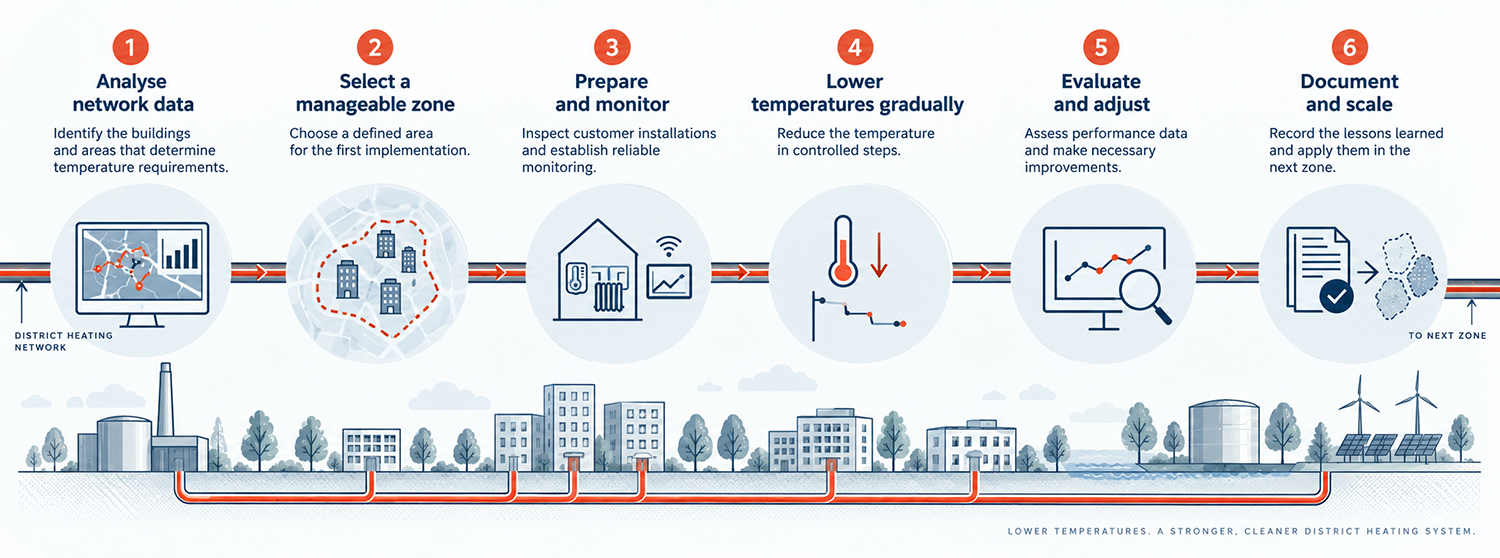
Figure 2. Step-by-step route infographic illustrating Albertslund’s approach to lowering district heating temperatures.
Smaller shutdowns and fewer disturbances
The value of zoning becomes very clear when work is carried out on the DH network. In a traditional setup, maintenance or pipework may require shutting down a large section. In Albertslund, the zone structure often makes it possible to isolate a smaller area while keeping the rest in operation. Local units can help maintain pressure and circulation for longer, even when work is taking place elsewhere.
For consumers, that means fewer noticeable interruptions. In favourable summer conditions, a short intervention may go unnoticed. For the utility, the work can be planned with more flexibility and less operational risk.
Finding faults faster
The same principle improves fault-finding. If there is a leak or sudden pressure loss, operators can isolate smaller areas, rebuild pressure step by step, and observe how the network responds. The search area becomes smaller, fewer consumers are affected, and the utility can shift from a broad, network-wide reaction to a structured diagnosis. In this sense, zoning is both a network design principle and a troubleshooting tool.
A more resilient network
DH networks depend on pumps, control systems, and electricity. A local electrical disturbance or voltage drop can therefore affect more than the immediate area around a station. Albertslund’s distribution structure has helped reduce that vulnerability. A disturbance at one location does not necessarily propagate in the same way, and local shunt or booster units may help sustain conditions in parts of the network when a larger station is affected.
Distribution alone is not enough, however. Each local station introduces equipment that must be inspected, maintained, and understood. Utilities should consider backup power, safe fallback modes, remote communication, spare parts, and access during emergencies.
They should also test scenarios rather than assume the system will respond as intended. What happens if a pump stops? Which valves should be operated? How quickly will pressure fall? Which consumers must be prioritised? Resilience is created through both physical design and rehearsed operational practice.
Lessons from international dialogue
Albertslund has hosted many visitors from utilities, municipalities and energy organisations outside Denmark. Their questions reveal that the international relevance is not limited to a particular Danish temperature level. Visitors commonly want to know how an existing system can be changed while remaining in service, how customer installations are brought into the process, how operators learn to manage several local units, and how the business case can include reliability and avoided disruption as well as reduced heat loss.
One recurring experience from these visits is that the technology is usually easier to explain than the transition process. A shunt station, pump, or control valve can be shown in a diagram. The more difficult part is coordinating network data, building improvements, investment planning, communication, and operational training over several years. The visits also underline that no universal blueprint exists. Dense urban networks, smaller towns, different building standards, and different heat sources require different zone sizes and temperature paths.
What can be transferred is the method: identify local constraints, create measurable zones, reduce temperatures in controlled steps, and use operational feedback to decide the next move. International guests often bring different regulatory and climatic conditions, but the core management challenge is recognisable: progress must be ambitious enough to support decarbonisation and cautious enough to preserve customer trust.
More flexibility, but not less responsibility
A zoned low-temperature network is not automatically simpler to operate. It may be more demanding because operators must understand how pumps, valves, controls, pressure, and local units interact. More measurement points generate more information, but also require data quality, alarm management, and clear responsibility.
The gain is not that every task becomes easier. The gain is that the utility has more options. The network can be controlled more precisely, disturbances can be contained, and maintenance can be organised around smaller operational units. To realise those benefits, utilities need competent staff, documented procedures, and a culture in which operating experience feeds back into planning and design.
A lesson for other district heating companies
For utilities considering lower temperatures, the key message from Albertslund is to broaden the objective. Do not treat the project solely as an exercise in reducing a temperature setpoint. Use it as an opportunity to examine the network’s operational architecture.
Begin with the consumers and the data. Find the buildings and hydraulic conditions that define the present limit. Choose a zone where learning is possible, install the necessary monitoring, and agree in advance how success will be measured. Include heat loss, return temperature, and pumping energy, but also track interruptions, time spent locating faults, the number of consumers affected by maintenance, and the operator’s ability to restore normal conditions.
Then scale in stages. The right solution may include local shunts, boosters, new valves, building-level improvements, or changes in control strategy. The exact combination will vary, but the principle remains: solve local needs locally where this avoids imposing unnecessarily high conditions on the whole network.
Most importantly, involve operations from the beginning. The people who run the network know where pressure is fragile, where consumer complaints arise, and which interventions are difficult. Their knowledge is essential to designing zones that work outside the hydraulic model.
Low-temperature DH is therefore not only about efficiency or future heat sources. When combined with deliberate zoning and strong operational practice, it can create a network that is easier to adapt, more precise to operate and more resilient when conditions change. That is the inspiration Albertslund can offer internationally: the temperature transition can also be an operational transformation.