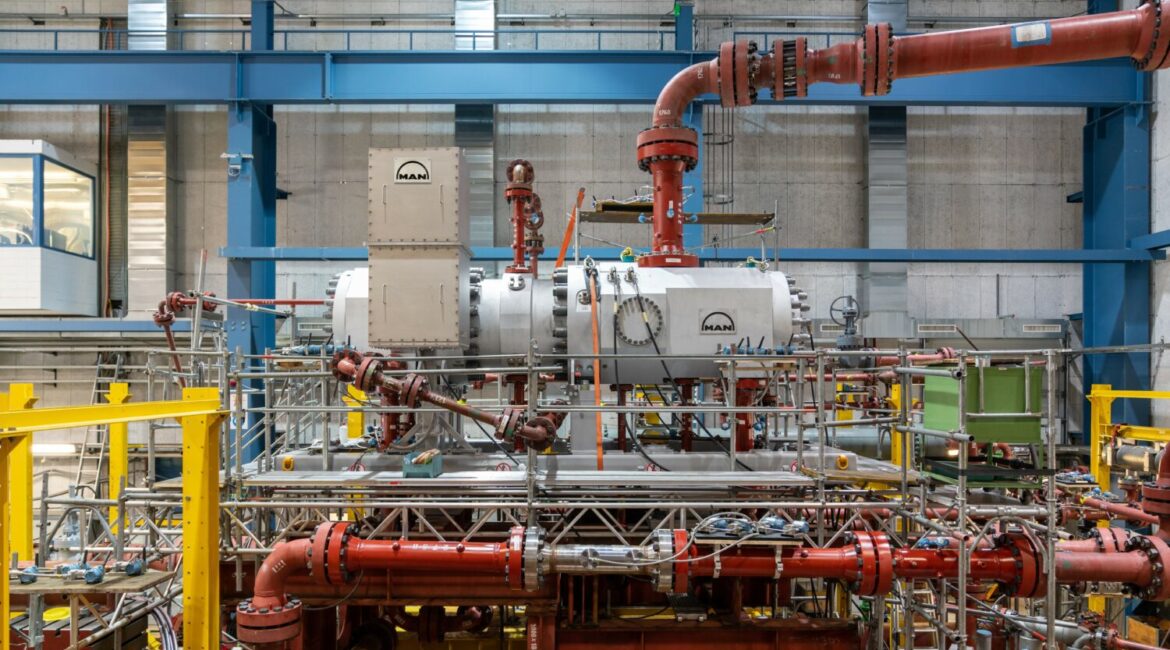
Make the most of the resource
The most important reason for integrating large-scale heat pumps into a geothermal system is that they enable the extraction of more heat from the reservoir than with heat exchangers alone. With large-scale heat pumps, heat can be extracted at temperatures below the return temperature of the district heating system, increasing the total output of the geothermal district heating plant.
Why geothermal sometimes needs a boost
Geothermal energy is a stable and renewable source of heat, but in some locations, the natural water temperature in deep aquifers is not quite high enough to meet the supply temperature requirements of a district heating network.
Modern networks often operate at 70–90°C in winter, while geothermal wells in low- to medium-temperature reservoirs may produce water at 30–90°C. That’s where large-scale heat pumps come in – upgrading the temperature so the heat can be used efficiently without overloading backup systems.
________________________________________
How large-scale heat pumps work with geothermal sources
A heat pump doesn’t create heat; it moves it from a colder source (in this case, the geothermal water) to a warmer sink (the district heating system). In a geothermal system, the heat pump extracts thermal energy from the geothermal water and “lifts” it to a higher temperature using electricity.
The process typically works like this:
- Geothermal water from the production well passes through a heat exchanger, transferring its energy to the heat pump circuit.
- The heat pump compressor raises the temperature of the district heating water by cooling the geothermal water.
- The upgraded heat is transferred to the district heating water, ready for distribution.
- The cooled geothermal water is reinjected into the reservoir for long-term sustainability.
________________________________________
Advantages of adding heat pumps to geothermal systems
- Access to more resources – Lower-temperature aquifers become viable, expanding the number of potential geothermal sites.
- Improved efficiency – Optimises geothermal output so less backup heating is required.
- Flexibility in network operation – Allows integration with variable supply temperatures and seasonal demand patterns.
- Decarbonisation boost – When powered by renewable electricity, heat pumps deliver additional heating capacity with minimal or no emissions.
________________________________________
Design considerations
Integrating a large-scale heat pump with a geothermal system requires careful planning:
- Sizing – The heat pump should be matched to the expected flow and temperature from the geothermal wells and the requirements of the district heating system.
- Electricity source – Renewable power maximises environmental benefits.
- COP (Coefficient of Performance) – Higher source temperatures and smaller temperature lifts result in better efficiency.
- Network compatibility – Systems with lower supply temperature requirements get the most benefit from heat pumps.
________________________________________
Examples in action
- Paris Basin, France – Geothermal networks use large-scale heat pumps to lift 60–70°C aquifer water to 80–85°C for urban supply.
- Tianjin, China – Heat pumps make moderate-temperature aquifers highly productive in large urban heating systems.
- The Netherlands – Paired with shallow, lower-temperature wells, heat pumps allow district heating and greenhouse systems to run efficiently year-round.
________________________________________
The future of geothermal heat pump integration
As more district heating networks move toward lower supply temperatures for efficiency, the synergy between geothermal and large-scale heat pumps will only grow. This combination offers a way to tap into abundant but moderate-temperature resources while maintaining a reliable, decarbonised heat supply.
________________________________________
In summary
Large-scale heat pumps turn good geothermal resources into great ones. By raising the temperature of geothermal heat to match district heating needs, they expand the number of viable sites, improve system performance, and help cities move faster toward net-zero heating.
________________________________________