How can Danish district cooling experience help cities in Latin America and the Caribbean develop efficient, sustainable and financially viable cooling systems? This was the focus when an international delegation visited Copenhagen on 22 October 2026.
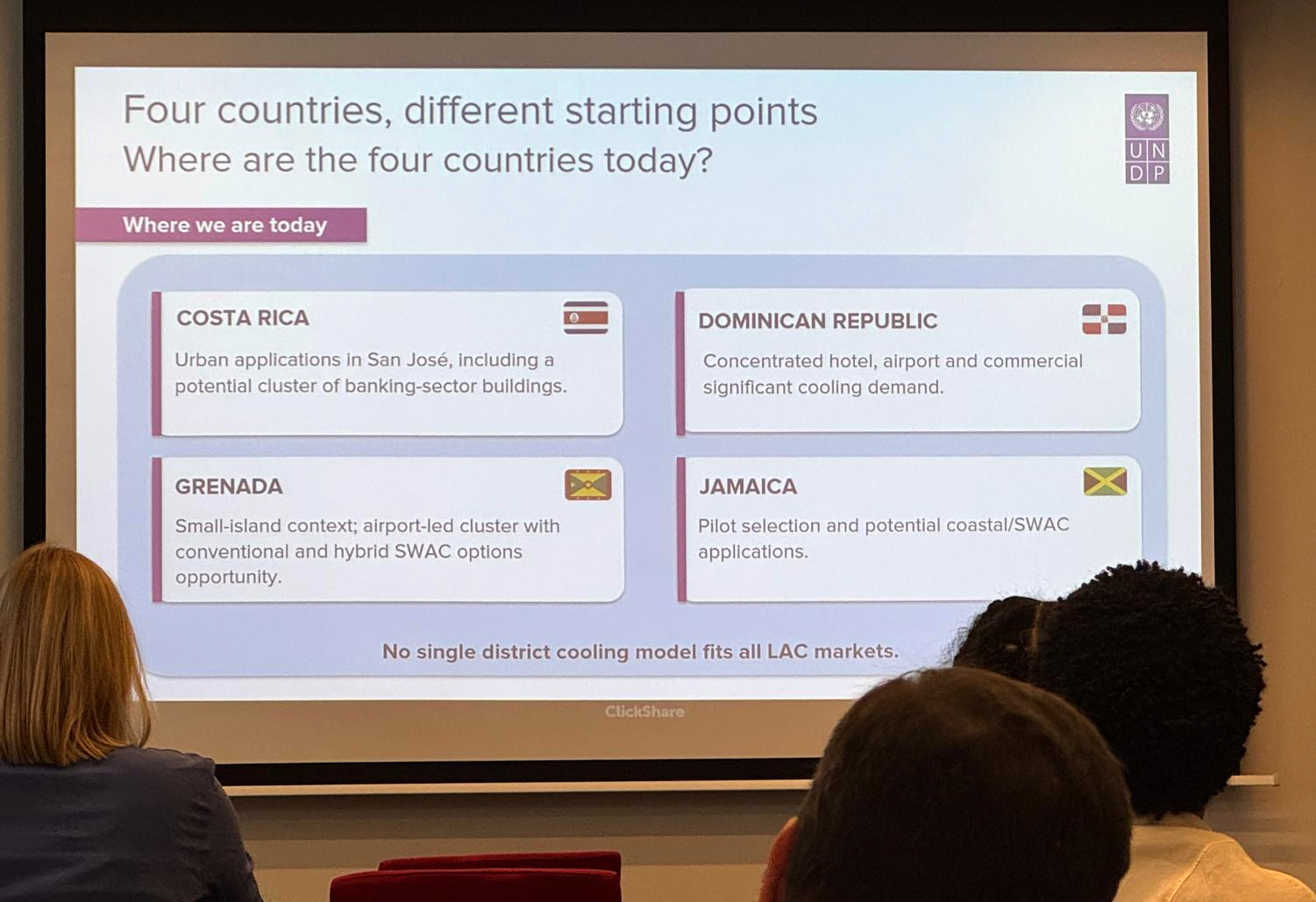
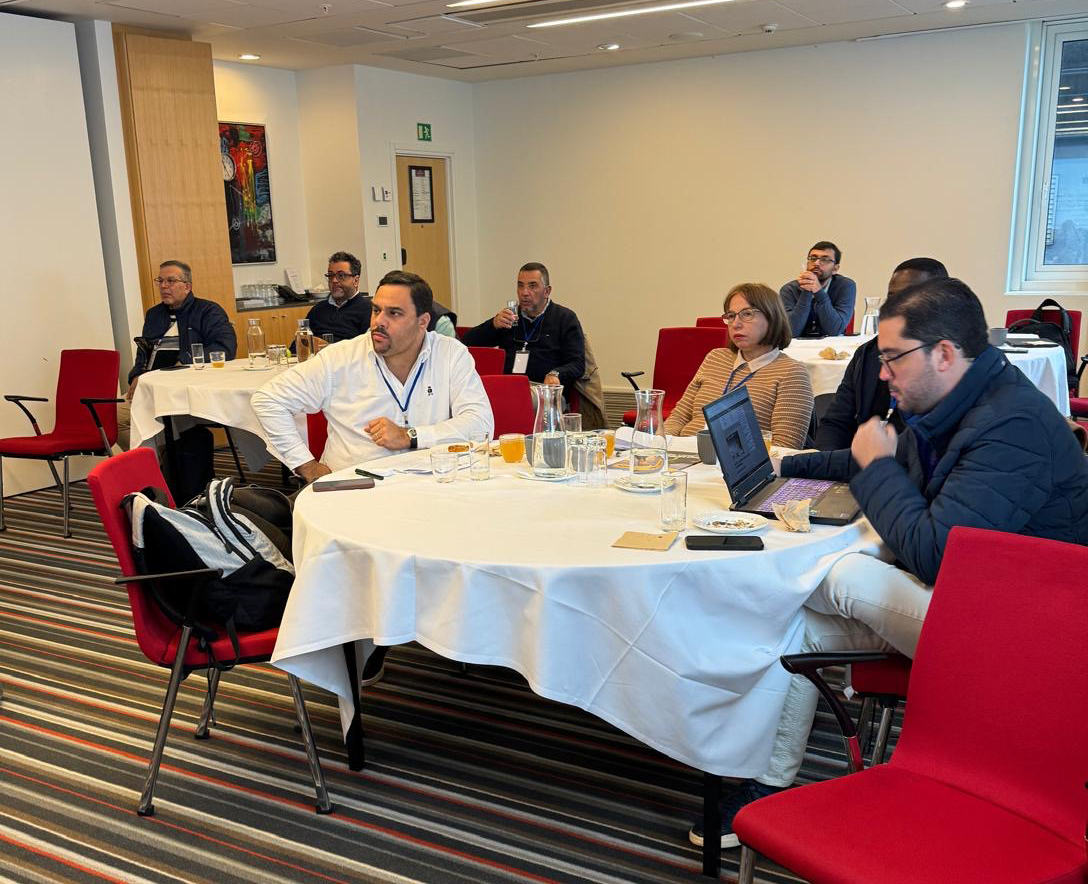
The visit was part of the Nordic-LAC District Cooling Innovation Exchange, organised by UNDP and funded by the European Union. Representatives from Costa Rica, the Dominican Republic, Grenada and Jamaica came together with Danish district energy experts to explore how district cooling projects can move from technical potential to practical implementation.
The workshop focused on sharing Danish experience with energy planning, regulation, business models and real-world district cooling applications.
Danish Experience: Planning, Regulation and Business Models
Lars Hummelmose, Managing Director of DBDH, introduced Denmark’s approach to district cooling and its integration with district heating, electricity systems and urban energy planning.
He highlighted how long-term planning, clear regulatory frameworks and commercially viable business models are essential for developing successful district cooling infrastructure.
A central message was that Latin American cities should adapt Danish principles to their own conditions rather than simply replicate Danish solutions.
This includes identifying areas with concentrated cooling demand, securing major customers early and exploring opportunities to integrate cooling with other energy systems.
Integrated Energy Planning Creates New Opportunities
Sara Shapiro-Bengtsen from Ea Energy Analyses presented how integrated energy system modelling can support better investment decisions.
By analysing electricity, heating, cooling and energy storage together, cities can identify opportunities to improve efficiency, integrate renewable energy and reduce overall system costs.
The presentation demonstrated why district cooling should be considered part of the wider energy system rather than developed as an isolated infrastructure solution.
District Cooling in Practice: Lessons from Høje Taastrup
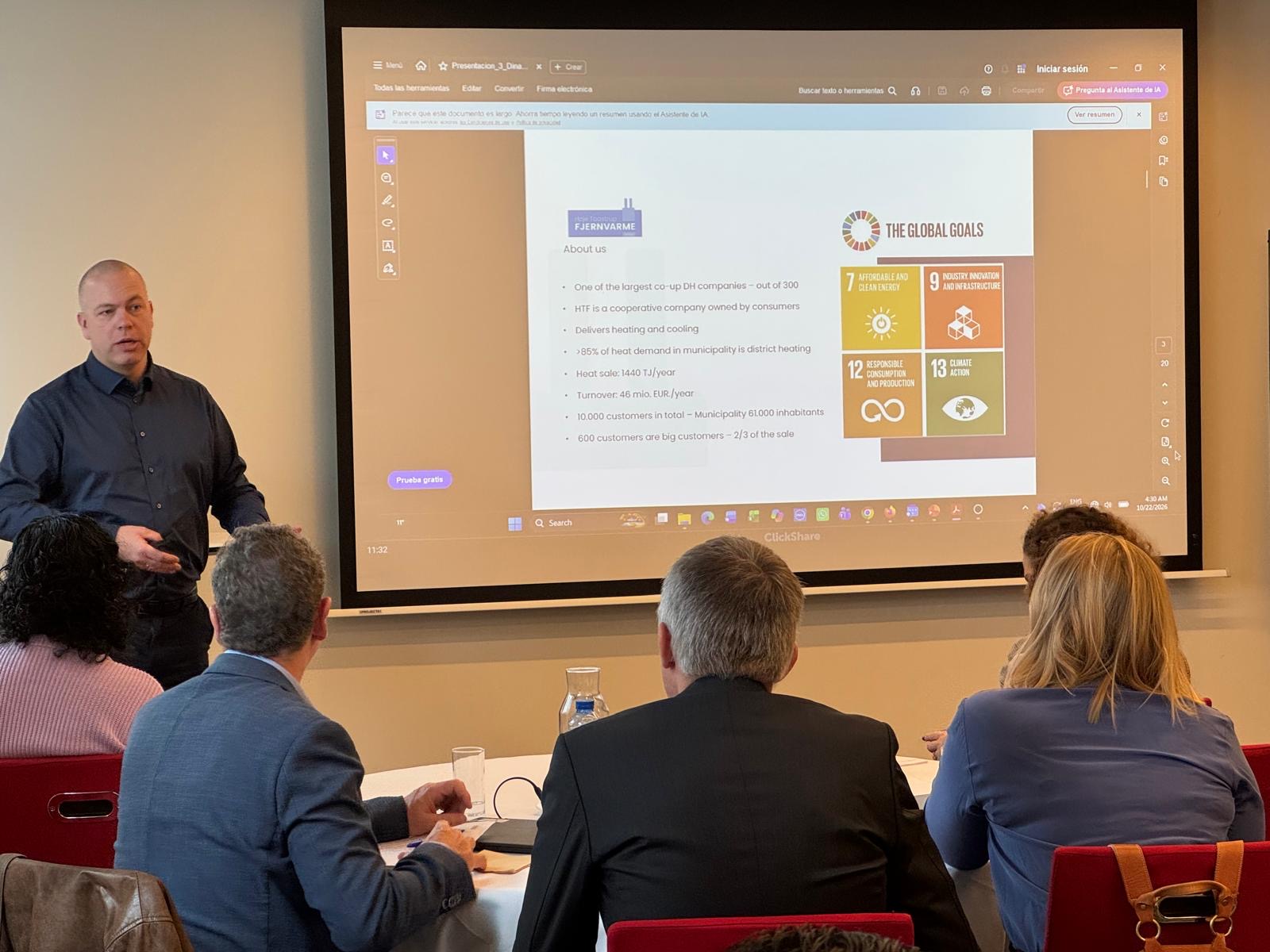
Frederik Rugaard from Høje Taastrup Fjernvarme shared practical experience from developing and operating district cooling systems in Denmark.
His presentation covered customer cases involving commercial buildings, shopping centres and data centres, demonstrating how district cooling can be combined with heat recovery and district heating production.
Høje Taastrup’s experience also highlighted the importance of energy storage, reliable operation and close cooperation with customers when developing new cooling infrastructure.
Turning Knowledge into Action
The workshop concluded with discussions about the barriers to implementing district cooling in Latin America and the Caribbean, including investment requirements, customer commitments and regulatory conditions.
The exchange provided an opportunity to connect Danish technical and operational experience with the specific challenges facing cities in the participating countries.
For DBDH, international knowledge exchange is an important part of accelerating sustainable district energy development worldwide.
The visit demonstrated how cooperation between international organisations, energy specialists and utilities can help turn district cooling opportunities into practical solutions.
DBDH thanks UNDP, the European Union, Ea Energy Analyses, Høje Taastrup Fjernvarme and the visiting delegation for an engaging exchange of knowledge and experience.
Read the latest industry news on dbdh.org here.