JPH Energi A/S brings decades of experience in upgrading biogas plants, modernizing and installing district heating systems, and a broad understanding of energy production processes and value chains. This includes both technological and financial expertise, essential for securing bankable projects. Specialist skills span thermodynamics, power systems, thermal storage tanks, engine-based CHP units, heat pumps (including CO₂ cycles), electric boilers, and biomass boilers, as well as the critical interplay among these technologies to meet simultaneous electricity and heat demands.
Published in Hot Cool, edition no. 2/2026 | ISSN 0904 9681 |
This case from Bramming, an urban district heating plant, demonstrates how a strategic combination of CHP engines, CO₂ heat pumps, electric boilers, and thermal storage can support the green transition while delivering a flexible and future-proof district heating system and improving resilience in volatile power markets.
It is a real-world example of increased electrification of heat production, a resilient portfolio capable of adapting to fluctuating markets, and evidence-based decision-making in practice. Improved efficiency delivers lower marginal heat costs, enhanced flexibility revenue, and a documented reduction in carbon intensity.
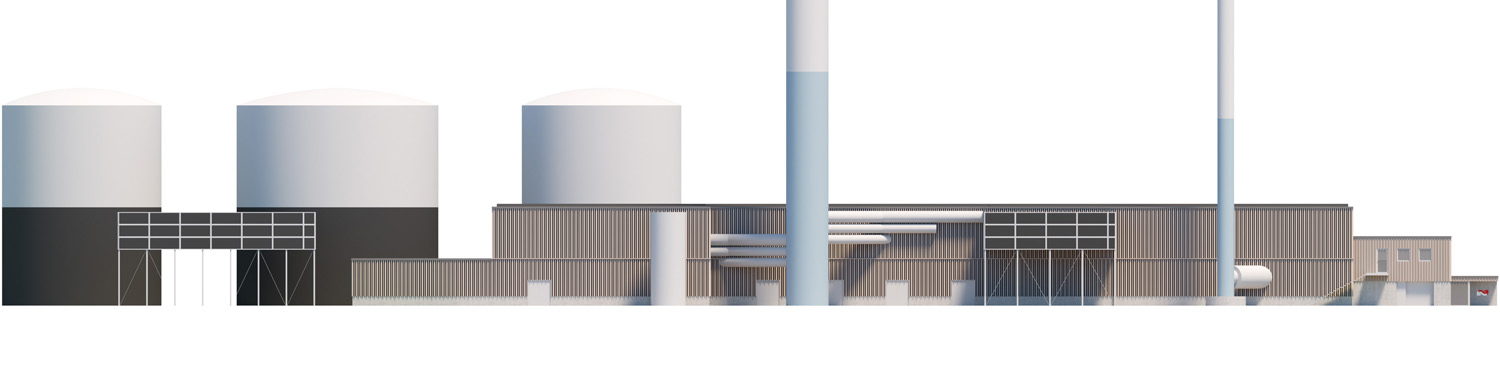
Expected reduction of gas consumption from 21.486 MWh and 30% of the heat production to 0 from the gas boiler. The case is particularly relevant to district heating professionals because it addresses operational and investment challenges faced by utilities as they navigate the green transition.
Ultimately, Bramming demonstrates how an urban plant can support the green transition while maintaining high security of supply, competitive heat prices, and strong socio-economic value. Locally and across the energy system.
Rather than focusing on individual technologies, it illustrates how value is created through system design and interaction:
- Portfolio design instead of one-to-one asset replacement.
- Flexibility and market participation rather than base load operation.
- Electrification is supported by thermal storage.
- Economic and regulatory robustness under volatile markets.
Objectives
Bramming District Heating is undergoing a strategic transformation of its combined heat and power (CHP) plant. The objective is to secure a flexible, future-proof, and economically resilient heat supply that reduces dependence on natural gas while leveraging the synergies between electricity and heat production.
The project is grounded in documented techno-economic analyses and executed through close collaboration between the board, plant management, and the municipality, following a phased approach from initial screening through commissioning.
The plant is situated in the city center, requiring a careful balance between supply security, environmental considerations, and compliance with local planning regulations. Historically, winter heat demand has been largely met by natural gas-fired boilers.
See figure 1 above: Layout of the plant before the transition. Illustration source by P+P Architects in Aarhus.
The challenge is threefold:
- Significantly reduce gas consumption,
- Support the green transition through technologies aligned with an increasingly electrified energy system, and
- Ensure robust economics under volatile electricity and gas price conditions—both short‑ and long‑term.
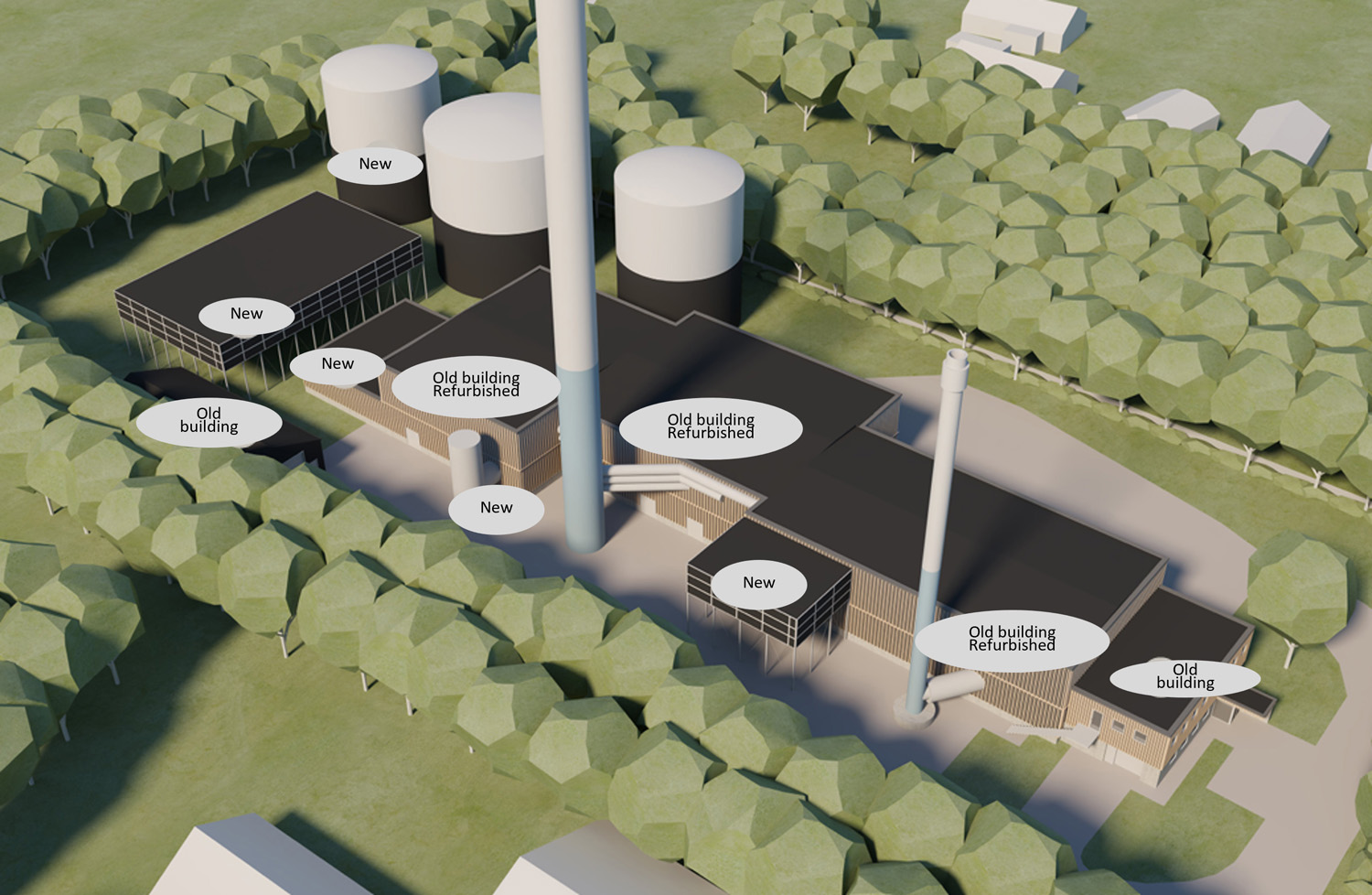
Figure 1. Layout of the new plant. Besides layout of the new plant, new claddings are suggested but not part of the solution planned so far. Illustration source by P+P Architects in Aarhus
Key solutions implemented in Bramming include:
- Engine replacement: One large CHP unit is replaced by two smaller CHP units, increasing total electrical capacity to 6 MW and improving part‑load efficiency, availability, and participation in balancing markets.
- CO₂ heat pump: 6 MW plus 2 MW air‑to‑water heat pump is installed. The 2 MW heat pump are supplemented by a flue‑gas heat recovery from the CHP units. This improves system efficiency and enables low‑cost heat production during low-electricity price periods and extends the CHP unit’s operation when needed.
- Thermal storage: A new 3,000 m³ storage tank complements existing storage, enabling load shifting, reduced cycling, and increased operational flexibility.
- Asset integration: Existing electric boilers and CHP units are retained and integrated, allowing sequential and parallel operation optimized for market conditions.
- Gas boiler phase‑out: The gas boiler is no longer needed, significantly reducing gas use and CO₂ emissions.
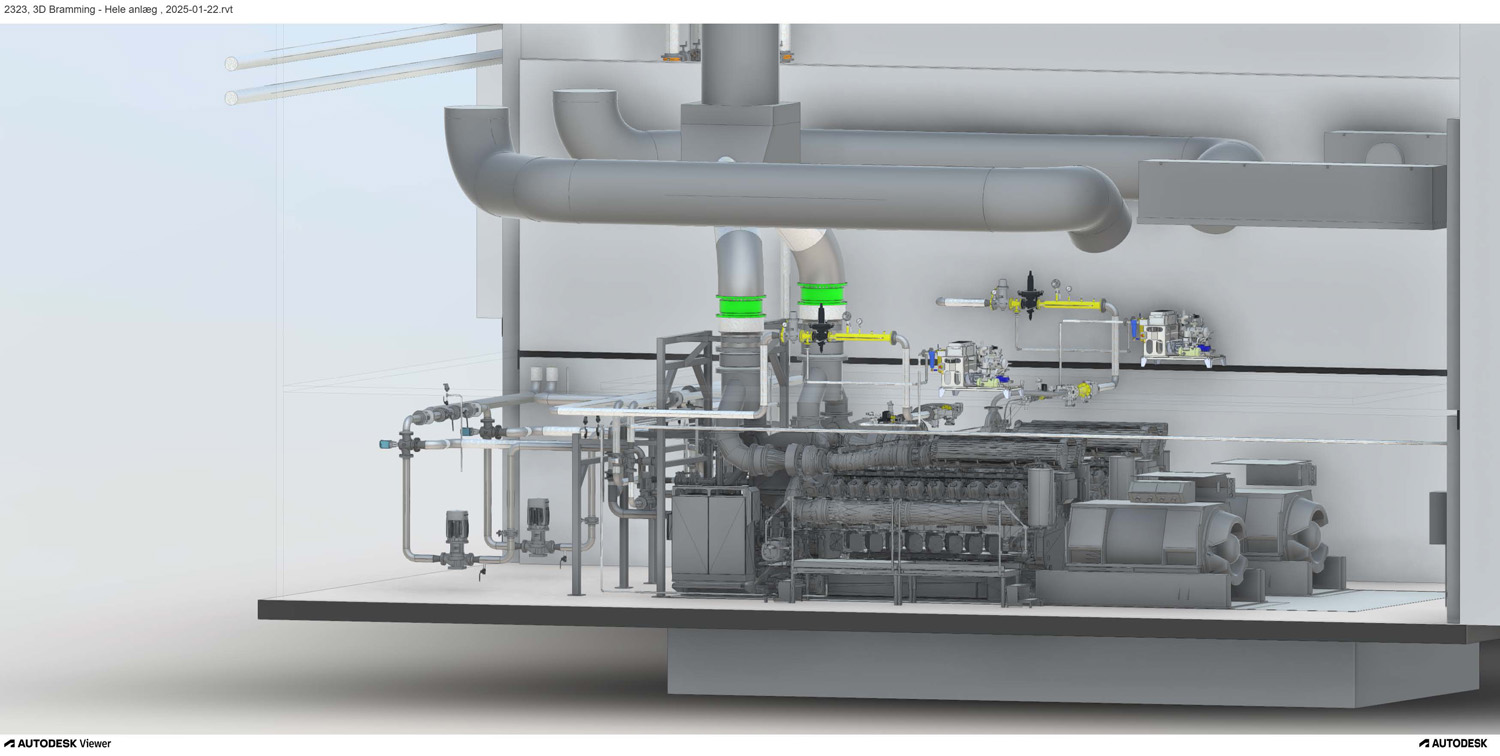
Figure 5: Engine room 4, where the former one bigger engine is replaced with two smaller engines. The purpose of two 3 MWe compared to a new 6 MWe engine is the faster response time to market needs, higher overall efficiency and by reusing the building and those installations possible to reuse at the site, investment and environmental impacts are optimized. Illustration source JPH Energy A/S
Analytical Framework and Decision Process
The approach is based on techno‑economic optimization of multiple scenarios, including hour‑by‑hour simulations of heat and electricity production. These simulations capture exposure to electricity price fluctuations, capacity tariffs, ancillary services, and CO₂ price sensitivity. Each scenario is evaluated using comprehensive investment analyses covering CAPEX, OPEX, lifetime heat costs, sensitivity analyses, and risk profiles.
The project relies on deep expertise in electricity markets and ancillary services, including FCR and aFRR/mFRR, as well as the regulatory drivers shaping these markets. Analytical capabilities focus on identifying the optimal combination of electricity and heat production at any given time, considering spot prices, efficiencies, start‑stop costs, and thermal constraints.
Results are consolidated into a structured decision‑making framework developed jointly with the board, plant management, and the municipality. This ensures compliance with the Heat Supply Act, environmental legislation, and local planning requirements. Following approval, the project proceeds to tendering with clear functional specifications and includes supervision during execution to ensure quality, timelines, and regulatory adherence.
Results and Impact
The resulting system substantially reduces winter gas consumption, a consumption corresponding to approximately 21.486 MWh and 30% of the heat production from the gas boiler to 0, increases electrification of heat production, and creates a resilient portfolio capable of adapting to fluctuating markets. Expanded thermal storage and improved efficiency deliver lower marginal heat costs, enhanced flexibility revenue, and a documented reduction in carbon intensity.
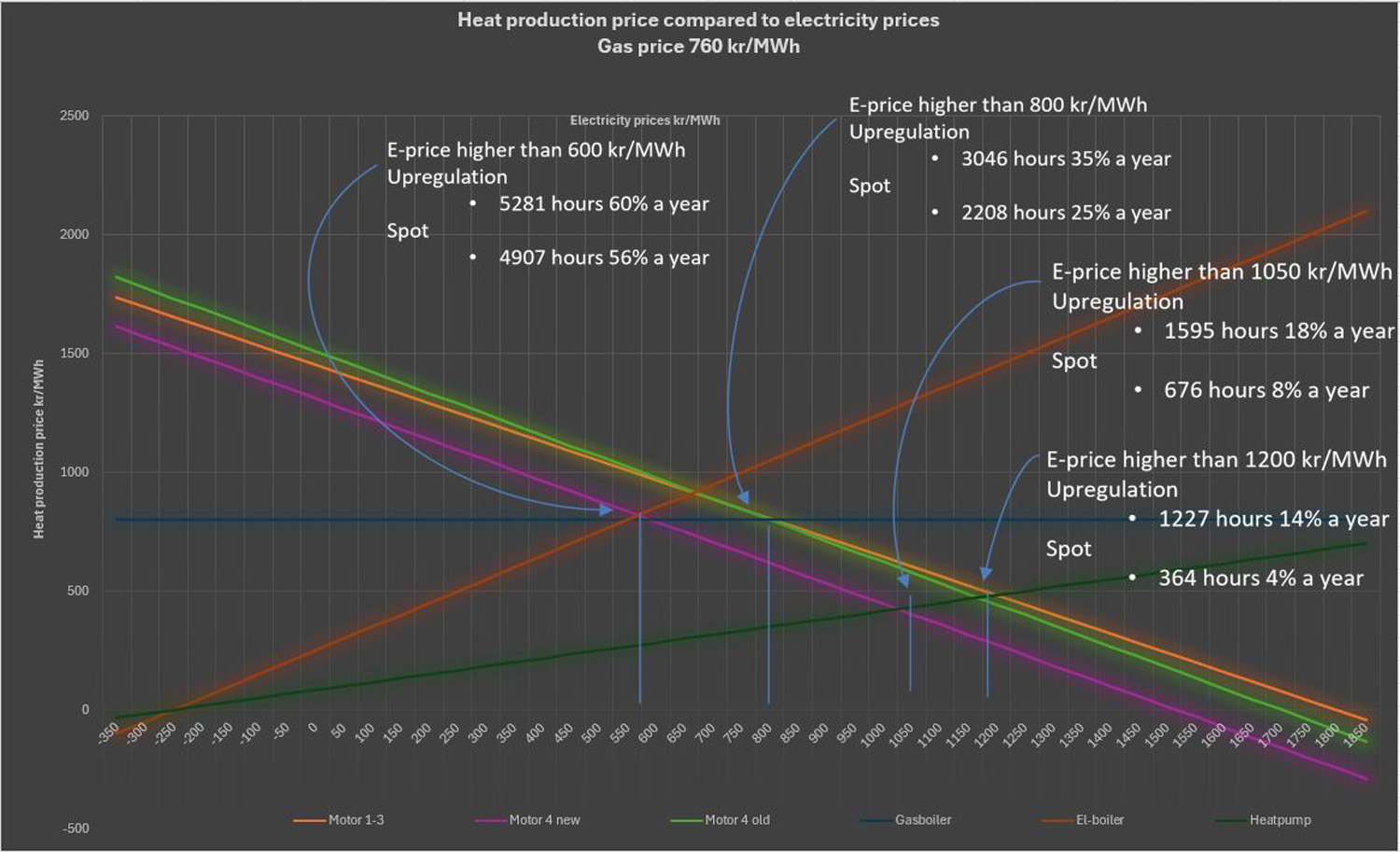
Figure 7. The significance of replacing the engine compared to other technologies installed at the plant and older engines. It illustrates the increased system robustness and security of supply, as well as the operational flexibility that becomes available when high capacity is required on a winter day. In general, this is the daily planning scheme the plant operating managers are looking into.
Read more about JPH Energi A/S here.
The Member Company profile for JPH Energi A/S was published in Hot Cool, edition no. 2/2026. You can download the article here:
Did you find this article useful?
Subscribe to the HOT|COOL newsletters for free and get insightful articles on a variety of topics delivered to your inbox twice a month!