By Morten Stobbe, CEO International, Ingeniør Huse A/S, and Jens Enevoldsen, CEO, Billund District Heating
Published in Hot Cool, edition no. 1/2026 | ISSN 0904 9681 |
An energy system in transition
Europe and Denmark are in the midst of a historic transition, where heat production is increasingly shifting from biomass and fossil fuels to electricity-based technologies.
The increasing electrification and growing supply of renewable electricity are making electricity-based heat production cheaper and more sustainable.
Billund District Heating is among the utilities leading this development. Billund is a small town in Southern Jutland with approximately 7,500 inhabitants. The town is best known for the LEGOLAND theme park, which typically attracts more than 1.5 million visitors annually, and it also has an airport serving around 4 million passengers each year.
With a modern plant that combines large heat pumps, electric boilers, and a thermal storage tank, the utility has equipped itself efficiently for the future and serves as an inspiring example for other similar medium-sized district heating utilities.
Project objectives
The objectives of the transformation of the company were threefold: to reduce the CO₂ footprint; to future-proof heat production with respect to flexibility and operational reliability; and, not least, to improve conditions for district heating consumers by optimizing heat prices through the operation of the lowest-cost available production units.
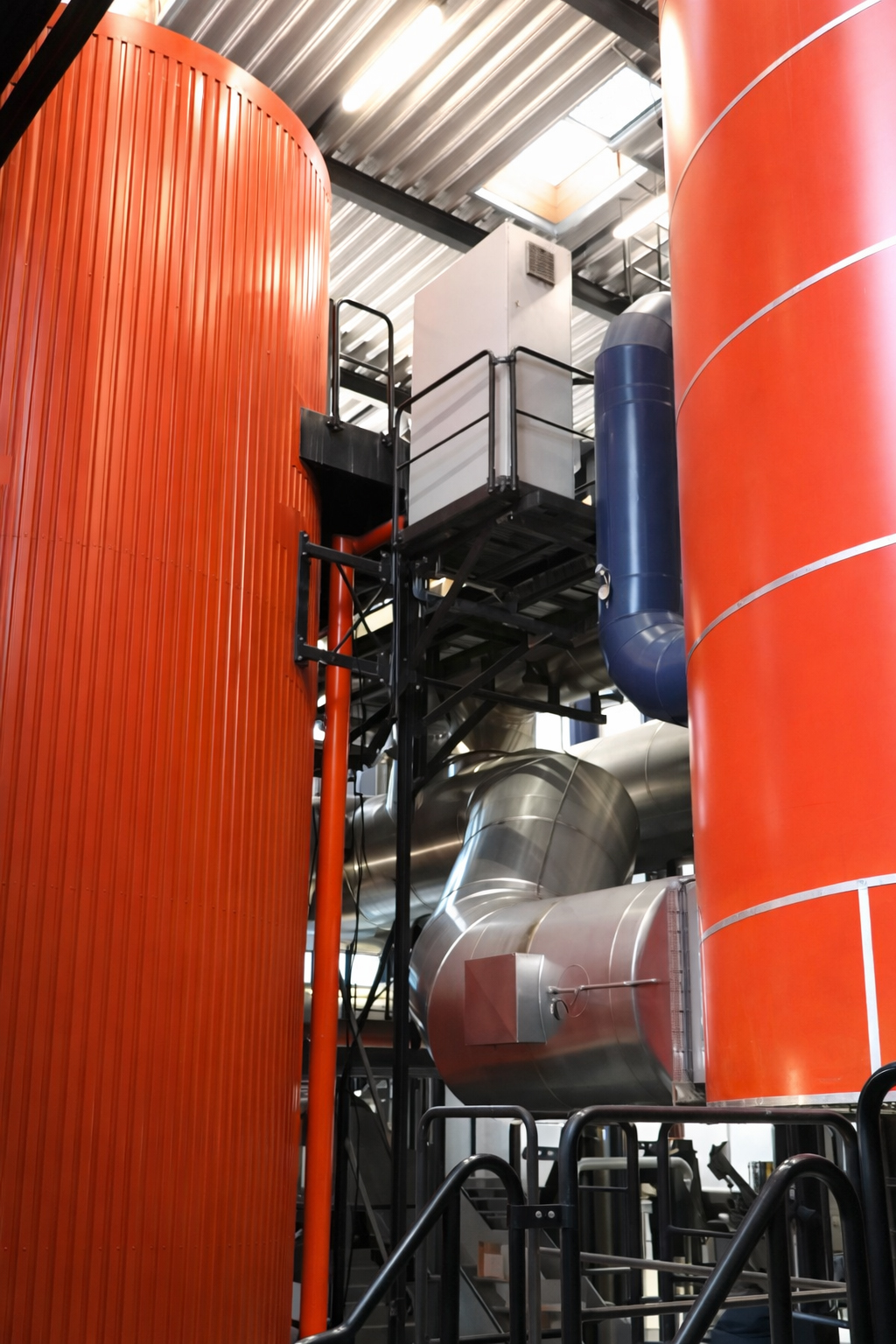
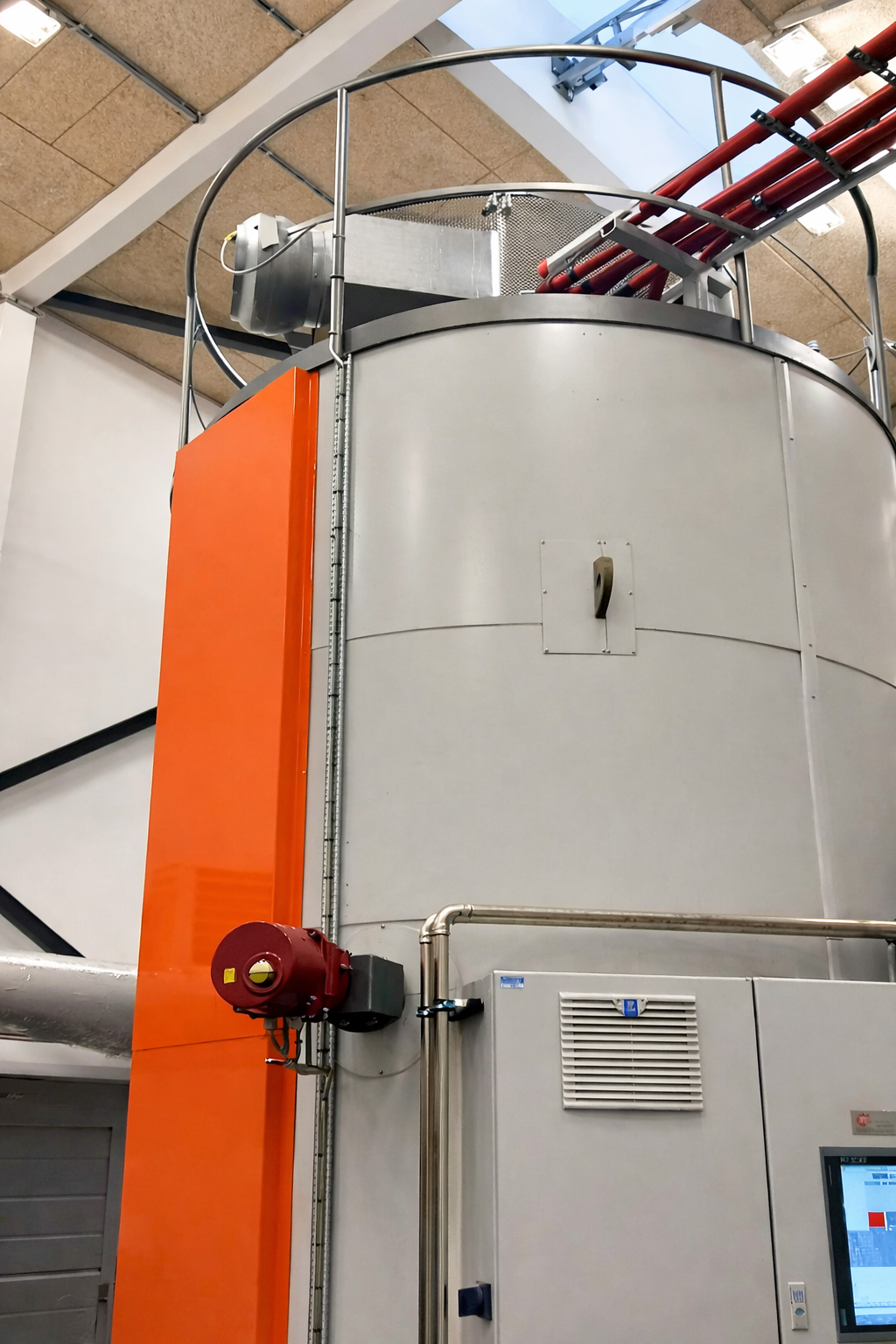
With the new plant, the energy mix is expected to shift from approximately 80% biomass to around 70% electricity and only 30% biomass. This change has delivered significant economic and environmental benefits.
As a result of the project, Billund District Heating has reduced the heat price by approximately 25% – from around DKK 700/MWh (€ 93/MWh) to approximately DKK 525/MWh (€ 70/MWh), including 25% VAT. This corresponds to roughly DKK 2,350 (EUR 315) per year for a Danish “standard house” (heat consumption of 13.4 MWh/year).
At the same time, CO₂ emissions are significantly reduced, and particle emissions from biomass combustion are also substantially lowered.
The utility estimates an annual CO₂ reduction of up to 10,000 tons, depending on the share of renewable electricity in its consumption and its annual operating profile.
Project scope
As early as 2021–22, it was concluded that Billund District Heating faced increasing heat demand and that the existing production equipment was insufficient and soon outdated. For many years, heat production relied on natural gas and a substantial share of locally sourced biomass (straw and wood chips). Boilers and small CHP units (natural gas) at the plant were 10–20 years old.
At the same time, heat demand in the town is expected to increase by 50% over the next 10 years due to new housing developments and district heating expansion.
To secure capacity for this expansion and enable more renewable production, a project was initiated that today includes:
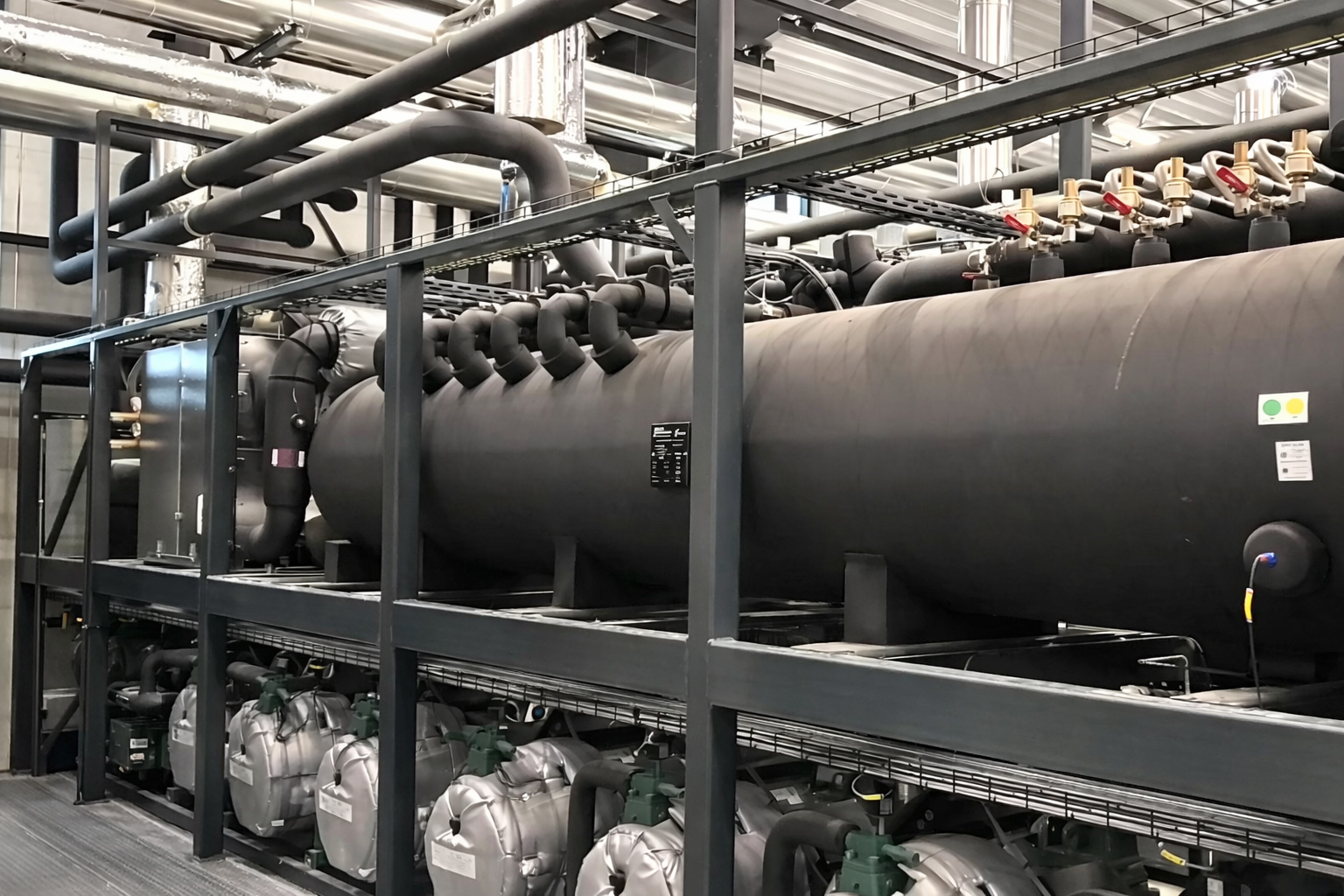
- A 16 MW air-to-water heat pump with high COP and optimized operating strategy for base load operation. The operating strategy includes thermal storage and prioritising low-return temperatures.
- A 30 MW electric boiler capable of delivering peak load and backup, while also responding instantly to electricity market signals.
- A 10,000 m³ thermal storage tank enabling heat storage for several days, thus providing flexibility and the ability to optimize production.
- A 60/10 kV transformer and switchgear. Switchgear and sufficient electrical capacity are prerequisites for effective electrification.
- A new transmission pipeline (as well as a new administration building).
Cooperation and project execution
Billund District Heating prepared a master plan to develop the utility’s supply system. The latest update, completed in January 2022, concluded that additional base load capacity would be required by 2025. A subsequent structural plan (December 2022) outlined the technical, planning, and financial framework for transitioning from fuel-based to electricity-based heat supply.
Through simulation of different scenarios, the economic optimum for future expansion was identified. Detailed planning began in January 2023, construction started in spring 2024, and the plant was inaugurated on 24 October 2025 by the Mayor of Billund.
Billund District Heating engaged Ingeniør Huse A/S as a consultant, which assisted throughout the process, from FID (Final Investment Decision) through EIA (Environmental Impact Assessment), tendering, supervision, and commissioning. The project was divided into five tenders corresponding to the main components (heat pump, electric boiler, thermal storage tank, transformer, and building), and the entire process was completed within approximately 36 months.
The investment budget for the new plant, including the administration building, was estimated at approximately DKK 300 million (~EUR 40 million). The project was completed with an investment of approximately DKK 250 million (~EUR 33,5 m) – about 17% below expectations – while simultaneously being expanded and prepared for the utilization of excess heat (from nearby LEGO). This was primarily due to very competitive bids for the individual components and limited use of contingency funds.
Throughout the project, the focus was on modularity, future expansion, and integration with other supply systems in Billund, including the use of excess heat from a casting process and the utilization of existing ATES wells (Aqua Thermal Energy Systems).
Close cooperation with the power grid operator, N1, enables the utility to act as a flexible electricity consumer and system service provider, helping stabilize the power system while producing heat.
Although planned and executed in Denmark, this project could easily be implemented elsewhere in Europe, for example, in Germany, the UK, the Netherlands, or Poland, where there is an increasing need to modernize outdated fossil production facilities or build new ones. A key prerequisite for electrification is, of course, access to sufficient electrical capacity in the grid.
Integrated system design and operating principles
The overall plant design is based on a hybrid production principle, with the heat pump supplying the base load and the electric boiler handling the peak load and rapid demand changes. The thermal storage tank plays a central role, acting as a buffer that allows independent control of electricity consumption and heat delivery. In addition, the existing biomass-based plant can still supply medium and peak load.
This structure allows the utility to increase heat production when electricity prices are low or when there is surplus green power, reduce electricity consumption when the grid is strained or prices are high, and use the storage tank to shift production over time.
In summary:
| Low electricity prices | High electricity prices | Need for grid regulation |
|---|---|---|
|
The heat pump operates base load (low heat cost). The electric boiler can charge the storage tank. Negative prices can deliver “free” heat. |
The heat pump ramps down to avoid expensive electricity. The electric boiler is idle. Heat is supplied from storage. Biomass boilers support if needed. |
The electric boiler provides fast response. The heat pump ramps moderately. District heating acts as an energy storage buffer for the grid. |
This results in:
- High operational efficiency due to the heat pump.
- Extreme flexibility via the electric boiler and storage tank.
- Optimal market participation with real-time response to price signals.
- Increased security of supply and robustness against price volatility.
- Better integration of renewable energy sources in both heat and power systems.
Electric boiler and heat pump participating in the balancing market
One of the most groundbreaking elements of the Billund project is its integration with the electricity balancing market and participation in system services.
On a national scale, electricity consumption and production must be always balanced – every second. This balance stabilizes system frequency around 50 Hz and supports security of supply.
The Danish TSO (Energinet) procures system services to ensure this balance, including from small- and medium-sized district heating utilities that use electricity via heat pumps and electric boilers, as well as from those that produce electricity (CHP plants and waste-to-energy plants).
In Denmark, several system service products exist. They are typically categorized by the need for activation speed. A race car represents fast-acting products with small energy storage (e.g., batteries), while a truck represents slower products with large energy storage (e.g., power plants).
| DK2 | FFR | FCR-D | FCR-N | aFRR | mFRR |
|---|---|---|---|---|---|
| Product name | Fast Frequency Reserve | Frequency Containment Reserve for disturbances | Frequency Containment Reserve for normal operation | Automatic Frequency Restoration Reserve | Manual Frequency Restoration Reserve |
| Function | Frequency stabilisation | Frequency stabilisation | Frequency stabilisation | Frequency stabilisation | Balance restoration |
| Technical specifications | |||||
| Response time | 0.7–1.3 seconds | 86% within 7.5 seconds 32 seconds of energy within 7.5 seconds |
63% within 60 seconds, 95% within 3 minutes | 5 minutes | 15 minutes |
| Min. delivery time | 5 seconds | N/A | N/A | 1 hour | 1 hour or 1 month |
| Max. restoration time | 15 minutes | No restoration time | No restoration time | No restoration time | No restoration time |
| Delivery characteristics | The supplier measures the grid frequency itself and delivers in case of frequency drop. | The supplier measures the grid frequency itself and delivers in case of frequency drop/increase. | The supplier measures the grid frequency itself and delivers in case of frequency drop/increase. | The supplier receives an automatic signal from Energinet every 4 seconds via the SCADA system. | The supplier receives a manual signal from Energinet when needed. |
| Load factor (2021) Activated energy relative to sold capacity |
0% | 0.05% | Net: ↓0.5% | Net: ↓12% | 100% |
| Market specifications | |||||
| Min. bid size | 0.3 MW | 0.1 MW | 0.1 MW | 1 MW | 5/1 MW |
| Max. bid size | N/A | N/A | N/A | 50 MW | 100/50 MW |
| Procured as | Upward regulation as an asymmetric product | Upward and downward regulation as two asymmetric products | Upward and downward regulation as a symmetric product | Upward and downward regulation as two asymmetric products | Upward regulation as an asymmetric product |
| Capacity market | Yes | Yes | Yes | Yes | Yes |
| Energy activation market | No | No | No | Implementation in 2024 | Yes |
| Availability payment | Marginal price settlement | Marginal price settlement | Marginal price settlement | Marginal price settlement | Marginal price settlement |
| Energy activation payment | Settled via the imbalance settlement | Settled via the imbalance settlement | Regulation power price for upward or downward regulation | Regulation power price | Regulation power price |
| Delivery requires balance responsibility | No | No | Yes | Yes | Yes |
Facilities providing system services are paid to ramp up or down electricity production or consumption, either within seconds or over longer periods. This market is increasingly important as more electricity comes from highly fluctuating weather-dependent sources such as wind and solar. And fluctuation demands balancing.
The system services market is well-developed in Denmark and is expanding across Northern Europe, including Germany, the Netherlands, the UK, and Poland, where renewable generation is growing. Overall balance is typically managed by the national TSO.
The electric boiler is the “race car”.
The electric boiler connection is designed with control equipment that enables a response to changes in frequency and price within seconds. It can deliver frequency-controlled reserves (FCR, aFRR, and mFRR).
The heat pump is the “car/truck”.
The heat pump contributes to secondary system services and market optimization.
The thermal storage tank is essential.
The storage tank is the “battery” functioning as a thermal buffer, enabling flexible operation and stable heat supply. When planning heat pumps or electric boilers, a thermal storage tank should always be considered – it pays off.
Future perspectives
In the next phase, predictive control based on sensor data and forecasts for electricity prices and weather is planned. Billund District Heating is also investigating integration with local wind and solar plants and participation in energy communities to further exploit electricity market flexibility.
The plant thus serves as a demonstration project showing how a medium-sized district heating utility can become an active player in both the power and heat sectors – in Denmark and internationally.
The combination of a large heat pump, a flexible electric boiler, and efficient thermal storage enables the delivery of environmentally friendly heat at competitive prices while providing value to electricity market balancing mechanisms. The project components are scalable and can be configured for a wide range of sizes and needs.
The project, therefore, represents a strong model for how small and medium-sized cities in Germany, the Netherlands, the UK, and Poland can use a standardized plant configuration to transition to environmentally friendly, cost-effective, and secure heat supply.
________________________________________
For further information please contact: Morten stobbe, mst@ingenioerhuse.dk
About Billund District Heating
- The heat pump is a CO₂-based machine consisting of six racks, delivering a total of 16 MW at an outdoor temperature of 0 °C. Each rack has eight compressors.
- An existing 15 MW electric boiler is now supplemented with an additional 30 MW of capacity. Both boilers are supplied at 10 kV.
- The transformer is a 60/10 kV, 50 MW unit, of which 7 MW is purchased as non-interruptible capacity and can therefore always function as peak load.
- The thermal storage tank has a volume of 10,000 m³ and can store approximately 600 MWh at 95/40 °C – equivalent to almost one day of consumption on a cold winter day or one week during summer.
- Billund District Heating delivers approximately 130,000 MWh annually (ex plant).
“Electrification, Flexibility, and Thermal Storage” was published in Hot Cool, edition no. 1/2026. You can download the article here:
Did you find this article useful?
Subscribe to the HOT|COOL newsletters for free and get insightful articles on a variety of topics delivered to your inbox twice a month!